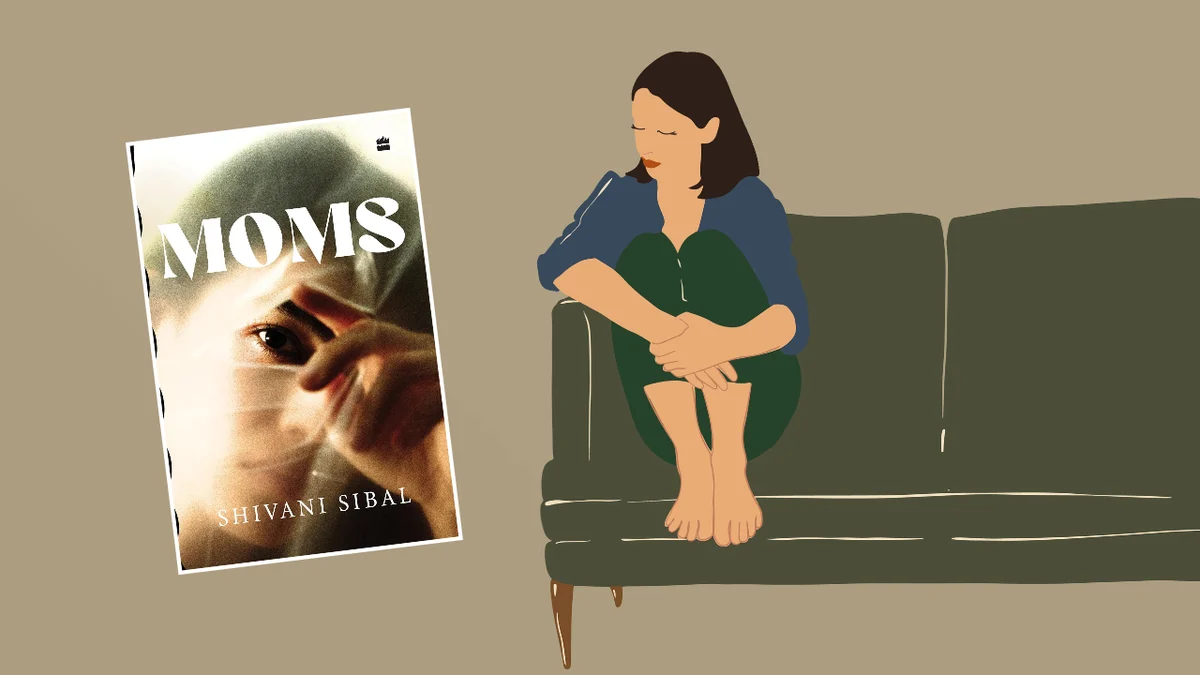
In 1897, American poet E.A. Robinson captivated the literary world with the tragic figure of Richard Cory. A man who was "richer than a king," Cory possessed everything society deems necessary for a fulfilling life: wealth, status, and the covetous admiration of his peers. Yet, the poem’s conclusion—a sudden, violent act of self-destruction—shattered the illusion that material prosperity acts as a bulletproof vest against despair. More than a century later, author Shivani Sibal revisits this haunting inquiry in her latest novel, Moms, challenging the assumption that privilege precludes pain.
The Narrative Architecture of Discontent
Moms introduces readers to Radhika, a 23-year-old woman whose life appears to be a blueprint for modern success. She is the wife of Manik Khanna, a high-flying, 34-year-old Delhi-based lawyer. To the outside observer, Radhika occupies the pinnacle of social standing. She is the "arm-candy" spouse, the polished matriarch to a school-going daughter, Samara, and a fixture in the city’s elite, business-lounge circles.
However, beneath the veneer of Evian-sipping brunch dates and perfectly curated Instagram timelines lies a suffocating reality. Radhika’s identity is entirely subsumed by her roles as "wife" and "mother." She is a woman attempting to carve out layers of individual meaning within rigid, pre-defined boxes, only to find herself trapped in a cycle of diminishing self-worth. Sibal’s narrative does not merely tell a story of a failing marriage; it dissects the ecosystem that enables it. The novel portrays a social stratum where cruelty is masked by etiquette, and where the "private matter" of spousal abuse is protected by the silence of a complicit social circle.
Chronology of a Crisis: From Privilege to Peril
The trajectory of Radhika’s character arc reflects a quiet, slow-burning crisis that mirrors the "trad-wife" phenomenon currently under cultural scrutiny.
- The Early Years: Radhika enters her marriage at a young age, stepping into a role defined by the expectations of the Delhi elite. The early stage of her marriage is characterized by the performative nature of their lifestyle—the pressure to maintain a youthful aesthetic, the constant demand for public displays of domestic perfection, and the relentless pursuit of social status.
- The Mid-Life Erosion: As the marriage progresses, the psychological toll of Manik’s cruelty begins to mount. Sibal meticulously documents the "reward and punishment" system inherent in this marriage, where Radhika’s value is indexed against her ability to conform to aesthetic and behavioral standards.
- The Breaking Point: The novel reaches a crescendo as Radhika confronts the existential void created by her lack of agency. Her internal monologue, captured in the pivotal line, "I can’t help it if I grew up in privilege. That doesn’t mean I don’t feel pain," serves as the moral anchor of the book. It is a defiant rebuttal to those who would dismiss the suffering of the affluent as mere melodrama.
The Sociology of the "Elite Margin"
One of the most provocative aspects of Moms is its interrogation of the "mainstream." For decades, contemporary literature has prioritized the voices of the disenfranchised, the subaltern, and the marginalized. This is a vital tradition, yet Sibal poses a difficult question: Does the focus on the marginalized leave the "privileged" exempt from psychological scrutiny?

Sibal challenges the reader to consider if the center is, in fact, a construct. By highlighting the fragility of the wealthy, the novel suggests that we are all, in various ways, a "mass of collective marginalities." The implication is that pain is not a resource that is depleted by wealth; it is a human constant. The book asks: Is it a crime to be born into privilege? And if one is born into the center, are they disqualified from the empathy usually reserved for the victim?
The novel serves as a critique of the "Insta-happiness" culture, where the curated image serves as a weapon of exclusion. By peeling back the layers of a high-society marriage, Sibal exposes the isolation that comes with maintaining a perfect public image.
Supporting Data: The Reality of the "Perfect" Marriage
The themes explored in Moms are not merely the products of artistic imagination. Recent societal trends provide a chilling backdrop to the narrative:
- The Rise of ‘Trad-Wives’: The recent cultural focus on the "trad-wife" aesthetic—women who intentionally embrace traditional domestic roles—has been analyzed extensively in literature like the novel Yesteryear. Both Yesteryear and Moms explore the dangerous intersection of traditional gender roles and modern, high-pressure environments.
- The ‘Private Matter’ Fallacy: Public discourse surrounding domestic violence often stalls when the victims are from the upper echelons of society. The perception that domestic conflict is a "private matter" persists in elite circles, often preventing timely intervention.
- The Case Study of Reality: The recent, harrowing report of a retired judge allegedly involved in the murder of her daughter-in-law highlights the extreme, lethal conclusions that can arise from domestic power imbalances, regardless of the family’s socioeconomic status. These real-world events serve as a grim validation of Sibal’s fictionalized warnings.
Official Perspectives and Critical Implications
Critics and literary observers have noted that Moms is a bold, albeit potentially polarizing, entry into the feminist canon. While some argue that the book treads familiar territory regarding the difficulties of finding meaning within traditional structures, others see it as a necessary evolution of the "feminist sorrow" genre.
The editor of 250 Years Of Jane Austen: Indian Responses notes that the novel’s strength lies in its ability to force the reader into uncomfortable introspection. The primary implication of the book is a call for a broader definition of empathy. If we only recognize the pain of those we perceive as "disenfranchised," we fail to see the humanity—and the suffering—of those who exist within the systems of power.

Furthermore, the novel acts as a mirror to contemporary society. By showing how an "entire ecosystem" witnesses abuse but chooses silence, Sibal highlights the collective responsibility of communities. The "reward and punishment" system is not just between a husband and wife; it is upheld by the friends, neighbors, and family members who choose to look away to protect their own social standing.
The Verdict: A Mirror to Our Times
Moms by Shivani Sibal is a haunting, necessary addition to the modern library. While its title may seem unassuming, the content is deeply seismic. It forces the reader to confront their own biases regarding who is "allowed" to suffer.
The tragedy of Richard Cory remains a classic because it touches on the inexplicable nature of the human spirit. Moms brings that tragedy into the 21st century, placing it in the context of high-rises, social media, and the crushing weight of expectation. Sibal effectively argues that the scariest part of fiction is its proximity to reality. In a world that demands we always appear to be "winning," the bravery required to admit that one is drowning—regardless of one’s bank balance—is the most radical act of all.
As we navigate an era where the lines between the public self and the private reality are increasingly blurred, Moms serves as a stark reminder: we disregard the silent suffering of others at our own peril. The "center" is not a sanctuary; it is merely another place where the human struggle for dignity, identity, and survival plays out in the shadows of success.
Book Details:
- Moms
- Author: Shivani Sibal
- Publisher: Harper Fiction
- Price: ₹599
- Genre: Contemporary Fiction/Sociological Drama