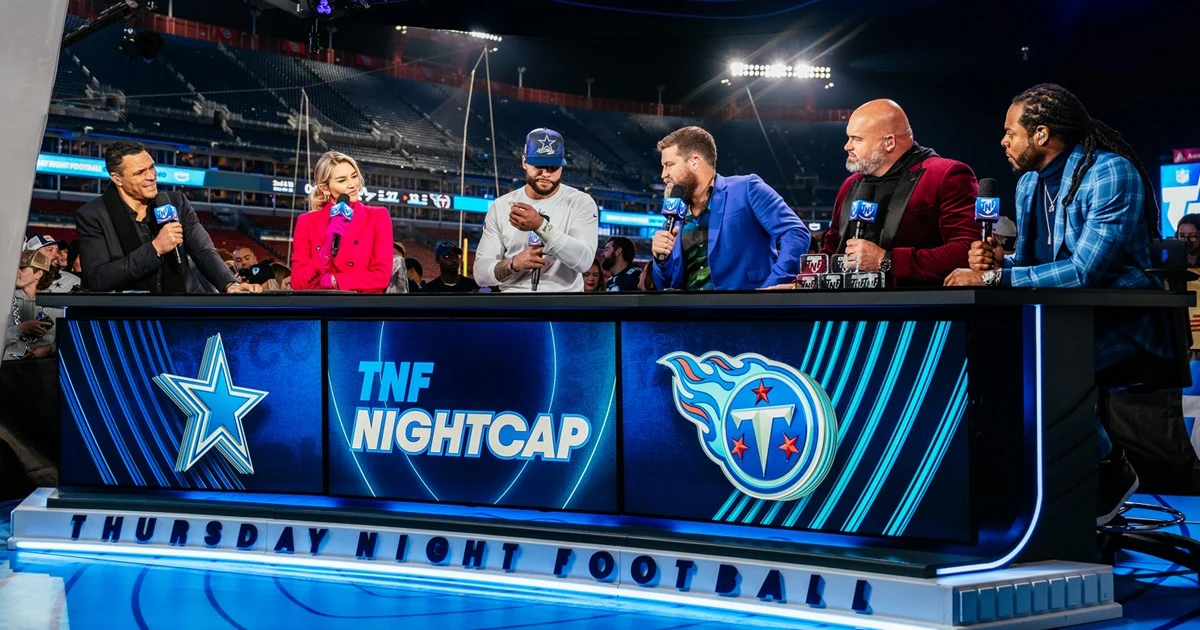
As the NFL’s 2024 season reaches its mid-point, the landscape of sports media continues to shift beneath the feet of traditional broadcasters. At the center of this transformation is Amazon Prime Video, currently navigating the fifth year of its landmark 11-year exclusive rights deal for Thursday Night Football (TNF). While the on-field action—exemplified by the recent, high-stakes 30-24 showdown between the Chicago Bears and the New England Patriots—continues to draw eyeballs, the real game is happening behind the scenes in the advertising suites.
Amazon is no longer just a platform for streaming; it has evolved into a powerhouse of data-driven advertising, actively expanding its playbook to integrate sports into the broader ecosystem of its retail and cloud services. With a 6% year-over-year increase in advertisers and a significant influx of new brands, the tech giant is proving that the future of sports media is inextricably linked to the power of the e-commerce engine.
The Main Facts: A Digital Takeover
The transition of Thursday Night Football from linear television to an exclusive streaming model was initially met with skepticism by industry traditionalists. However, five years into the 11-year deal, the data paints a picture of undeniable success.
The most recent metrics from Prime Video reveal a robust growth trajectory. Beyond the 6% year-over-year increase in the total number of advertisers, the platform is seeing granular success in key verticals. Financial services, retail, hardlines, automotive, and travel sectors have all reported double-digit growth in ad spending on the platform. Perhaps most tellingly, 17% of the brands appearing during this season’s TNF broadcasts are entirely new to both the TNF ecosystem and the Prime Video ad suite.
This is not merely a sports broadcast; it is a conversion funnel. By leveraging the unique identity of Prime members, Amazon is offering brands a level of attribution—connecting a television ad to an actual purchase on Amazon.com—that legacy broadcasters simply cannot match.
Chronology: The Road to the Streaming Gridiron
The journey to the current state of Amazon’s sports dominance is rooted in a deliberate, multi-year strategy:
- 2017: The Testing Ground. Amazon first entered the NFL space by simulcasting Thursday Night Football alongside legacy networks like CBS and NBC. This period served as a technical proof-of-concept, allowing Amazon to test its latency and server capacity for massive live audiences.
- 2020-2021: The Exclusivity Pivot. Recognizing the potential for data capture, Amazon aggressively bid for exclusive rights. The transition began in earnest, with Amazon securing the exclusive rights to broadcast TNF starting with the 2022 season.
- 2022: The First Exclusive Season. Amazon launched its own production team, hiring veterans from major networks to ensure the broadcast quality met NFL standards. The integration of "X-Ray" features allowed viewers to access player stats and shopping opportunities in real-time.
- 2023-2024: The Ecosystem Integration. Moving beyond the broadcast itself, Amazon began heavily promoting its "Buy with Prime" and cross-platform advertising tools. The focus shifted from merely selling "spots" to creating holistic partnerships that span the entire Amazon ecosystem, including Twitch, Fire TV, and the Amazon Store.
Supporting Data: Why Brands are Leaning In
The shift in advertising budgets toward Prime Video is not driven by sentiment, but by hard data. When analyzing the current advertising landscape, three primary pillars emerge:
1. Audience Demographics and Engagement
Prime Video’s TNF audience skews younger and more affluent than the traditional broadcast television audience. This demographic is notoriously difficult for advertisers to reach via linear cable, making the TNF platform a premium asset.
2. The Power of Attribution
The "holy grail" of advertising is knowing exactly how much revenue a specific commercial generated. Through Amazon’s "Marketing Cloud," advertisers can track the path of a viewer from seeing a commercial during the Bears-Patriots game to clicking a product on Amazon and finalizing the purchase. This "closed-loop" system is a competitive advantage that networks like ESPN or NBC currently lack.
3. Sector-Specific Growth
The double-digit growth in the automotive and financial services sectors is particularly telling. These industries rely on long-term customer acquisition. By using Amazon’s first-party data, these brands can target specific household types—for example, showing car ads to households that have recently searched for automotive accessories or auto insurance.
Official Responses: Insights from the Front Lines
The strategy behind this growth is guided by a focus on "leaning in." Amy McDevitt, head of live sports sales partnerships at Amazon Ads, recently articulated the company’s vision for the current season.
"The latest season is about getting advertisers to lean in to Prime Video’s offerings and expand their relationship across the company," McDevitt noted. This language underscores a shift from transactional advertising—buying a 30-second window—to relational advertising.
Amazon is encouraging brands to move beyond the traditional "commercial break" model. They are pushing for custom brand integrations, interactive ad formats that allow users to add items to their carts directly from the screen, and cross-channel campaigns that combine TNF viewership data with display ads on other Amazon-owned properties. For McDevitt and her team, the broadcast is merely the tip of the spear; the objective is to make the entire Amazon ecosystem a part of the consumer’s game-day ritual.
The Broader Implications: What This Means for the Future
The success of Amazon’s TNF strategy has profound implications for the media industry at large.
The Decline of Linear Dominance
The 6% growth in advertisers, coupled with the fact that 17% of those advertisers are new to the platform, suggests that ad dollars are shifting away from linear television at an accelerating rate. As legacy networks struggle with "cord-cutting," the stability of a streaming-native sports product becomes an attractive hedge for major brands.
The Gamification of Shopping
We are witnessing the birth of "shoppable sports." By integrating commerce directly into the viewing experience, Amazon is changing the nature of television consumption. In the future, fans might not just watch a jersey being worn by a star player; they may be able to purchase a replica with a single click of their remote. This turns every football game into a massive, multi-hour retail event.
The Future of Data Privacy
As Amazon tightens its grip on sports broadcasting, it also gains immense amounts of data on viewer behavior. The implications for consumer privacy are significant. While this data is currently used to provide targeted advertisements, it also places Amazon in a position of unprecedented influence regarding what consumers see, hear, and buy during the most watched events of the week.
The Competitive Response
Other streamers, including Netflix (which recently entered the live sports space with the Tyson-Paul fight and NFL Christmas games) and Apple TV+ (with its MLS deal), are watching Amazon closely. Amazon’s success serves as a blueprint: combine high-value, exclusive live content with a massive, pre-existing commercial infrastructure.
Conclusion: A New Era of Prime-Time Engagement
As we look toward the remainder of the 2024 NFL season and beyond, it is clear that Thursday Night Football is no longer just a broadcast—it is a cornerstone of Amazon’s overarching corporate strategy. By effectively merging entertainment, data analytics, and retail, Amazon has managed to do what many thought impossible: make a legacy product like the NFL feel like a cutting-edge technological advancement.
For brands, the message is clear: if you want to reach the modern consumer where they live, work, and shop, you must be on Prime Video. For the rest of the media industry, the lesson is equally stark: the playbook has changed, and the digital giants have rewritten the rules of the game. The final score of the Bears-Patriots game was a victory for Chicago, but the broader victory is being claimed by Amazon, which is effectively turning the gridiron into the world’s largest, most efficient retail storefront.