By Julie Bort
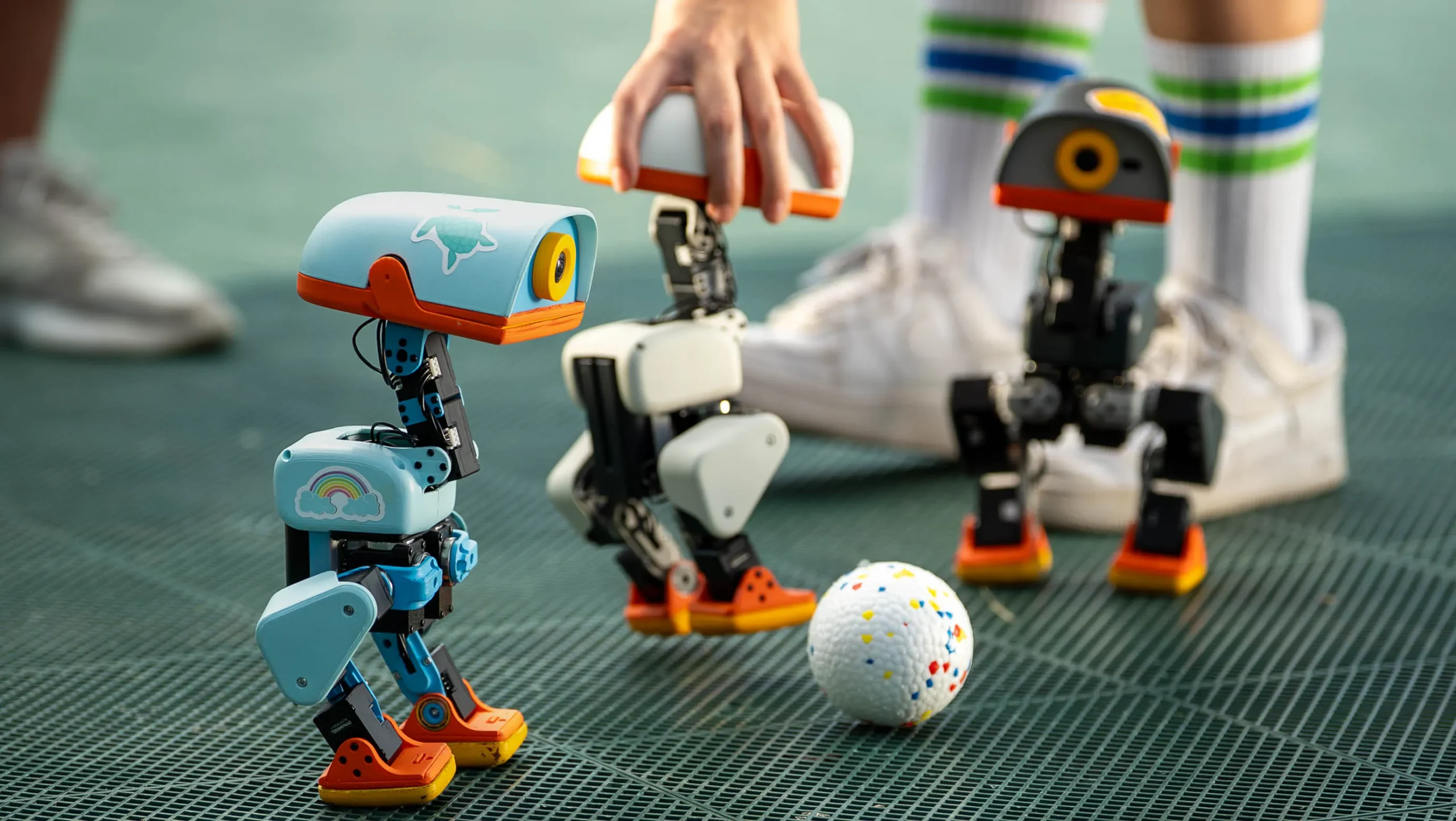
In an industry currently reeling from the existential dread of mounting cybersecurity failures and the rapid, often unsettling, acceleration of autonomous systems, the tech world was handed an unlikely reprieve this week. During the GTC Berlin keynote, Nvidia CEO Jensen Huang took the stage not just to discuss the future of high-performance computing, but to introduce the world to a flock of waddling, R2-D2-chirping robots that have arguably become the most viral sensation of 2026.
These robots, dubbed "Microducks," are more than just a charming stage prop. They represent a new frontier in consumer robotics: open-source, trainable, and—most importantly—endearingly accessible. With preorders exceeding 20,000 units within twenty-four hours of their public debut, the Microduck is quickly pivoting from a conference novelty to the definitive must-have item for the upcoming holiday season.
The Viral Moment: From Keynote to Global Phenomenon
The spectacle at GTC Berlin was masterfully executed. As Huang spoke about the democratization of AI, a small group of robotic ducks navigated the stage, responding to voice commands with surprising fluidity. They sat, performed "naps" where they would flop over in a display of programmed exhaustion, and even executed somersaults.
The reaction was instantaneous. By the following day, Clem Delangue, CEO of Hugging Face, took to social media to confirm that the company had already surpassed 20,000 preorders. "This isn’t just for the kids," Delangue noted in his post, highlighting a trend that observers have been tracking for months: the shift in consumer robotics from specialized industrial tools to high-engagement, personality-driven companions for adults and hobbyists alike.
A Strategic Integration: The Path to Microduck
The journey of the Microduck is a roadmap of recent consolidation within the AI hardware sector. The robots were designed and manufactured by Pollen Robotics, a boutique robotics firm known for its commitment to open-source hardware. In 2025, Hugging Face acquired Pollen, bringing their expertise in embodied AI under the Hugging Face umbrella.
However, the consolidation didn’t stop there. In a move that sent shockwaves through the industry last September, GPU titan Nvidia acquired Hugging Face. This means that the Microduck is, in effect, an Nvidia product—the latest step in the company’s aggressive expansion into the physical world. This is not Hugging Face’s first foray into the market; the company previously launched the Reachy Mini, an open-source robotic arm that gained a cult following among developers. The Microduck, however, represents a significant shift toward a more consumer-friendly, mass-market form factor.
Technical Architecture: Intelligence in a Small Package
While the charm of the Microduck lies in its waddle and its chirps, the underlying technology is a testament to the power of the Nvidia stack. The robots are powered by advanced simulation training models. Before a single unit was shipped, the Microducks were put through their paces in Nvidia’s Omniverse-driven simulation environments.
Through reinforcement learning, these digital versions were taught the mechanics of locomotion—walking, balancing, and posture—as well as complex motor patterns like the somersault. This "simulation-to-reality" (Sim2Real) pipeline allows the robots to arrive pre-loaded with a suite of behaviors, but the true innovation lies in the platform’s extensibility.
Pollen Robotics has maintained the open-source ethos that made them a favorite in the maker community. Owners are not just passive users; they are encouraged to create, refine, and upload their own "tricks" or behaviors for their Microducks. These can then be shared across the community via the Hugging Face platform, effectively crowdsourcing the evolution of the robot’s personality and capability.
Chronology: The Road to the Holiday Launch
- September 2025: Nvidia finalizes the acquisition of Hugging Face, signaling a major pivot toward integrating generative AI with physical robotics hardware.
- August 2026: Hugging Face begins teasing the next generation of small-form-factor robots following the success of the Reachy Mini.
- October 23, 2026: During the GTC Berlin keynote, Jensen Huang officially unveils the Microduck. Preorders open immediately.
- October 24, 2026: Within 24 hours, preorder figures top 20,000 units. Social media engagement reaches a fever pitch as videos of the robots’ "naps" go viral.
- December 2026 (Projected): Global distribution begins, aiming to reach consumers in time for the holiday gifting season.
Industry Implications: AI’s Human-Centric Turn
The meteoric rise of the Microduck provides a fascinating counter-narrative to the current industry climate. For much of October, the discourse surrounding AI has been dominated by fears of cybersecurity vulnerabilities, with several high-profile AI-assisted cyberattacks causing global instability.
In this context, the Microduck serves as a necessary "palate cleanser." It reframes AI not as a faceless, menacing algorithm, but as a tangible, playful, and approachable companion. However, the implications run deeper than simple public relations.
1. The Normalization of Embodied AI
For years, the "robot in every home" promise remained unfulfilled. By focusing on personality and a low barrier to entry, Nvidia and Hugging Face are normalizing the presence of autonomous agents in living spaces. The Microduck is not a vacuum cleaner or a security camera; it is an agent that interacts with its environment and its owners.
2. The Power of the Open-Source Ecosystem
By keeping the platform open, Nvidia is betting on the "Lego effect." By allowing users to develop their own behaviors, the company ensures that the product’s lifecycle is extended far beyond the initial purchase. If a community of thousands of developers is constantly creating new ways for the duck to move, dance, and communicate, the value of the device increases over time.
3. Vertical Integration of Hardware and Software
This product highlights the strength of Nvidia’s current strategy. By owning the chips (the brains), the simulation platform (the training ground), and the company that creates the physical hardware (the body), Nvidia has achieved a level of vertical integration that few, if any, competitors can match.
Official Responses and Market Outlook
While Nvidia has not yet released specific revenue projections for the Microduck, the internal sentiment is reportedly bullish. Analysts suggest that if the company can scale manufacturing to meet the holiday demand, the Microduck could become the most successful consumer robot ever launched.
"We wanted to build something that showcased the capability of our simulation models while acknowledging that AI should be a part of our daily joy," a representative close to the development team remarked.
Critics, however, remain cautious. Privacy advocates have raised questions about the data collected by these devices, particularly given their microphones and camera sensors. While the company has pledged to adhere to strict privacy standards, the integration of such devices into the home remains a point of regulatory scrutiny.
Conclusion: A Toy or a Harbinger?
Whether the Microduck is viewed as a harmless toy or the beginning of a new era of home-based artificial intelligence, its impact is undeniable. It has managed to capture the public imagination in a way that complex LLMs and enterprise-grade infrastructure simply cannot.
As we approach the end of 2026, the sight of thousands of tiny, somersaulting robots under Christmas trees may become the definitive image of the year in tech. It is a reminder that even as we navigate the complex, often frightening, landscape of artificial intelligence, there is still a place for the simple, the cute, and the undeniably fun.
For those looking to secure a unit, the current advice is clear: act fast. With production lines running at maximum capacity to meet the pre-Christmas deadline, the "hottest toy of the year" label is quickly becoming a reality. Whether you are a hardened robotics engineer or a curious tech enthusiast, the Microduck is proof that sometimes, the most sophisticated technology is the kind that makes you smile.