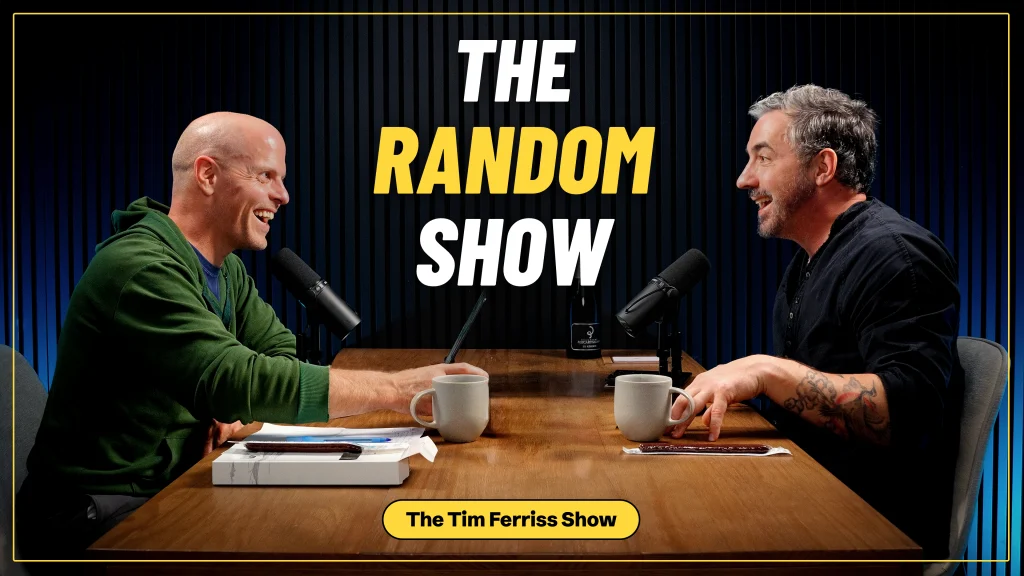
In a world increasingly saturated by digital noise, the latest installment of The Random Show—the long-running, freewheeling podcast series hosted by Tim Ferriss and Kevin Rose—has once again served as a cultural bellwether. Recording from Los Angeles, the duo tackled a sprawling agenda that touched upon the rapid evolution of agentic AI, the science of performance supplementation, and the psychological frontiers of "dream engineering."
What follows is an exploration of the key themes, technologies, and debates raised in this latest edition, highlighting the convergence of high-tech automation and biological optimization.
The AI Inflection Point: From Chatbots to Super-Assistants
The conversation opened with a candid assessment of the rapid shift in artificial intelligence. While the last two years have been defined by conversational chatbots—tools like ChatGPT and Claude—Rose argued that the last month has signaled a definitive "inflection point." We are moving away from passive information retrieval toward agentic, proactive assistants.
The Rise of Agentic Commerce
Rose introduced several new entrants into the AI ecosystem, including "Instinct" and Meta’s "Muse." Unlike previous iterations, these systems are designed to exist within the user’s native communication channels—specifically iMessage—effectively turning AI into a texting partner that manages calendars, documents, and even legal sign-offs.
The implications for e-commerce are profound. Amazon, once the undisputed destination for online shopping, now faces an existential threat from AI agents that can browse the web, compare prices, and execute transactions on behalf of a user. If an AI agent can find a product for ten dollars less on a competitor’s site, the traditional "Amazon-first" funnel risks being bypassed entirely. Shopify, notably, has leaned into this shift, opening its platform to these agents, whereas other retail giants are scrambling to block them to protect their advertising revenue models.
Chronology of the Human Performance Lab
The episode functioned as a living laboratory, with both hosts sharing the latest results of their personal health experiments. Their approach remains consistent: identifying "high-leverage" interventions that can be validated by peer-reviewed literature.
Beta-Alanine and the Climbing Frontier
Ferriss, currently in the midst of a rigorous rock climbing training regimen, discussed his re-introduction of beta-alanine. While often associated with general endurance, Ferriss pointed to specific, if rare, studies involving elite climbers. The data suggests that consistent supplementation can improve muscle carnosine saturation, significantly delaying the "flaming out" of forearm muscles during long, strenuous traverses.
The "Sperm Quality" Protocol
In a segment that balanced scientific inquiry with characteristic humor, Ferriss detailed his deep dive into walnut consumption. Citing a 2012 randomized controlled trial, he noted that the daily intake of roughly 75 grams of walnuts yielded statistically significant improvements in sperm vitality and motility. The duo discussed the broader implications of micronutrient density, specifically the need to source nuts from soil-rich regions to ensure adequate selenium levels, as seen with high-quality Brazil nuts.
The A2 Protein Shift
Rose highlighted his transition to A2-protein milk products, specifically those from Pioneer Pastures. The discussion centered on the "cleaner" digestion of A2 casein, a form of protein that predates modern agricultural shifts. For those sensitive to dairy, the A2 variant provides a high-protein, low-discomfort alternative that has become a staple for athletes who, like Rose, seek to avoid the digestive malaise often associated with standard whey-based shakes.
Supporting Data: The Mechanics of Mind and Body
As the discussion turned to mental health and cognitive longevity, the hosts explored the intersection of neuro-stimulation and sleep architecture.
Neuromodulation and Anxiety
Ferriss provided an update on his ongoing work with neuromodulation. He highlighted Ampa Health, a private company developing modular, non-invasive brain stimulation technology. Unlike the large, refrigerator-sized hardware of the past, these devices are increasingly portable and capable of delivering accelerated protocols—sometimes in a single day—that may offer relief for treatment-resistant anxiety and OCD.
Dream Engineering: The New Frontier
Perhaps the most speculative and fascinating segment of the episode was the discussion on "dream engineering." Ferriss introduced the work of Dr. Adam Haar Horowitz and his startup, Dust, which aims to facilitate two-way communication between dreamers and researchers.
The potential applications here are staggering. By utilizing EEG monitoring and specific tapers of anesthetics like propofol during the emergence phase of surgery, researchers are exploring whether patients can "re-script" traumatic memories. By visualizing a traumatic event ending in a neutral or positive resolution while in an induced REM-like state, patients with complex PTSD have reported zero symptoms up to ten months post-treatment.
Official Perspectives: The Philosophy of "Hard Times"
While the podcast is deeply rooted in optimization, the hosts took a moment to reflect on the dangers of over-optimization. Ferriss shared a reading from Personal Renewal by John Gardner, a 1990 speech that emphasizes the necessity of lifelong learning and the ability to find purpose regardless of circumstance.
The Case for Single-Tasking
A recurring theme was the preservation of human agency in an age of AI. Ferriss recommended an article titled Please Use AI by Shawn Smucker, which serves as a counter-narrative to the drive for total efficiency. The piece advocates for the "dancing animal"—the human tendency to prioritize the process, the inefficiency, and the random encounter over the output.
Implications: The Road Ahead
The discussion concluded with a focus on the future of media and productivity. Ferriss, currently working on his next book, addressed the difficulty of writing in an era where AI can synthesize information in seconds. His conclusion? The "moat" for any creator is no longer just the information provided, but the reputation and the lived experience behind the work.
As they closed the show, the hosts issued a lighthearted challenge: a six-month bet on physical flexibility. Rose, emboldened by sessions at StretchLab, has committed to achieving the legendary "Jean-Claude Van Damme" splits between two chairs.
For the listener, the takeaway is clear: while technology will continue to automate the mundane and optimize the physiological, the most valuable human activities remain those that resist automation—the deep, slow reading of oral histories, the physical pursuit of an athletic goal, and the intentional choice to say "no" to a world that demands an automated "yes."
Summary of Mentioned Resources
- AI: Instinct, Muse (Meta), Grok.
- Performance: Thorne Beta-Alanine-SR, Momentous Collagen, Pioneer Pastures A2 Protein.
- Literature: Hard Times: An Illustrated Oral History of the Great Depression by Studs Terkel; Personal Renewal by John Gardner.
- Media: The Dark Wizard (Dean Potter miniseries).
- Health: Dr. Jart+ Cicapair (for rosacea), Ampa Health (neuromodulation).