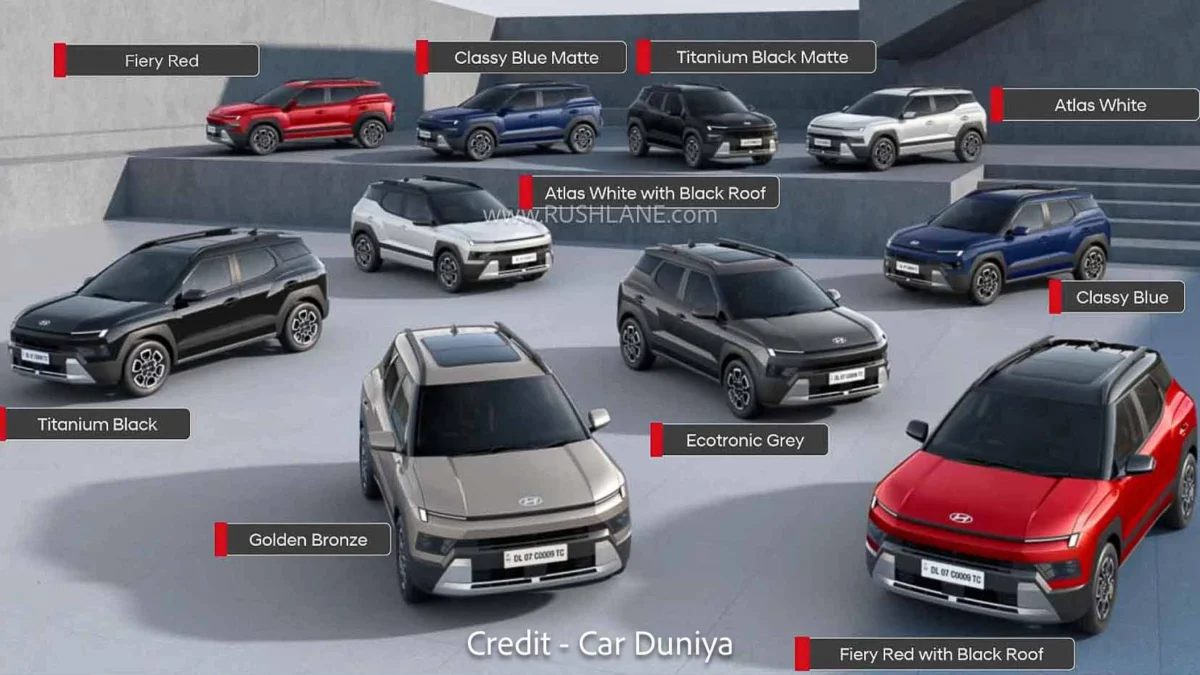
As the automotive landscape shifts toward smarter, more connected, and safer vehicles, Hyundai is poised to redefine the sub-compact SUV segment with its latest offering: the new Hyundai Bayon. With an official launch date set for October 26, 2026, anticipation has reached a fever pitch. While the manufacturer maintains a controlled silence, a wave of leaked data—originating from industry insiders and corroborated by reports from Car Duniya—has provided an unprecedented look at what consumers can expect from this highly anticipated model.
Positioned strategically to bridge the gap between the compact Venue and the more premium Creta, the Bayon aims to capture the hearts of urban commuters who demand the presence of an SUV paired with the agility of a city car.

Main Facts: Setting the Stage for the Bayon
The Hyundai Bayon is designed with a focus on both utility and aesthetic appeal. Measuring 4,245 mm in length, 1,810 mm in width, and 1,605 mm in height (including roof rails), the vehicle presents a balanced, muscular stance. Its 2,600 mm wheelbase ensures a spacious cabin, while a 205 mm ground clearance makes it well-suited for varying road conditions, from smooth highways to uneven urban backroads.
Under the hood, the Bayon features a robust 1.5-litre four-cylinder MPI petrol engine, tuned to produce 115 PS of power and 143.8 Nm of torque. This powertrain is paired with either a 6-speed manual transmission or a seamless iVT (Intelligent Variable Transmission) automatic, ensuring that both enthusiasts and comfort-seekers are catered to. With a 43-litre fuel tank and a generous 505-litre boot, the Bayon is clearly designed to be as practical for weekend getaways as it is for daily grocery runs.

Chronology of Development and Leaks
The journey toward the October 26 launch has been marked by a slow, calculated drip of information.
- Early Q3 2026: Initial sightings of camouflaged test mules began appearing on local highways, confirming the SUV’s design language.
- September 2026: Reports surfaced regarding Hyundai’s aggressive safety strategy, confirming 35 standard safety features across the entire lineup.
- Mid-October 2026: The most significant leak arrived, detailing the seven-trim hierarchy (HX2, HX3, HX3+, HX5, HX6, HX8, and HX10) and specific equipment levels for each.
- October 26, 2026 (Upcoming): The global unveiling and official price announcement.
Variant Breakdown: A Tiered Approach to Technology
Hyundai has structured the Bayon’s seven trims to cater to a wide spectrum of budgets and lifestyle requirements.

The Entry Level: HX2 and HX3
The base HX2 variant serves as the entry point, focusing on fundamental essentials. It comes equipped with R16 steel wheels, LED projector headlamps, and the signature H-style LED DRLs and tail lamps. While it skips a central infotainment system, it provides a functional 4.2-inch TFT cluster, manual AC, rear AC vents, and a tilt-and-telescopic D-cut steering wheel.
The HX3 and HX3+ variants introduce the creature comforts that modern buyers demand. The HX3 brings a 10.25-inch touchscreen infotainment system, a rear camera with a Driver Rear View Monitor, and a smart key with push-button start. The HX3+ elevates the aesthetic further with an electric sunroof, bridge-type roof rails, and 17-inch styled wheels. Both these trims are exclusively paired with the 6-speed manual gearbox.

The Mid-Range: HX5, HX6, and HX8
Starting at the HX5, buyers get access to the iVT automatic transmission. This variant is a significant jump in technology, offering Bluelink connectivity with over 70 features, OTA (Over-the-Air) updates, and a wireless charger. It also introduces drive modes (Eco, Sport, and Normal), paddle shifters, and a "dash boost" mode for more spirited driving.
The HX6 adds a touch of luxury with a panoramic sunroof, ambient lighting, and diamond-cut 17-inch alloys. The HX8 shifts focus toward premium utility, offering ventilated front seats, an 8-way power-adjustable driver’s seat, a built-in dashcam, and rear disc brakes. For those opting for the HX8 iVT, an electronic parking brake is included as a standard convenience.

The Flagship: HX10
The HX10 is the crown jewel of the lineup, serving as a showcase for Hyundai’s latest technological advancements. It features a dual curved screen setup—housing a 12.3-inch infotainment display and a 12.3-inch digital instrument cluster—powered by the NVIDIA-accelerated Connected Car Navigation Cockpit (ccNC).
Most notably, the HX10 integrates generative AI, powered by Perplexity and SoundHound. This allows for a conversational user experience where the driver can interact with the vehicle using natural language. Additionally, the HX10 is equipped with an 8-speaker Bose audio system and Level 2 ADAS (Advanced Driver Assistance Systems), which utilizes a complex network of three radars and 12 sensors to provide 23 distinct safety functions.

Safety: The Non-Negotiable Standard
Perhaps the most commendable aspect of the new Bayon is Hyundai’s commitment to safety. Across all seven variants, the vehicle includes 35 standard safety features. This includes six airbags, Electronic Stability Control (ESC), Vehicle Stability Management (VSM), Hill Start Assist, a tyre pressure monitoring system (TPMS), and a rollover sensor. By making these features non-negotiable across the board, Hyundai is setting a new benchmark for the segment, ensuring that the base model is as safe as the top-spec flagship.
Implications for the Market
The introduction of the Bayon is set to shake up the sub-compact SUV market in several ways:

- Democratization of Tech: By offering AI-powered infotainment and high-end connectivity, Hyundai is pushing rivals to accelerate their own digital transformation.
- Pricing Pressure: With an estimated entry price of Rs 9.5 lakh and a top-end price of approximately Rs 17 lakh, the Bayon occupies a "value-plus" space. It forces competitors to justify their pricing against a vehicle that offers superior tech and standard safety features.
- The "Creta-Venue" Squeeze: While the Bayon provides a middle ground, it may cannibalize some sales from the Venue and the lower-end Creta. However, for Hyundai, this is a calculated risk to ensure they own every segment of the growing SUV market.
- Strategic Shift toward AI: The inclusion of generative AI in a mainstream vehicle signals a shift in how we perceive car interfaces. The era of clunky, menu-driven infotainment is being replaced by intelligent assistants that behave like human co-pilots.
Conclusion
As the October 26 launch date approaches, the Hyundai Bayon stands out not just as another SUV, but as a statement of intent. It blends the practical dimensions of a city car with the advanced, high-tech features previously reserved for luxury vehicles. Whether it is the inclusion of standard 6-airbag safety or the cutting-edge integration of generative AI, the Bayon is clearly built for a generation that demands more from their machines.
While the official pricing and final feature lists are yet to be confirmed by Hyundai, the leaked specifications paint a compelling picture of a vehicle that is ready to dominate the roads. For prospective buyers, the wait is almost over—and if these details hold true, the Bayon will likely be one of the most significant vehicle releases of the decade.