Nearly one year after orchestrating the advertising industry’s most consequential consolidation—the acquisition of Interpublic Group (IPG)—Omnicom is beginning to provide a definitive answer to the skeptics who questioned the feasibility of such a massive integration. The latest third-quarter financial results suggest that the advertising giant is not merely getting larger; it is becoming more efficient, profitable, and technologically agile.
As the company nears the first anniversary of the IPG deal, which officially closed in November 2025, Omnicom’s financial disclosures paint a picture of a group successfully navigating the complex waters of post-merger integration. With organic revenue growth, significantly expanded margins, and a clear roadmap toward $900 million in cost synergies by 2026, Omnicom is attempting to prove that scale, when managed correctly, is a catalyst for innovation rather than a weight on creative agility.
The Financial Landscape: A Data-Driven Transformation
Omnicom’s reported revenue for the third quarter hit $6.42 billion, a staggering jump from the $4.04 billion recorded in the same period of 2025. While this figure is heavily bolstered by the inclusion of IPG’s consolidated operations, the "organic" story—the performance of the business excluding the noise of acquisitions—is arguably more compelling.
Core Performance Metrics
Stripping away the impact of acquisitions and divestitures, Omnicom’s core operations grew by 7.2 percent. This growth generated $6.01 billion in revenue, signaling that the underlying business remains robust despite the immense operational distraction of merging two global entities.
Profitability metrics further underscore the success of this transition:
- Adjusted Earnings Per Share (EPS): Rose 22% year-on-year to $2.73.
- Adjusted EBITA: Increased by 21.1% to $1.1 billion.
- Adjusted EBITA Margin: Expanded to 18.2%, a significant climb from the 16.2% reported in the third quarter of 2025.
These figures illustrate a crucial narrative: Omnicom is successfully squeezing more profit out of every dollar earned, even while absorbing the costs associated with restructuring.
Chronology of the Integration
The path to the current state of the business has been defined by a series of deliberate, often costly, strategic maneuvers:
- November 2025: The acquisition of IPG closes, triggering an immediate and massive restructuring phase.
- Early 2026: Omnicom initiates a rigorous program of real estate consolidation and workforce alignment to realize early synergies.
- Mid-2026: The company begins to "cleanse" its portfolio, disposing of non-core subsidiaries to sharpen its focus on high-demand, high-margin services.
- Third Quarter 2026: The company reports its first major evidence of margin expansion, confirming that the "integration phase" is nearing completion.
The integration has not been without its fiscal friction. During the third quarter, the company recorded $84.7 million in severance and repositioning charges—largely tied to property exits and staffing adjustments—and an additional $40.4 million in transaction-related expenses. These costs were partially offset by a $106.8 million gain from the disposal of a non-core subsidiary, highlighting the delicate balancing act Omnicom is performing to keep its bottom line healthy while aggressively restructuring.
Strategic Focus: Where the Money Moves
Omnicom’s revenue mix reveals a company that is increasingly moving away from "traditional" advertising toward integrated, data-centric marketing.
Revenue by Discipline
The dominance of "Integrated Media" is the most telling statistic of the quarter. Generating $3.2 billion—or 53% of total core revenue—this segment includes the media planning, buying, and connected marketing services that now form the bedrock of the client-agency relationship.
Other segments provide a diversified support structure:
- Advertising: $935.4 million (15.6%)
- Public Relations: $678.3 million (11.3%)
- Experiential and Other Services: $644.3 million (10.7%)
- Healthcare: $566.6 million (9.4%)
Geographic Concentration
The United States remains the undisputed engine of the group, contributing 60.2% of core revenue ($3.6 billion). Europe (including the UK) remains a significant secondary pillar, while the Asia-Pacific region accounts for 9.6%. This distribution suggests that while Omnicom is a global entity, its financial stability is currently anchored by its performance in the highly competitive North American market.
Official Perspective: The CEO’s Vision
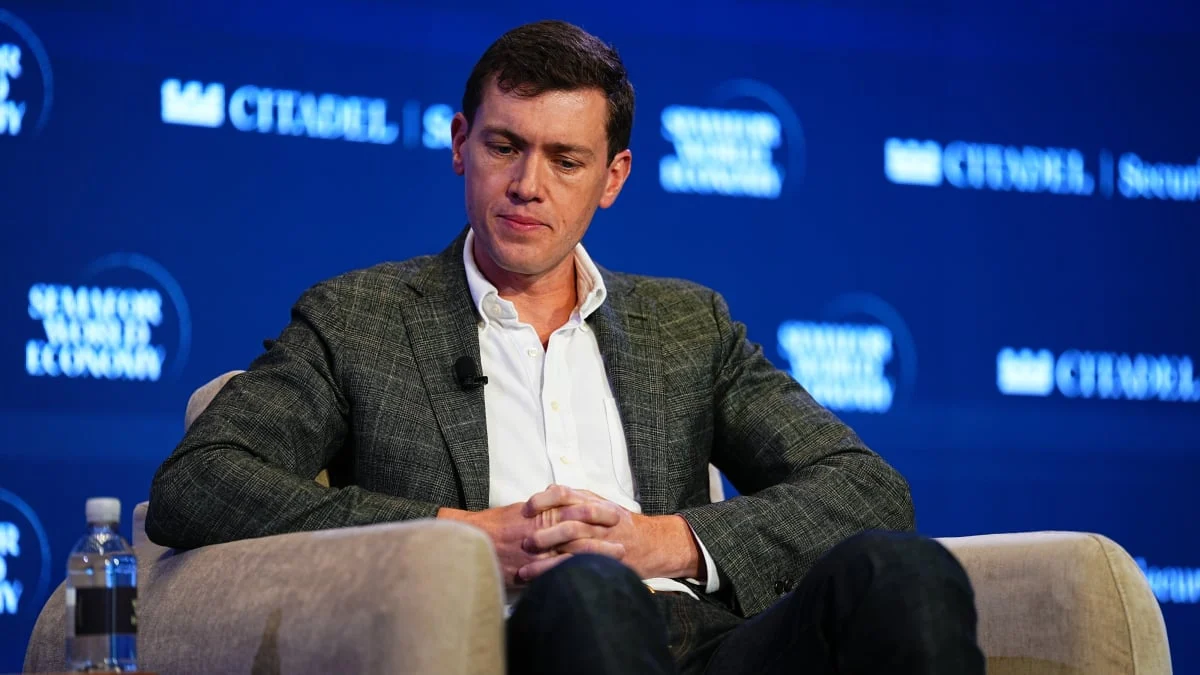
John Wren, Chairman and CEO of Omnicom, has been vocal about the necessity of this merger in a world where client demands are shifting toward "all-in-one" technology solutions.
"With our integration nearly complete and our portfolio of companies and operations streamlined, we’re focused on high-demand services and are well positioned to pursue future growth," Wren stated during the earnings call.
Wren emphasized that the next phase of Omnicom’s journey is not just about cost-cutting—it is about "agentic technology." This refers to AI systems capable of performing multi-step tasks with autonomy, a sector where Omnicom is betting its future relevance. By integrating these tools into the workflow, Wren believes Omnicom can offer clients unprecedented levels of efficiency, provided the company can maintain its creative edge.
Implications for the Advertising Industry
Omnicom’s results provide a blueprint for how large agency groups are attempting to stay relevant in an era dominated by tech giants and AI-driven platforms.
The "Efficiency vs. Creativity" Dilemma
The central challenge for Omnicom, and indeed the entire holding company model, is ensuring that the drive for $900 million in cost savings does not hollow out the creative culture that made these agencies successful in the first place. When an organization cuts real estate and restructures departments, it risks losing the very talent that drives "big idea" advertising.
The Rise of Agentic Technology
Omnicom’s commitment to investing in agentic AI is a clear signal to the market. Agencies can no longer rely on manual labor for routine tasks like media buying or performance reporting. By automating these via agentic systems, Omnicom hopes to free up its human talent for high-value strategic work. While the company has yet to quantify exactly how much revenue this technology has generated, its inclusion in the CEO’s forward-looking statements confirms it is the company’s "North Star."
The "Reported vs. Core" Duality
For investors, the distinction between reported and core figures is vital. The reported figures capture the "new" Omnicom—a massive, consolidated force. The core figures capture the "performance" of that force. The fact that organic growth is accelerating alongside margin expansion suggests that the IPG acquisition was not a "lazy" growth strategy, but an operational one.
Conclusion: The Long Road Ahead
The integration of IPG into the Omnicom ecosystem is, by all traditional metrics, ahead of schedule. However, the true test lies in the transition from integration to innovation.
Achieving $900 million in cost synergies by 2026 is a concrete financial target, but in the creative industries, the numbers only tell half the story. The company must now prove that its leaner, more tech-heavy structure can consistently produce award-winning work that justifies the premium fees its clients expect.
As Omnicom moves into the final stages of this merger, it stands as a litmus test for the industry. If Omnicom can sustain this momentum, it may well prove that in the age of AI and massive data complexity, the best way to serve a client is to be the biggest, most efficient room in the industry—provided that the soul of the creative work remains intact. The next year will be defined by whether the group can turn these operational efficiencies into a lasting competitive advantage that transcends the balance sheet.