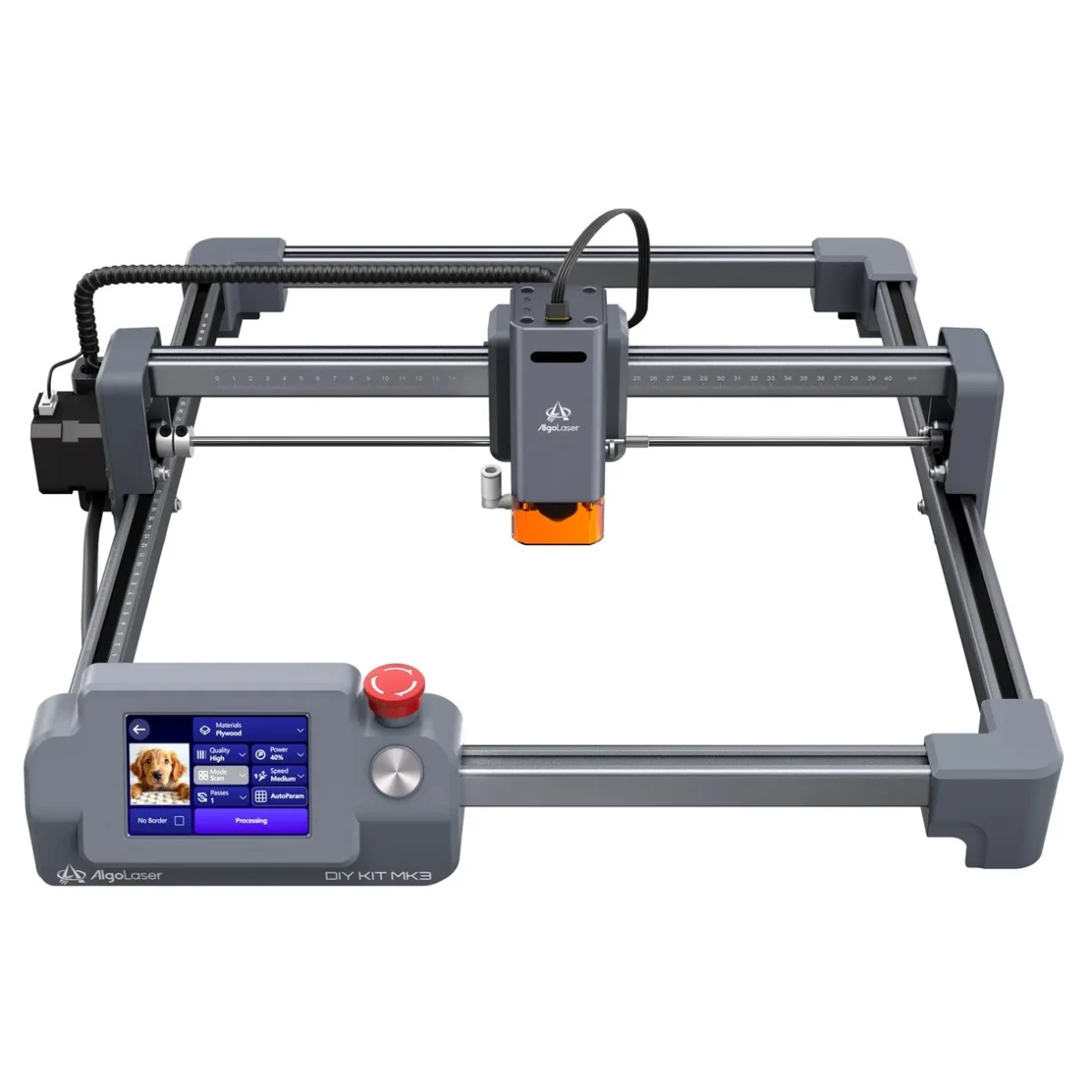
For the modern maker, the transition from hobbyist tinkering to small-scale production often hinges on a single, critical investment: the desktop laser engraver. As the market becomes increasingly saturated with "plug-and-play" promises, the AlgoLaser DIY KIT MK3 enters the fray at a competitive $569 price point. Positioned as an accessible, gantry-style diode laser, it targets a demographic that values efficiency and ease of use. However, beneath its polished, pre-assembled exterior lies a machine that—like all tools of its class—requires a disciplined approach to safety, calibration, and environmental management.
Main Facts: What is the AlgoLaser DIY KIT MK3?
The AlgoLaser DIY KIT MK3 is an open-frame diode laser system designed to bring industrial-style engraving and cutting capabilities into the home or small workshop. With a generous 400 x 400 mm work area, it is sufficiently sized for a variety of tasks, ranging from intricate personalized gifts and signage to batches of promotional coasters and custom craft components.
The machine’s versatility is defined by its modular power options. Available in 8W, 15W, and 20W configurations, the system allows users to tailor their purchase to their specific production needs. While the 8W model serves as an ideal entry point for light engraving, the 15W unit (used in this assessment) and the robust 20W version offer the cutting headroom required for thicker, more demanding materials.
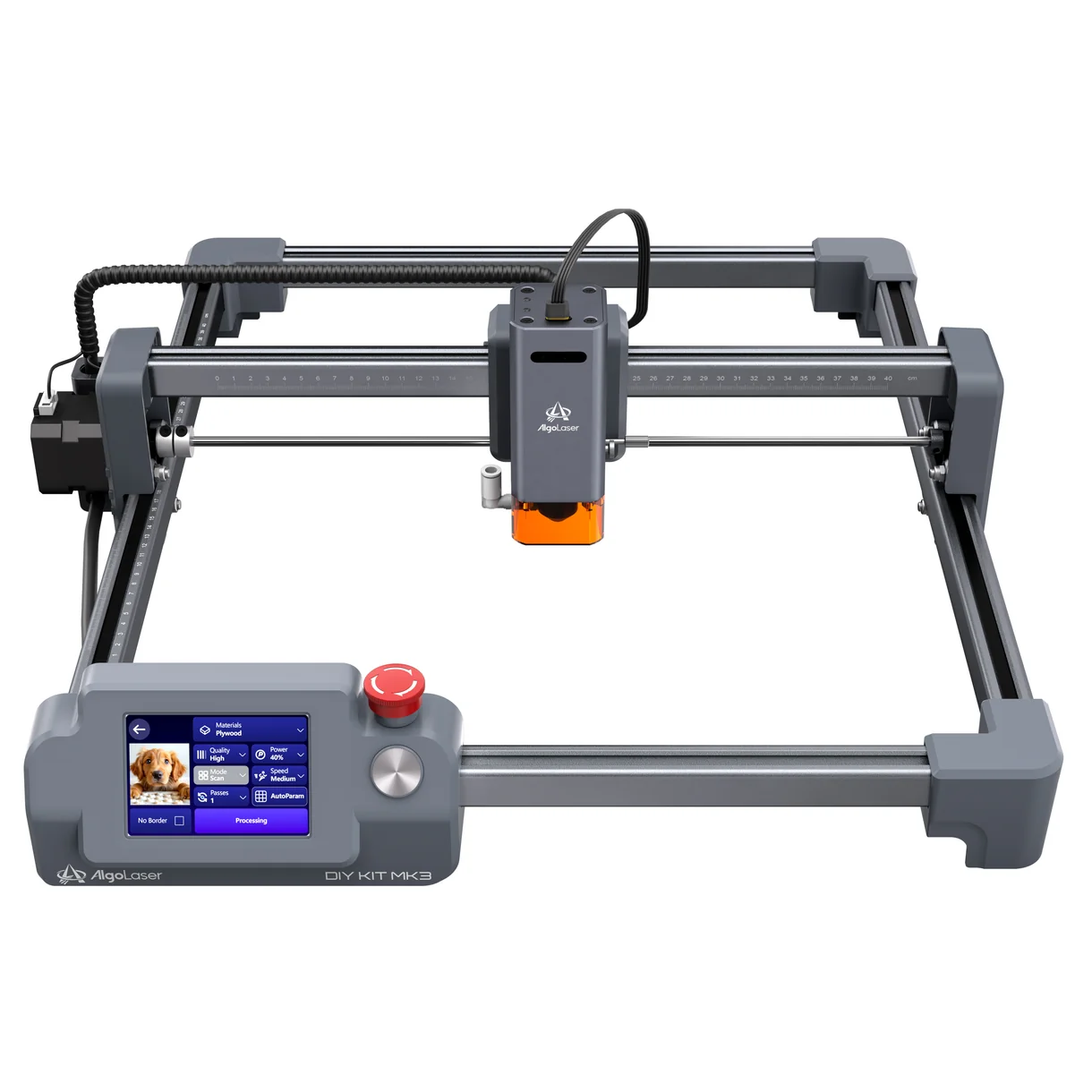
Beyond the raw power of the laser module, the MK3 distinguishes itself through its onboard interface. By incorporating a dedicated touchscreen and the proprietary AlgoOS, the machine allows users to execute jobs directly from the hardware, effectively detaching the laser from a permanent, tethered computer connection. This design philosophy is clearly aimed at reducing the "software friction" that often discourages beginners.
Chronology: From Unboxing to Operation
The journey with the MK3 begins with a shipping experience that favors convenience. Unlike many kit-based laser systems that arrive as a pile of aluminum extrusions and loose fasteners, the MK3 arrives approximately 95% pre-assembled.
- Assembly (The First Hour): The setup process is streamlined into five clear stages. While the instructions are generally intuitive, users should exercise caution; the process can occasionally veer into "IKEA-level" complexity, where simple steps require precision. It is essential to resist the temptation to rush, as mechanical integrity is the bedrock of laser accuracy.
- Mounting and Calibration: Once assembled, the machine requires a stable, permanent home. Because it lacks an enclosure, the MK3 is best suited to a dedicated workbench. The installation of the anodized aluminum cutting plates is a critical step; if the surface is not perfectly level or the machine is not securely fastened, the gantry’s movement will suffer.
- Mechanical Tuning: During our testing, we discovered that even a "pre-assembled" machine requires human intervention. The eccentric rollers—the components that allow the laser module to slide smoothly along the rails—must be tensioned correctly. Neglecting this leads to classic mechanical failures, such as circles rendered as ovals or erratic, jittery lines during engraving.
- Software Integration: While the touchscreen handles basic operations, more complex projects require software like Lightburn or LaserGRBL. The transition from the onboard touchscreen to desktop software is relatively fluid, provided the user has a stable USB connection.
Supporting Data and Technical Performance
The effectiveness of a diode laser is dictated by a synergy of speed, focus, and environmental variables. AlgoLaser advertises speeds of up to 15,000 mm/min, a figure that is theoretically achievable but practically dependent on the material and the specific laser module being utilized.

The Role of Power and Air Assist
Our tests confirm that power is not a panacea for poor technique. The 15W module provides significant utility for cutting thin plywood, but the quality of the "kerf" (the cut width) and the edge charring are heavily influenced by the air-assist system. When an air pump is utilized, the debris is cleared from the cut path instantly, resulting in cleaner, sharper edges. Without it, the laser effectively "burns" through the material, leaving behind unwanted carbon deposits and increasing the risk of flare-ups.
Stability as a Performance Metric
A significant finding during our evaluation was the correlation between physical stability and output consistency. During high-speed passes, any micro-vibration in the workbench is amplified in the engraving. In our trials, inconsistent results were traced back to the mounting surface. To maximize the MK3’s capabilities, users should treat the machine as a precision instrument, ensuring the base is rigid and the belt tensions are verified periodically.
Connectivity Limitations
While the touchscreen is a welcome feature for job management, the wireless functionality leaves room for improvement. The machine operates on a 2.4GHz Wi-Fi band, which, while standard, proved less reliable than a hardwired USB connection during complex job transfers. For firmware updates, the wireless connection is adequate, but for high-resolution, long-duration projects, the stability of a physical cable is far superior.
Official Responses and Manufacturer Positioning
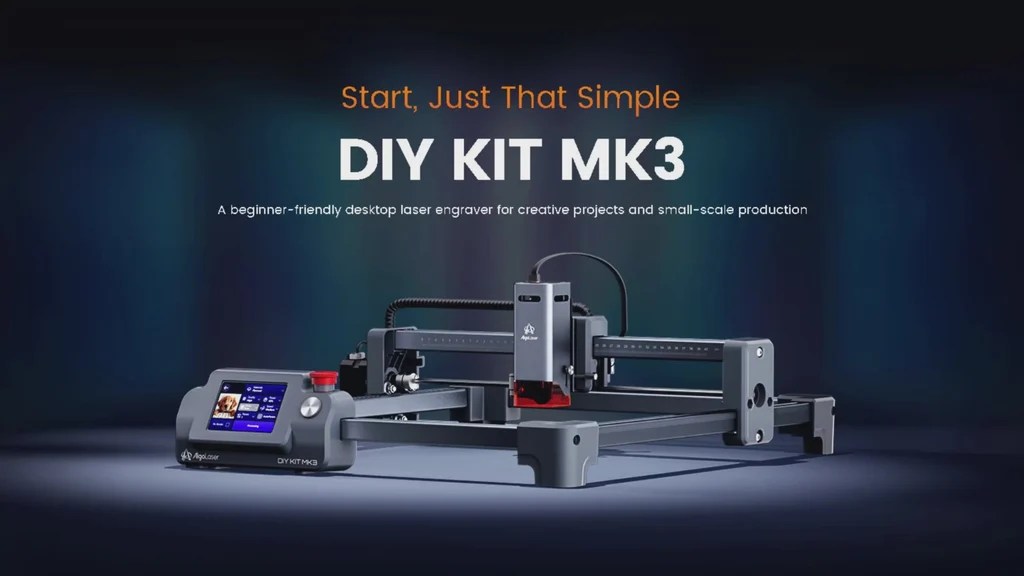
AlgoLaser has marketed the DIY KIT MK3 as a "low barrier to entry" machine. Their promotional literature emphasizes that the machine is intended to get makers "started" immediately. By removing the burden of complex assembly, the manufacturer is clearly addressing the common frustration among newcomers who find the DIY assembly process for CNC machines daunting.
In response to inquiries regarding the lack of an enclosure, the company notes that the open-frame design is a trade-off for modularity and cost. By not building the machine into a heavy, integrated box, the manufacturer keeps the shipping weight manageable and the retail price accessible. They encourage users to construct their own safety solutions—a standard practice in the maker community—though they do provide clear documentation on the necessity of external ventilation.
Implications for the Maker Community
The introduction of the AlgoLaser DIY KIT MK3 carries several implications for the current landscape of desktop manufacturing.

Safety First
The most pressing implication is the responsibility placed on the user. Because the MK3 is an open-frame laser, it does not inherently contain smoke, debris, or stray laser light. Prospective buyers must understand that the "out-of-the-box" experience is not a "plug-and-play" experience in terms of safety. An investment in a fire-safe enclosure and an active exhaust system is not an optional add-on; it is a fundamental requirement for indoor operation.
The Learning Curve vs. The "Turnkey" Promise
The MK3 successfully lowers the mechanical learning curve. A user can go from unboxing to engraving in a fraction of the time required by traditional, fully-disassembled kits. However, it does not eliminate the process learning curve. A user must still master material science: understanding that laser power settings for Baltic birch will differ vastly from those for basswood or leather. The machine provides the tool, but the user must provide the expertise.
Growth Potential
Perhaps the most significant strength of the MK3 is its compatibility with open-source software like Lightburn. By supporting these industry-standard applications, AlgoLaser ensures that users are not trapped within a walled garden. As a maker’s skills evolve, they can perform more advanced functions—such as dithering, vector manipulation, and complex layer sequencing—without needing to upgrade their hardware.

Final Assessment
The AlgoLaser DIY KIT MK3 is a compelling, if imperfect, addition to the budget laser market. It occupies a space between the ultra-cheap, highly volatile import kits and the expensive, professional-grade enclosed systems.
Strengths:
- Reduced Assembly: The 95% pre-assembled frame significantly lowers the entry barrier.
- Interface: The touchscreen provides a refreshing, tactile way to run basic jobs without the distraction of a computer.
- Versatility: The choice of laser modules (8W/15W/20W) allows for targeted investment based on the user’s project scope.
- Software Compatibility: Full support for industry-leading software ensures long-term viability for the user.
Challenges:

- Safety Requirements: The open-frame design necessitates an external enclosure and ventilation system for indoor use.
- Environmental Sensitivity: The machine is sensitive to physical stability; it requires a rigid, level surface to avoid mechanical errors.
- Maintenance: Users must be prepared to calibrate roller tension and adjust settings for various material thicknesses.
For the hobbyist, the craft entrepreneur, or the workshop-based maker, the AlgoLaser DIY KIT MK3 offers a high-value platform. It is a machine that rewards patience and careful setup with consistent, professional-looking results. While it is not a "magic button" that requires no knowledge, it provides the essential hardware foundation for a maker to produce, experiment, and grow. As with any precision tool, the quality of the output will always be a reflection of the care taken in the setup, and in that regard, the MK3 is a capable partner in the creative process.