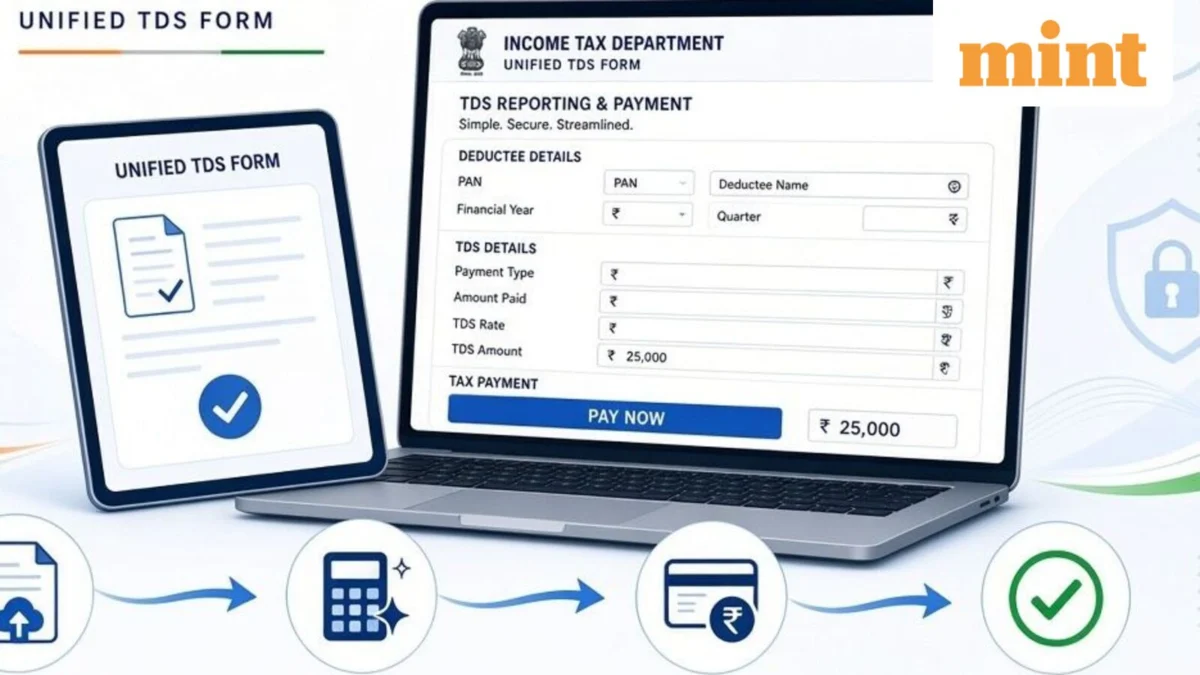
NEW DELHI, October 23, 2026 – In a significant stride towards simplifying tax administration and enhancing compliance, the Indian Income Tax Department has officially rolled out Form 141, a consolidated challan-cum-statement designed to streamline the reporting and payment of Tax Deducted at Source (TDS) for a range of critical transactions. This landmark introduction, effective under the progressive Income Tax Act, 2025, marks a pivotal shift from the previous fragmented system, promising a more efficient and taxpayer-friendly experience.
The newly introduced Form 141 serves as a unified mechanism, replacing a quartet of distinct forms – namely Forms 26QB, 26QC, 26QD, and 26QE – which previously operated under the now-superseded Income Tax Act, 1961. Its primary objective is to bring clarity and ease to TDS compliance for transactions involving immovable property, rent payments, remunerations to contractors and professionals, and the increasingly prevalent transfers of Virtual Digital Assets (VDAs). While hailed as a major simplification, taxpayers must note that a single Form 141 is not a blanket solution for all transaction types; a separate filing is still required for each distinct category.
The Genesis of a Unified System: A Chronological Look at TDS Evolution
India’s tax landscape has continuously evolved, with a consistent push towards digitization and simplification. The concept of Tax Deducted at Source has long been a cornerstone of the country’s revenue collection mechanism, ensuring that tax is collected at the very point of income generation. Historically, compliance for various transactions involving TDS has often been complex, requiring taxpayers to navigate multiple forms and procedures.
Under the Income Tax Act, 1961, specific transactions required dedicated forms for TDS reporting. For instance:
- Form 26QB was mandatory for reporting TDS on the transfer of immovable property.
- Form 26QC was used for TDS on rent paid by individuals or Hindu Undivided Families (HUF) exceeding a certain threshold.
- Form 26QD covered TDS on payments to contractors and professionals by individuals or HUFs.
- Form 26QE was specifically introduced to address the emerging asset class of Virtual Digital Assets, requiring TDS on their transfer.
While these forms served their purpose, the proliferation of distinct reporting requirements often led to administrative burden, potential errors, and a fragmented view for both taxpayers and the tax department. The transition to the Income Tax Act, 2025, provided a fresh impetus to re-evaluate and modernize these processes. The introduction of Form 141 is a direct outcome of this legislative overhaul, reflecting the government’s commitment to leveraging technology and legislative reforms to foster a more transparent and efficient tax ecosystem. This move is a strategic step forward, consolidating multiple reporting requirements into a single, comprehensive framework under the new Act. The timing of its introduction in late 2026 suggests a well-considered implementation following the enactment of the new legislative framework.
Supporting Data: Deep Dive into Form 141’s Structure and Scope
Form 141 is not merely a name change; it represents a thoughtful restructuring of TDS reporting, designed to cater to diverse transaction categories while maintaining an underlying unity. The form is structured with four distinct schedules, each meticulously crafted to address a specific type of transaction, ensuring clarity and accuracy in reporting.
What Form 141 Replaces and Why it Matters:
The consolidation of Forms 26QB, 26QC, 26QD, and 26QE into Form 141 under the Income Tax Act, 2025, is a significant procedural simplification. Previously, a taxpayer engaged in, for example, both paying high rent and purchasing a property, would have to file two separate forms (26QC and 26QB). Now, while still requiring separate filings per category, the unified interface of Form 141 provides a consistent user experience and reduces the cognitive load associated with different form structures.
Key Features and Filing Mechanism:
- Consolidated Challan-cum-Statement: Form 141 integrates both the challan (for tax payment) and the statement (for reporting transaction details), simplifying the entire process.
- Online Filing: The form must be filed exclusively through the taxpayer’s PAN-based login on the Income Tax Department’s e-Filing portal, reinforcing the digital-first approach to tax administration.
- Resident Deductees Only: Crucially, the department has specified that Form 141 applies only to resident deductees. This means that transactions involving non-resident sellers or recipients may still require adherence to different, specific TDS provisions and forms, necessitating careful verification of official instructions for such cases.
- Single Category Per Filing: A vital detail for taxpayers is that Form 141 permits the reporting of only one type of transaction per filing. For instance, if an individual needs to report TDS on rent payments and also on the sale of immovable property, two separate instances of Form 141 must be submitted, each selecting the relevant schedule.
- Multiple Deductees within a Single Filing (Conditional): While distinct transaction categories require separate forms, the department has allowed for the inclusion of multiple deductees within a single Form 141, provided two strict conditions are met:
- All deductees belong to the same deductee category (e.g., all are individuals, or all are HUFs).
- The month of deduction is identical for all included deductees.
This nuanced approach aims to strike a balance between comprehensive unification and maintaining granular data for specific transaction types.
Understanding the Four Schedules of Form 141:
Each schedule within Form 141 is tailored to a specific type of transaction, outlining the details required for accurate TDS reporting:

-
Schedule A – Rent Payments:
- Scope: This schedule specifically addresses TDS on rent payments made by an individual or a Hindu Undivided Family (HUF). It consolidates the reporting requirements previously handled by Form 26QC.
- Context: Typically, this applies when the monthly rent paid by an individual or HUF exceeds a certain threshold (e.g., ₹50,000 per month, as per previous regulations, which are likely carried forward or adjusted under the new Act).
- Impact: It formalizes a significant segment of the rental economy, ensuring that high-value rent transactions are brought under the tax net, providing crucial data for both landlords and tenants. The deductor (tenant) is responsible for deducting and depositing the tax, furnishing proof to the deductee (landlord).
-
Schedule B – Immovable Property Transfers:
- Scope: This schedule is dedicated to reporting TDS on the transfer of immovable property. It replaces the erstwhile Form 26QB.
- Context: This provision typically applies when the consideration for the transfer of immovable property (excluding agricultural land) exceeds a specified amount (e.g., ₹50 lakhs under the previous regime). The buyer is responsible for deducting TDS (typically 1%) from the payment made to the seller.
- Impact: This schedule plays a critical role in curbing unaccounted transactions in the real estate sector. By requiring TDS at the point of sale, it enhances transparency, helps track high-value transactions, and provides early revenue to the government.
-
Schedule C – Contractor and Professional Payments:
- Scope: Designed for individuals and HUFs, this schedule covers TDS on payments made to contractors or professionals. It subsumes the functions of the former Form 26QD.
- Context: This applies when individuals or HUFs, not subject to tax audit, make payments to contractors for carrying out work or to professionals for rendering services, exceeding a specified annual threshold. Examples include payments to interior designers, architects, consultants, or even for specific contract work at home.
- Impact: This helps formalize the informal economy surrounding services and contracts, ensuring that income earned by contractors and professionals from individuals and HUFs is subject to tax deduction at source, leading to better compliance and data matching.
-
Schedule D – Virtual Digital Assets (VDAs):
- Scope: This is a forward-looking schedule, covering TDS on transfers of Virtual Digital Assets (VDAs) by an individual or HUF. It consolidates the reporting previously handled by Form 26QE.
- Context: With the rapid growth of the digital asset economy, the government introduced provisions to tax VDAs. This schedule formalizes the TDS requirement on the transfer of such assets (e.g., cryptocurrencies, NFTs), typically at a rate of 1% on the consideration paid, when certain thresholds are met.
- Impact: This schedule is crucial for bringing the burgeoning VDA market under the ambit of tax compliance. It aims to create a transparent framework for digital asset transactions, track capital gains, and ensure that a portion of the tax is collected at the source, addressing the unique challenges posed by this new asset class.
Official Responses and Departmental Vision
The Income Tax Department has consistently articulated its vision for a "faceless, paperless, and cashless" tax administration. The introduction of Form 141 aligns perfectly with this overarching goal.
"The unified Form 141 is a testament to our ongoing commitment to simplifying the tax compliance landscape for Indian citizens," an official spokesperson from the Income Tax Department stated, emphasizing the strategic intent behind the reform. "By consolidating multiple reporting requirements into a single, intuitive framework, we aim to significantly reduce the administrative burden on taxpayers. Our objective is to make TDS reporting and payment easier, thereby providing a more streamlined and positive filing experience."
The department further highlighted that this unification is expected to lead to:
- Reduced Compliance Cost: For both taxpayers and the department, by minimizing the number of distinct forms and associated procedures.
- Improved Data Accuracy: A unified system can lead to better data validation and fewer errors in reporting, as taxpayers interact with a single interface.
- Enhanced Transparency: Centralized data collection on specified transactions offers the department a more comprehensive view, aiding in better tax enforcement and policy formulation.
- Digital Transformation: Reinforces the government’s digital agenda, encouraging taxpayers to adopt online filing mechanisms.
The department also confirmed its plans for extensive taxpayer outreach and educational campaigns to ensure a smooth transition and widespread understanding of Form 141’s functionalities and requirements.
Implications: A Broader Look at Impact
The introduction of Form 141 carries significant implications across various stakeholders and the broader economy.
For Taxpayers (Deductees and Deductors):
- Simplified User Experience: For individuals and HUFs involved in the specified transactions, the unified interface of Form 141 promises a more consistent and potentially less confusing filing process. The online portal will guide them through selecting the relevant schedule.
- Need for Awareness: While simplified, the nuance of filing a separate form for each transaction category (despite being the same Form 141) is critical. Taxpayers must be educated to avoid common errors. The conditions for including multiple deductees (same category, same month of deduction) also require careful attention.
- Enhanced Accountability: Deductors will find the process of compliance more integrated, but the responsibility to deduct and deposit tax correctly remains paramount. Deductees will benefit from more accurate and timely TDS credit in their Form 26AS/AIS.
- Access to Information: The digital nature of filing and the consolidated data will likely provide taxpayers with better access to their TDS history and status.
For the Income Tax Department:
- Improved Data Analytics: A unified form facilitates better data collection and analysis. The department can gain deeper insights into transaction patterns in real estate, rental markets, service contracts, and the burgeoning VDA sector.
- Efficient Compliance Monitoring: With a streamlined reporting mechanism, the department can more effectively monitor compliance, identify non-filers, and detect discrepancies, leading to targeted interventions.
- Reduced Administrative Burden: Long-term, the unification is expected to reduce the manual processing and reconciliation efforts previously associated with managing multiple forms, freeing up resources for more strategic initiatives.
- Policy Formulation: The enhanced data repository can inform future tax policy decisions, ensuring that legislative changes are based on real-time transactional insights.
Broader Economic and Societal Impact:
- Formalization of Transactions: By simplifying TDS compliance, Form 141 encourages more individuals and HUFs to report their transactions, contributing to the formalization of economic activities in sectors like real estate, rental housing, and the gig economy.
- Combating Black Money: The continued focus on TDS, especially in high-value transactions like property transfers and VDAs, is a potent tool in combating the generation and circulation of black money.
- Digital Economy Integration: The explicit inclusion of Virtual Digital Assets underscores India’s proactive approach to integrating emerging digital economies into the traditional tax framework, ensuring fairness and revenue collection from new forms of wealth.
- Enhanced Transparency: Overall, the reform fosters greater transparency across various economic activities, which is vital for a healthy and equitable tax system. It builds on India’s global reputation for digital public infrastructure.
The Road Ahead: Continuous Evolution
The introduction of Form 141 under the Income Tax Act, 2025, is not merely an isolated procedural change but a vital component of India’s ongoing journey towards a modern, efficient, and transparent tax administration. As the nation continues its digital transformation, such reforms are crucial for fostering a culture of compliance and ensuring that the tax system remains responsive to the evolving economic landscape. While the initial phase may present some learning curves for taxpayers, the long-term benefits of a unified, streamlined TDS reporting system are poised to significantly enhance the ease of doing business and personal finance management across the country. The Income Tax Department’s commitment to continuous improvement suggests that Form 141 is a significant step, but not the last, in the evolution of India’s tax compliance framework.