BHUBANESWAR – In a significant boost to the eastern state’s economic roadmap, Odisha Chief Minister Mohan Charan Majhi returned to the state capital on Friday, October 23, 2026, with a transformative industrial mandate. Following a high-stakes two-day delegation at the ‘India Chem 2026’ summit in Mumbai, the Chief Minister announced that Odisha has successfully secured investment proposals totaling a staggering ₹53,893.51 crore.
This capital infusion, aimed at diversifying the state’s industrial base beyond its traditional mineral-rich foundations, is projected to generate over 20,000 direct and indirect employment opportunities. The success of the Mumbai mission marks a pivotal moment in Odisha’s transition toward becoming a specialized hub for chemicals, petrochemicals, and downstream industrial manufacturing.
The Core Statistics: A New Era of Investment
The figures emerging from the Mumbai summit underscore a robust appetite among global and domestic corporations for Odisha’s burgeoning industrial ecosystem. According to the data provided by the Chief Minister’s Office, the state secured:
- Total Investment Proposals: ₹53,893.51 crore.
- Total Employment Potential: 20,210 jobs.
- Strategic Agreements: Nine Memorandums of Understanding (MoUs) totaling ₹51,443.51 crore and four expressions of investment intent amounting to ₹2,450 crore.
The largest individual commitment came from NLC India Ltd, which has proposed a massive ₹36,763.51 crore investment spanning the chemicals and power sectors. Additionally, infrastructure giant Larsen & Toubro (L&T) committed to an ₹8,100 crore project, solidifying its presence in the region.
Chronology of the Mumbai Mission
The Chief Minister’s visit was meticulously planned to maximize networking and policy advocacy.
Day 1: Establishing the Narrative
Upon arrival in Mumbai, CM Majhi immediately shifted into high gear, prioritizing outreach to captains of industry. The first day was characterized by intense one-on-one sessions, where the focus was not merely on seeking capital, but on showcasing Odisha’s "ease of doing business" reforms and infrastructure readiness. The delegation highlighted the strategic advantage of Odisha’s ports, its vast land banks for industrial parks, and the abundance of raw materials essential for the chemical sector.
Day 2: Closing the Deals
The second day focused on the formalization of partnerships. The signing of the nine MoUs took place against the backdrop of the India Chem 2026 platform, providing a high-visibility stage for the state. Beyond the formal agreements, the Chief Minister held 25 individual meetings with representatives from global firms based in the United States and the European Union, alongside domestic industrial heavyweights like POSCO India and JSW.
The Return and Announcement
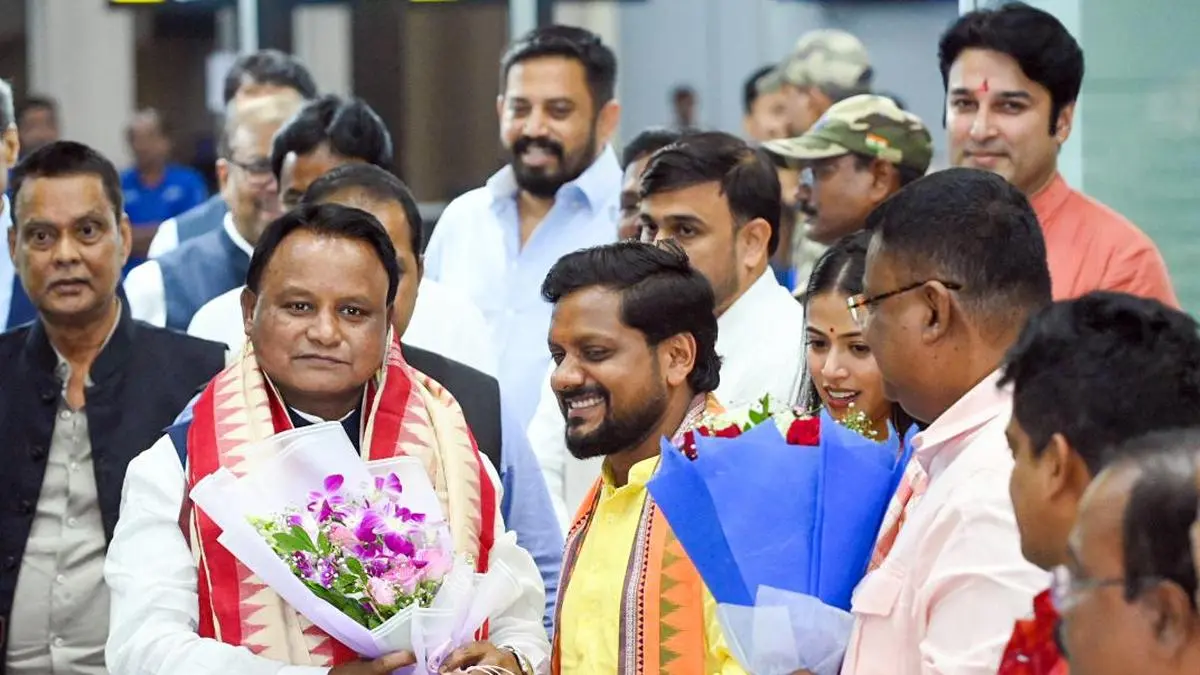
On Friday, October 23, CM Majhi was greeted by a spirited reception at Biju Patnaik International Airport. Addressing the media, he emphasized that this trip was not just about the numbers, but about the long-term vision for the state’s economy. The crowning announcement of his return was the confirmation that Odisha would host the next edition of the India Chem summit, a move aimed at positioning Bhubaneswar as a national center for chemical discourse and policy-making.
Strategic Significance: Shifting from Metal to Molecules
Historically, Odisha’s economic narrative has been defined by its mineral wealth—steel, iron ore, and aluminum. While these remain the bedrock of the state’s GDP, the current administration is aggressively pivoting toward a more sophisticated, value-added industrial model.

The Chemical and Petrochemical Pivot
The chemical sector is capital-intensive and requires a sophisticated logistics chain. By incentivizing companies to set up base in Odisha, the government aims to create a circular economy where the by-products of the metal industries are repurposed into chemical feedstock.
"We are building an integrated industrial ecosystem," CM Majhi explained. "By bridging the gap between our metal industries and the chemical/petrochemical sector, we are moving up the value chain. This is the cornerstone of our contribution to the Atmanirbhar Bharat vision—replacing imports with domestic production capacity."
Strengthening the L&T Partnership
A highlight of the visit was the strengthening of ties with L&T. The Chief Minister extended a personal invitation to the firm to expand its manufacturing footprint in eastern India. "Odisha is prepared to be a major growth partner for L&T," Majhi stated. "We are inviting them to explore new frontiers in chemicals and petrochemicals, which will further cement their presence in our state’s engineering and technology sector."
Supporting Data and Stakeholder Analysis
The success of the India Chem 2026 outreach is not an isolated incident but the result of sustained policy advocacy.
- NLC India’s Role: By committing over ₹36,000 crore, NLC India has effectively become the anchor investor for Odisha’s new chemical-power corridor. This project is expected to stabilize power supply for downstream industries, reducing overheads for smaller manufacturers.
- FICCI and Central Government Synergy: The Chief Minister was quick to acknowledge the role of Union Chemicals and Fertilisers Minister JP Nadda. The collaborative effort between the state government, the Union ministry, and the Federation of Indian Chambers of Commerce and Industry (FICCI) proved critical in streamlining the negotiation process for potential investors.
Implications for the State’s Economic Future
The influx of ₹53,893 crore represents a massive validation of Odisha’s governance model. The implications are multi-fold:
- Job Creation: The commitment of 20,210 jobs is a significant step toward addressing unemployment in the state. The focus on high-skill manufacturing sectors will require a corresponding investment in vocational training and technical education within Odisha’s universities.
- Infrastructure Upgrades: To support a robust chemical industry, the state will need to expedite work on dedicated chemical industrial zones, which will require specialized effluent treatment plants (ETPs) and hazardous waste management systems.
- Global Integration: By attracting firms from the EU and the US, Odisha is signaling its openness to global standards of environmental and safety compliance. This will make the state more attractive to foreign direct investment (FDI) in the long run.
- Regional Hegemony: Hosting the next India Chem event will solidify Bhubaneswar’s reputation as a business-friendly city, attracting further interest from ancillary industries that thrive around large summits.
Official Response and Looking Ahead
Reflecting on the successful visit, the Chief Minister reiterated that the work is only just beginning. "Our focus now shifts to the implementation phase," he noted. "The signing of an MoU is just the first step. My government is committed to ensuring that the project approval process is seamless and that these investments translate into ground-level activity as quickly as possible."
The state government is expected to set up a dedicated "Investment Facilitation Task Force" to monitor the progress of these 13 projects. This body will be responsible for addressing any bottlenecks in land acquisition, utility connectivity, or environmental clearance, ensuring that the momentum generated in Mumbai is maintained.
As the state looks toward the future, the integration of chemical manufacturing into the broader Odisha industrial story seems inevitable. With the government’s proactive stance and the massive private sector interest, Odisha is well-positioned to become the next industrial powerhouse of India, moving steadily from the extraction of resources to the creation of value.
The successful conclusion of the Mumbai delegation serves as a testament to the state’s resilience and its ambitious trajectory for the year 2026 and beyond. By fostering a climate of trust and providing the necessary infrastructure, the current administration is not just chasing investment—it is curating a long-term industrial legacy.