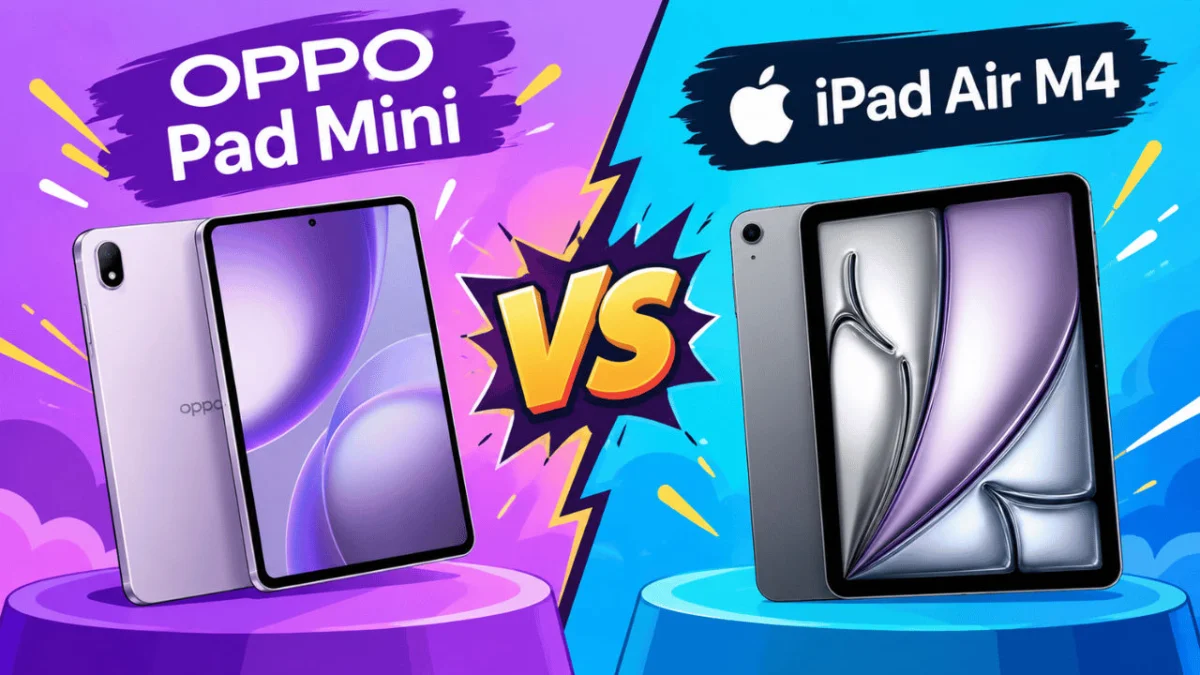
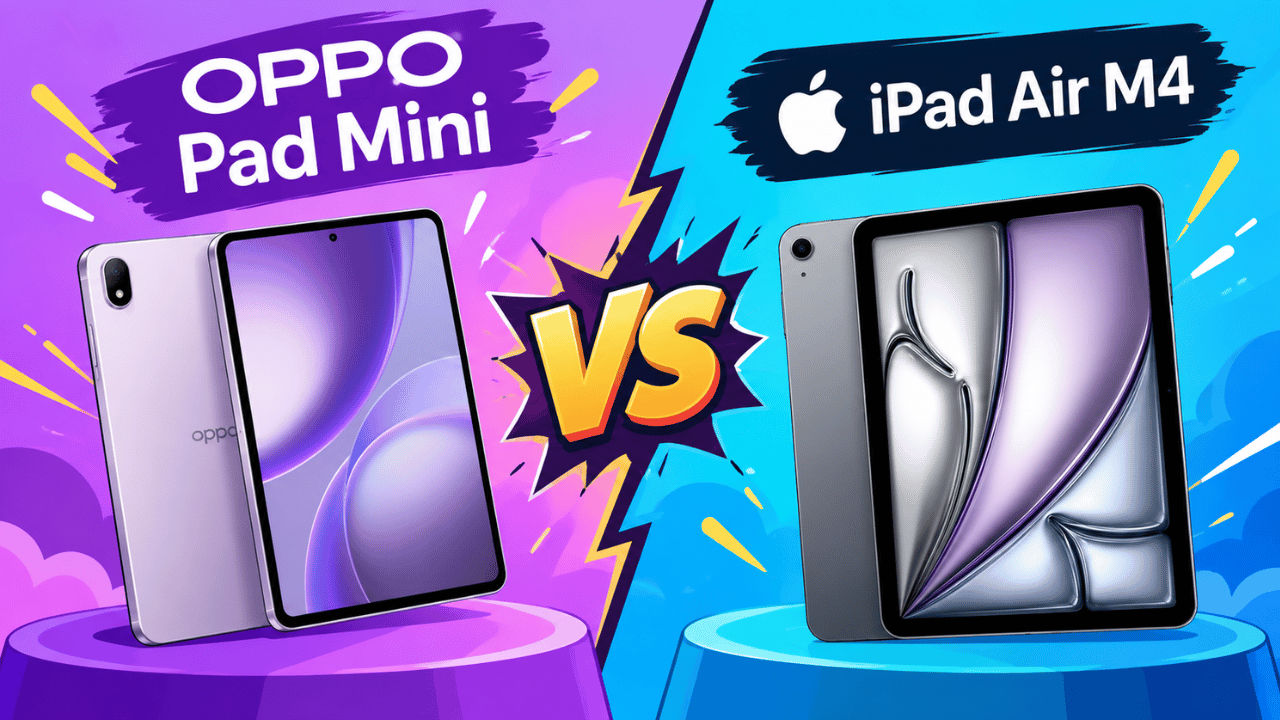
The premium tablet landscape in India has witnessed a significant shift with the recent launch of the Oppo Pad Mini. Introduced alongside the flagship Find X10 series, this device represents Oppo’s most ambitious attempt to capture the high-end tablet segment—a territory long dominated by Apple’s iPad lineup. Specifically, the Oppo Pad Mini enters the fray with a price tag of Rs 94,999, positioning it directly against the 11-inch Apple iPad Air powered by the formidable M4 chip.
This comparison explores the technical nuances, performance benchmarks, and value propositions of these two devices, providing a comprehensive guide for consumers navigating the sub-Rs 1,00,000 tablet market.
1. Chronology of the Market Entry
The Indian tablet market has traditionally been bifurcated: budget-friendly Android tablets at the lower end and the iPad Pro/Air at the premium end. However, the mid-to-high-tier "compact" segment has seen a resurgence.
- Apple’s Move: Earlier this year, Apple refreshed its iPad Air lineup, introducing the M4 processor—a chip originally reserved for the Pro models. This move solidified the iPad Air as a productivity powerhouse for those who did not require the Pro’s Tandem OLED display but wanted desktop-class performance.
- Oppo’s Counter-Strike: In late 2024, during the Find X10 series launch event, Oppo unveiled the Pad Mini. This wasn’t just another Android tablet; it was a high-spec "mini" device designed to fill the void left by the aging iPad Mini 6 and to compete with the rumored upcoming iPad Mini OLED.
- The Price Collision: By pricing the Pad Mini at Rs 94,999, Oppo has made a bold statement. It is no longer competing on price alone but on specialized hardware features like display technology and charging speeds, challenging the base iPad Air M4 (starting at Rs 89,900) for the wallets of Indian professionals and gamers.
2. Display and Design: Portability vs. Screen Real Estate
The most immediate difference between these two devices lies in their form factor and display philosophy.
Oppo Pad Mini: The Compact Visual King
The Oppo Pad Mini is built for one-handed use and high-fidelity visuals. It features an 8.8-inch 2.5K OLED display. What sets it apart is the 144Hz refresh rate, providing a level of fluidity that the standard iPad Air lacks.
- Brightness: With a staggering 3,200 nits peak brightness, the Pad Mini is designed to be legible even under direct Indian sunlight.
- Finish: It includes a matte coating to reduce reflections, making it an ideal device for outdoor reading and gaming.
- Portability: At just 5.5 mm thickness and a weight of 279g, it is significantly lighter and thinner than its competitor, catering to users who prioritize mobility.
Apple iPad Air M4: The Productivity Canvas
The iPad Air takes a more traditional approach with its 11-inch IPS LCD (Liquid Retina) screen. While it lacks the infinite contrast of OLED and the high refresh rate (sticking to a standard 60Hz), it offers a larger canvas for multitasking.
- Brightness: It reaches 500 nits, which is standard for indoor professional use but pales in comparison to the Oppo’s peak levels.
- Build: The 11-inch Wi-Fi model weighs 464g and is 6.1mm thick. While still sleek, it is a "two-handed" device compared to the Oppo.
3. Performance and Software: Mobile Agility vs. Desktop Power
Under the hood, these tablets represent two different architectural philosophies.
Silicon and RAM
- The M4 Factor: The iPad Air is powered by Apple’s M4 chip. This is a desktop-class processor capable of handling intense video editing (LumaFusion, Final Cut Pro) and complex 3D rendering. It is paired with 12GB of RAM, ensuring that the "iPadOS" experience remains smooth even under heavy workloads.
- Snapdragon Supremacy: The Oppo Pad Mini utilizes the Qualcomm Snapdragon 8 Gen 5. While it is one of the most powerful mobile chips available, it is generally optimized for mobile efficiency and high-end gaming rather than the sustained desktop-like productivity of the M4. The Pad Mini comes with 8GB of RAM.
Operating Systems
- ColorOS 16 (Android 16): The Oppo tablet runs on a highly customized version of Android. ColorOS 16 is designed to bridge the gap between smartphones and tablets, offering features like split-screen multitasking and seamless file sharing with Oppo/OnePlus devices.
- iPadOS 26/27: The iPad Air boots on iPadOS 26, with a guaranteed upgrade path to iPadOS 27. Apple’s ecosystem remains its greatest strength, offering a library of "Pro" apps (Logic Pro, Procreate) that are specifically optimized for the tablet form factor, often outperforming their Android counterparts in creative workflows.
4. Supporting Data: Technical Specifications Comparison
| Feature | Oppo Pad Mini | Apple iPad Air M4 (11-inch) |
|---|---|---|
| Display | 8.8-inch 2.5K OLED, 144Hz | 11-inch IPS LCD, 60Hz |
| Peak Brightness | 3,200 nits | 500 nits |
| Processor | Snapdragon 8 Gen 5 | Apple M4 Chip |
| RAM | 8GB | 12GB |
| Storage | 256GB | 128GB (Base) / Up to 1TB |
| Rear Camera | 13MP | 12MP Wide |
| Front Camera | 8MP | 12MP Landscape Centre Stage |
| Battery | 8,000mAh | 7,606mAh (28.93Wh) |
| Charging | 67W Wired | 20W (In-box) |
| Weight | 279g | 464g |
| Thickness | 5.5mm | 6.1mm |
| Price (Base) | Rs 94,999 (256GB) | Rs 89,900 (128GB) |
5. Camera and Battery: Real-World Utility
While tablets are rarely used as primary cameras, the optics on these devices serve essential roles in video conferencing and document scanning.

- Cameras: The iPad Air features a 12MP Landscape Centre Stage front camera. This is a critical design choice, placing the camera on the long edge for a more natural look during Zoom or FaceTime calls. The Oppo Pad Mini uses a standard 8MP selfie lens and a 13MP rear camera, which are sufficient for casual use but lack the software-driven "tracking" features of Apple’s Centre Stage.
- Battery and Charging: This is where Oppo takes a definitive lead. The Pad Mini houses a 8,000mAh battery and supports 67W fast charging. In contrast, the iPad Air has a slightly smaller 7,606mAh cell and ships with a modest 20W charger. For users who are constantly on the move, the ability to rapidly top up the Oppo tablet in under an hour is a significant advantage.
6. Official Responses and Market Positioning
Oppo’s entry into this price bracket is a calculated risk. By pricing the Pad Mini higher than the base iPad Air, Oppo is signaling that they believe their OLED technology and compact ergonomics command a premium. To sweeten the deal, Oppo has launched pre-booking offers that include the Oppo Pencil 3 Pro (Rs 6,999) and a Smart Case (Rs 3,999) at no extra cost. This effectively brings the "effective price" down for early adopters.
Apple, conversely, relies on its established value. While the 128GB iPad Air is cheaper at Rs 89,900, a comparable 256GB Wi-Fi model jumps to Rs 1,01,900. Apple’s strategy remains focused on the "ecosystem lock-in," where the iPad Air serves as the perfect middle ground between the entry-level iPad and the expensive iPad Pro.
7. Implications for the Consumer
The choice between the Oppo Pad Mini and the Apple iPad Air M4 boils down to a conflict between Visual Experience vs. Ecosystem Power.
Why choose the Oppo Pad Mini?
- The Gamer’s Choice: The 144Hz OLED display and Snapdragon 8 Gen 5 make this arguably the best gaming tablet in India. The compact size is perfect for handheld controllers or touch-based FPS games.
- Media Consumption: For users who watch HDR content, the 3,200-nit OLED screen provides a visual depth that the iPad Air’s LCD cannot match.
- Extreme Portability: If you want a tablet that fits in a jacket pocket or a small bag without weighing you down, the 279g Pad Mini is the clear winner.
Why choose the Apple iPad Air M4?
- The Creative Professional: If you use your tablet for drawing, video editing, or music production, the M4 chip and the library of iPadOS apps are unparalleled.
- Longevity: Apple’s track record for software updates (7+ years) generally exceeds that of most Android manufacturers.
- Resale Value: iPads traditionally hold their market value significantly better than Android tablets, making them a better long-term investment.
Conclusion
The Oppo Pad Mini is a specialist tool—a high-performance, ultra-portable powerhouse that challenges the notion that "bigger is better." The iPad Air M4 remains the versatile generalist, capable of transforming from a sketchbook into a laptop replacement. At approximately Rs 90,000 to Rs 95,000, the Indian consumer now has two distinct paths: the cutting-edge display and portability of Oppo, or the raw processing might and mature ecosystem of Apple.