In the modern marketing landscape, the most persistent adversary to growth is not the competition—it is the fragmentation of the internal organization. As consumer touchpoints proliferate across digital and physical realms, brands are increasingly struggling to deliver a cohesive message. At ADWEEK’s Brandweek 2026, held last month in Atlanta, Georgia, Bruce Williams, CEO of Dentsu X North America, took the stage to address this industry-wide malaise. His central thesis was clear: the era of "experience planning"—a process often characterized by the clumsy stitching together of disparate media, data, and technology—must come to an end. In its place, Williams advocates for "experience platforming," a systematic approach designed to unify teams, data, and execution to transform media from a mere expense into a powerful flywheel for growth.
The Architecture of Fragmentation: Defining the Problem
For years, the marketing industry has operated under the assumption that specialization is the key to success. Agencies built silos around programmatic buying, creative content, social media, and data analytics. While this allowed for deep technical expertise, it created a structural nightmare for brands trying to present a unified face to the consumer.
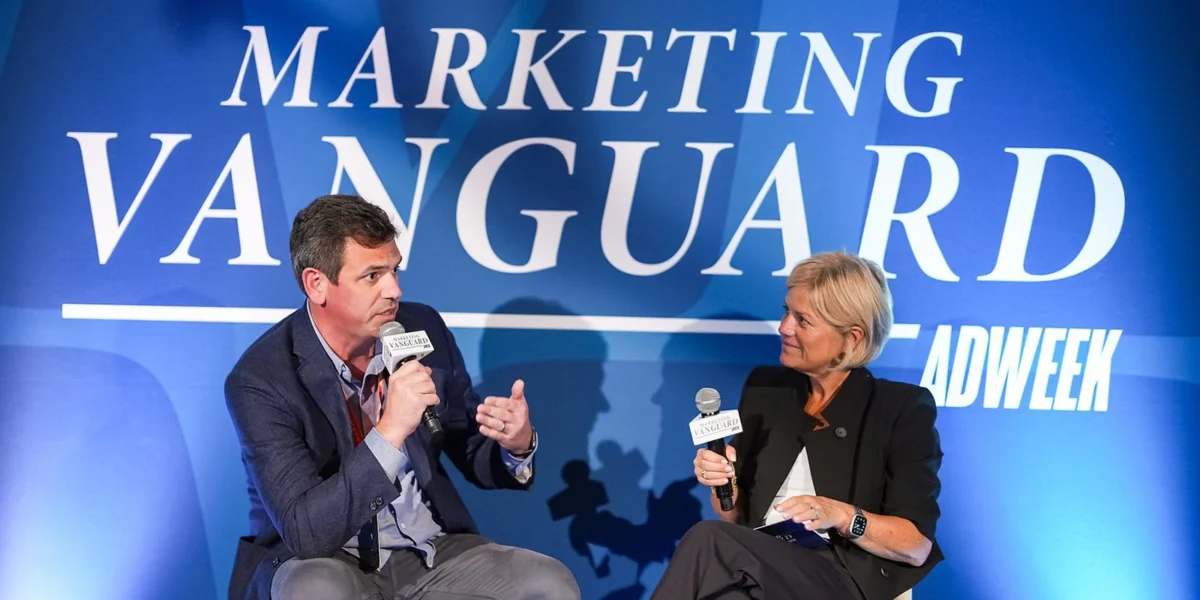
"Fragmentation is the primary obstacle to campaign cohesion," Williams argued during his keynote session, "Media As a Flywheel For Growth," moderated by ADWEEK Chief Brand and Community Officer Jenny Rooney. According to Williams, when media, data, content, and tech are treated as separate workstreams, the consumer experience becomes disjointed. A customer might see a high-production advertisement on television, only to find a conflicting offer in an email or an entirely different brand voice on a mobile app.
This siloed method, which Williams refers to as traditional "experience planning," creates friction. It prevents the brand from acting as a single entity, forcing the consumer to navigate a broken journey. To solve this, Williams posits that agencies and brands must shift their perspective: media should not be an isolated channel, but the central nervous system of the entire consumer experience.
Chronology of a Shift: From Planning to Platforming
The evolution of the Dentsu X methodology, as detailed by Williams, represents a pivot in how global agencies approach client service.
Phase 1: The Recognition of Disconnect (2022-2024)
In the early 2020s, the rise of retail media networks and the sunsetting of third-party cookies forced brands to re-evaluate their data strategies. Many brands attempted to solve these problems by layering on more tech stacks, which inadvertently increased the fragmentation Williams now warns against.
Phase 2: The Integration Mandate (2025)
Recognizing that tech alone wasn’t the solution, Dentsu X began internal restructuring. The focus shifted toward dissolving the walls between departments. This period was marked by the realization that "stitching together" legacy systems was a stopgap measure, not a long-term strategy.
Phase 3: The Era of Experience Platforming (2026-Present)
As presented at Brandweek 2026, the current strategy centers on "experience platforming." This is not merely a change in terminology; it is a change in operational philosophy. It requires the merging of teams—creative, media, and data scientists—into a singular, collaborative unit that works in lockstep from the ideation phase through to the execution phase.
Case Study: The Heineken Model
To illustrate the efficacy of this unified approach, Williams highlighted the work Dentsu X has conducted with global beverage giant Heineken. The Heineken partnership serves as a masterclass in how "experience platforming" can be applied at scale.
The challenge facing Heineken was one of scale versus agility. As a global brand with a vast network of franchisees, retailers, and local divisions, Heineken needed to maintain a consistent global brand identity while remaining hyper-relevant in local markets.
"Heineken created systems that enabled it to work together across markets and bidirectionally, from agency to brand," Williams explained. By breaking down the barriers between the agency’s strategic team and the brand’s local marketing leads, they created a feedback loop. Competitive data, store-level inventory data, and local market intelligence were no longer locked in spreadsheets; they were funneled directly into a centralized decision-making engine.
The result was a go-to-market plan that allowed for activation at scale. If a specific local market intelligence report indicated a shift in consumer preference or a spike in demand for a particular product variant, the media strategy could be adjusted in real-time. This information flow was not just one-way; it empowered stakeholders, franchisees, and local store managers to make data-backed decisions, effectively democratizing the brand’s intelligence.
Implications for the Industry: The "Flywheel" Effect
The concept of media as a "flywheel" is a core tenet of Williams’ philosophy. In physics, a flywheel is a mechanical device that stores rotational energy; once it gains momentum, it requires less effort to keep spinning. In marketing, this translates to a self-reinforcing cycle of growth.
When media, data, and creative are unified, every campaign becomes an opportunity to learn. The outcomes of an initial activation provide data that improves the next one. As Williams noted, "It’s about thinking of ways we can use scale solutions, while remaining scrappier and nimbler."
The Strategic Shift
The implications of this shift are profound for both agency and client relationships:
- Financial Efficiency: By removing redundant processes and siloed technology, brands can reduce waste and redirect capital toward high-impact activations.
- Organizational Agility: When teams are platformed rather than partitioned, the time-to-market for new campaigns is drastically reduced.
- Consumer Loyalty: A consistent, data-informed experience increases the likelihood of long-term brand affinity. Consumers gravitate toward brands that appear to "know" them, regardless of which channel they are currently utilizing.
The Future of Agency-Brand Collaboration
The discussion at Brandweek 2026 underscored a broader truth: the agency model of the 2010s is insufficient for the demands of the late 2020s. Clients no longer want an agency that simply executes a media buy; they require a partner that helps build the infrastructure of their business.
"How are we building for that?" Williams asked the audience in Atlanta. This question remains the ultimate litmus test for any marketing initiative. It forces the brand to consider whether a campaign is a one-off event or a building block for a larger, more resilient brand platform.
Challenges Ahead
While the vision of "experience platforming" is compelling, it is not without its challenges. Implementing this model requires a high degree of cultural change within an organization. It demands that employees who have spent their careers in specialized silos develop a more generalist, cross-functional mindset. Furthermore, it requires a significant investment in unified data infrastructure—a hurdle that can be daunting for legacy organizations with deep-rooted technical debt.
Conclusion: The Path Forward
Bruce Williams’ appearance at Brandweek 2026 signaled a clear departure from the status quo. By highlighting the success of the Heineken model and articulating the necessity of "experience platforming," he has provided a roadmap for brands looking to move beyond the constraints of fragmented marketing.
The message is clear: if brands want to thrive in an increasingly complex media ecosystem, they must stop treating their internal teams like isolated islands and start building them into a singular, cohesive platform. As the marketing industry looks toward the remainder of the decade, the ability to integrate, iterate, and act with agility—the components of the growth flywheel—will likely be the defining factor between those who merely survive and those who lead.
In the final analysis, the goal is simple: to create a seamless interaction between the consumer and the brand. By tearing down the silos that stand in the way, Dentsu X is not just optimizing media spend; they are reshaping the very foundation of how brands interact with the world. The transition from "planning" to "platforming" is not just a trend; it is the necessary evolution of a professional industry coming to terms with the reality of a connected world.