The Indian smartphone landscape, long considered the world’s most vibrant and resilient frontier for mobile technology, has encountered a seismic shift. According to the latest data from Counterpoint Research, smartphone shipments in India collapsed to a decade-level low during the third quarter of 2026, marking a staggering 20% year-over-year (YoY) decline. This contraction represents one of the most significant pullbacks in the history of the Indian telecommunications sector, signaling a cooling of consumer demand driven not by a lack of interest, but by a crisis of affordability.
The July-September period, typically a window of aggressive inventory building and high-volume sales ahead of the festive season, instead saw a market paralyzed by escalating component costs and a fundamental shift in the pricing tiers that once defined the Indian "mass market."
The Core Crisis: Rising Costs and the Death of Affordability
The primary catalyst for this historic slump is an unprecedented surge in component pricing, particularly in the semiconductor and memory sectors. High memory prices—specifically for DRAM and NAND flash—have forced Original Equipment Manufacturers (OEMs) to repeatedly hike retail prices. For a market as price-sensitive as India, where the bulk of volume historically resides in the sub-₹15,000 category, these incremental increases have had a devastating effect on sell-through rates.
As costs rose, OEMs found themselves in a precarious position. To maintain margins, they were forced to push their devices into higher price brackets. This "price-band migration" has effectively hollowed out the entry-level and budget segments. Research Analyst Shubham Singh noted that the sub-₹20,000 segment, which was once the engine of India’s digital revolution, saw shipments plummet by a massive 47% in Q3 2026.
"Rising component costs pushed device prices higher, putting increasing pressure on affordability and weakening the traditional mass-market volume engine," Singh stated. "The price hikes have been so consistent that models originally intended for the budget segment are now being sold in the mid-premium categories, leaving a void at the entry level."
Chronology of a Market Contraction
The path to this decade-low point was not an overnight phenomenon but a culmination of several quarters of mounting pressure.
- Early 2026: Global supply chains began reporting shortages in high-speed memory modules, leading to a gradual uptick in Bill of Materials (BoM) costs for smartphone manufacturers.
- Q2 2026: Indian consumers began feeling the pinch as major brands like Xiaomi, Realme, and Vivo announced "inflationary adjustments" to their popular mid-range series. Market growth slowed to single digits.
- Q3 2026 (The Slump): As the July-September quarter commenced, the full weight of the component crisis hit. Instead of the usual pre-festive surge, shipments fell by 20%. OEMs, wary of overstocking expensive inventory that might not sell, began holding back shipments, leading to the decade-low figures reported by Counterpoint.
- Post-September 2026: The market now enters the festive season with elevated pricing and a cautious consumer base, with experts predicting further price hikes before the year ends.
The New Market Hierarchy: Samsung Returns to the Top
Despite the overall market decline, the competitive landscape underwent a significant reshuffle in Q3 2026. Samsung, the South Korean tech giant, reclaimed the top position in the Indian market after a hiatus of nine quarters.
Samsung secured a 17% market share, a feat attributed largely to the success of its Galaxy A series. By leveraging its integrated supply chain—which allows it to mitigate some of the memory cost pressures that plague smaller rivals—Samsung was able to maintain a more consistent presence in the mid-to-high price tiers. The Galaxy A series, known for offering premium features like high-refresh-rate AMOLED screens and robust 5G connectivity at a perceived "value-luxury" price point, resonated with consumers looking for longevity over low entry costs.
Vivo followed closely in second place with a 16% market share. Its Y series continued to be a volume driver, particularly in offline retail channels where the brand’s strong distribution network and aggressive marketing provided a buffer against the online-centric slowdown.
Oppo and Xiaomi found themselves tied for the third and fourth positions, each commanding a 12% share of the market. For Xiaomi, once the undisputed king of the Indian smartphone market, the decline reflects the broader struggle of the budget segment. As the brand that built its reputation on high-spec, low-cost devices, the inability to maintain sub-₹10,000 and sub-₹15,000 price points has hit its shipment volumes harder than its competitors.

The Premium Paradox: Apple and Google Defy the Trend
While the mass market struggled, the premium and ultra-premium segments told a different story. In a striking contrast to the general market decline, Apple and Google reported robust growth, suggesting that India’s affluent consumer base remains insulated from the pricing pressures affecting the lower tiers.
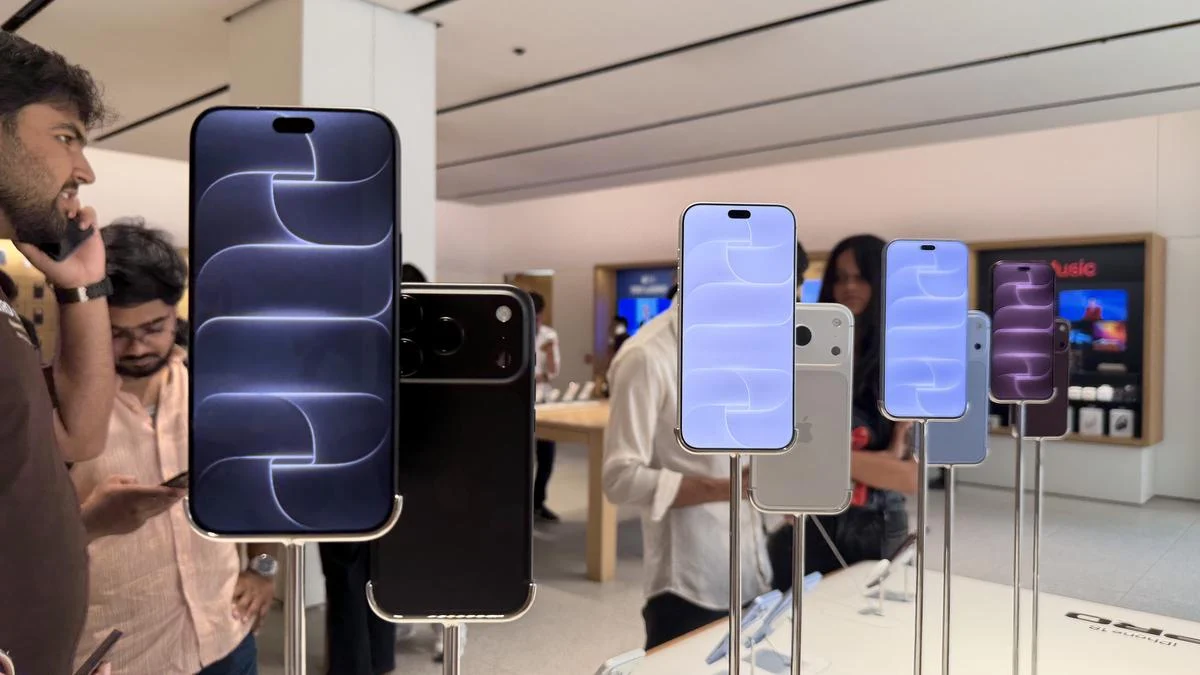
The Apple iPhone 18 Pro series witnessed a stellar debut in India. Initial sales for the 18 Pro series were nearly 20% higher YoY compared to the iPhone 17 Pro series. Apple’s strategy of aggressive trade-in programs, bank tie-ups, and the aspirational value of the brand has allowed it to capture a larger slice of the value share, even as volume share remains lower than the leaders. Furthermore, the iPhone 17 lineup continued to see strong demand following strategic pricing adjustments, proving that the "premiumization" of the Indian market is accelerating.
Google also emerged as a surprise winner in Q3 2026, witnessing over 50% YoY growth. The expansion of the Pixel service network and a more localized marketing strategy have finally begun to pay dividends, positioning Google as a viable third alternative in the premium Android-versus-iOS battle.
The Silicon Powerhouse: MediaTek’s Dominance
In the realm of internal hardware, MediaTek solidified its position as the leading chipset OEM in India. In Q3 2026, MediaTek powered 45% of all smartphones shipped in the country. The company’s Dimensity series has become the go-to choice for OEMs looking to provide 5G capabilities at competitive prices, even amidst rising BoM costs. While Qualcomm remains a formidable player in the flagship and high-end segments, MediaTek’s ability to dominate the mid-range and "affordable 5G" categories has made it the backbone of the Indian mobile ecosystem.
Official Responses and Expert Analysis
The industry sentiment remains cautious, with analysts pointing toward a fundamental restructuring of the market. Tarun Pathak, Research Director at Counterpoint, provided a sobering outlook for the remainder of the year and into 2027.
"We expect India’s smartphone market to shrink by around 13% in 2026," Pathak stated. "The continued pricing pressure is weighing heavily on both affordability and replacement demand. Consumers who would typically upgrade every 18 to 24 months are now stretching their device lifecycles to 30 or 36 months because the cost of a comparable new device has jumped significantly."
Pathak also warned of a "post-festive seasonal slowdown" that could further dampen the market. "The elevated component costs are likely to drive another round of price hikes after the festive season sale. This creates a challenging environment for OEMs who are caught between shrinking margins and a price-sensitive consumer base."
Industry insiders suggest that the "mass market" is no longer defined by the ₹10,000 price point, but has shifted closer to ₹20,000. This shift is leaving millions of first-time smartphone buyers—those transitioning from feature phones—with fewer and less attractive options, potentially slowing down the "Digital India" transition.
Implications: A Changing Consumer Landscape
The Q3 2026 collapse carries deep implications for the future of mobile technology in India.
- The Lengthening Replacement Cycle: As smartphones become more expensive, they are no longer viewed as "disposable" tech. Consumers are demanding better build quality and longer software support (4-5 years) to justify the higher investment. This will likely lead to a permanent reduction in annual shipment volumes but an increase in the Average Selling Price (ASP).
- The Secondary Market Boom: With new phones becoming less affordable, the refurbished and second-hand smartphone market is expected to see exponential growth. Platforms specializing in certified pre-owned devices may become the new "entry-level" for many Indian consumers.
- OEM Consolidation: The current environment favors "full-stack" players like Samsung and Apple who have more control over their supply chains. Smaller Chinese OEMs, who operate on razor-thin margins, may find it increasingly difficult to compete in India, leading to a potential consolidation of the market.
- 5G vs. Affordability: The push for 5G ubiquity is clashing with the reality of component costs. While 5G adoption is high in the premium segment, the "5G for everyone" dream is being deferred as the cost of 5G modems and supporting hardware keeps device prices high.
Conclusion
The 20% YoY collapse in Q3 2026 is a wake-up call for the global tech industry. India, once seen as an inexhaustible source of growth, is hitting a ceiling imposed by global economic realities. While the success of Apple and Google indicates that there is plenty of money at the top, the "decade low" in shipments highlights a crisis at the foundation. As the market prepares for a projected 13% annual contraction, the focus for 2027 will likely shift from chasing volume to securing value, as both manufacturers and consumers adapt to the new, more expensive reality of the mobile world.