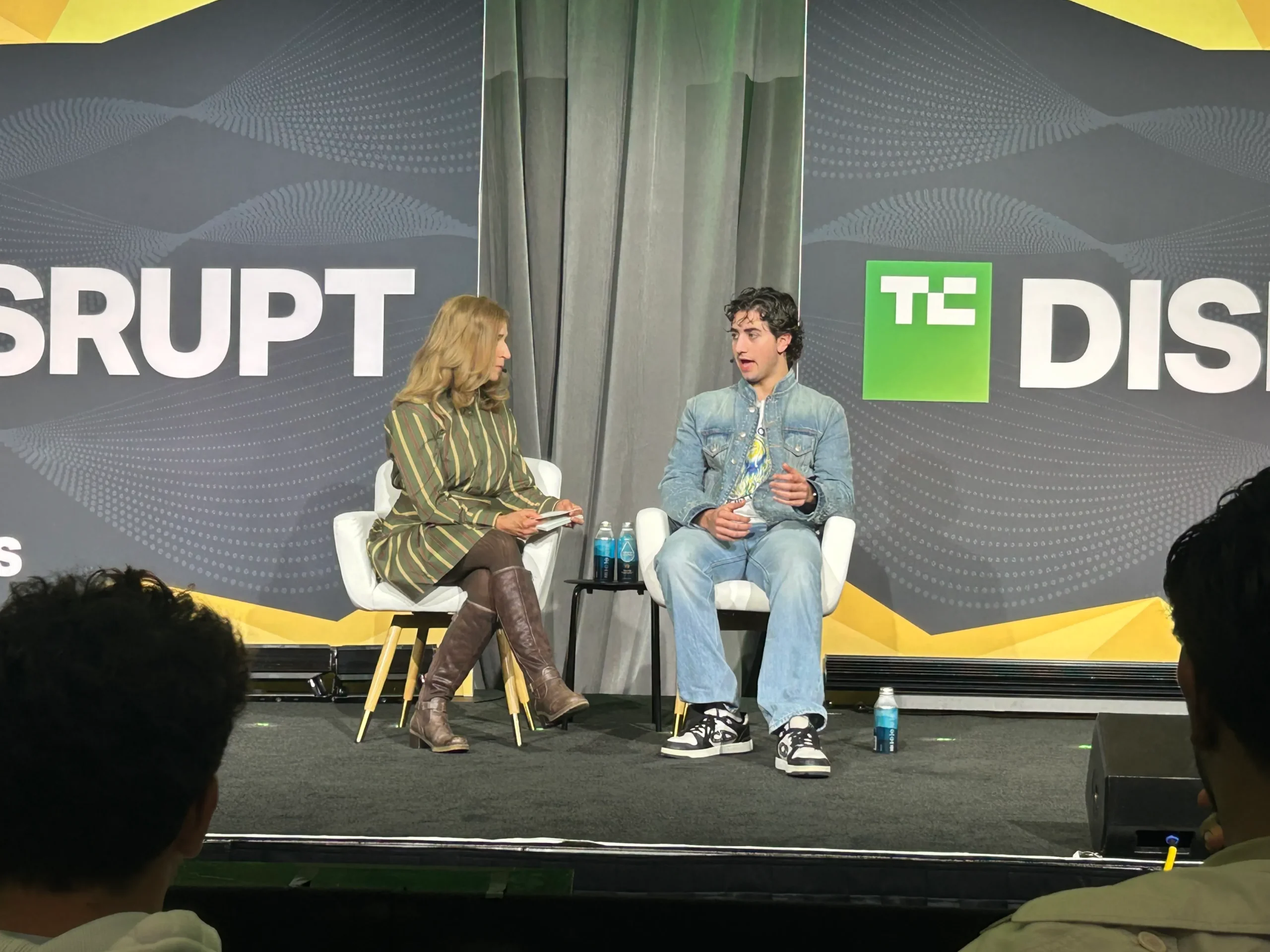
In the fast-paced ecosystem of Silicon Valley, where "overnight success" is a term often used with skepticism, 19-year-old entrepreneur Zach Yadegari has managed to turn the concept into a tangible reality. Having only recently traded his high school diploma for the high-stakes world of venture capital and software development, Yadegari has quickly become a poster child for the new generation of AI-native founders.
His journey, punctuated by the meteoric rise and subsequent acquisition of his calorie-tracking app, Cal AI, culminated in a candid appearance at TechCrunch Disrupt this Thursday. There, the Forbes 30 Under 30 alumnus detailed the aggressive, influencer-driven playbook that allowed a teenage founder to secure an acquisition by fitness giant MyFitnessPal in just two years.
The Chronology of a Viral Phenomenon
The story of Cal AI is one of rapid iteration and tactical precision. Founded in 2024, the company did not rely on traditional advertising spend or organic search optimization. Instead, Yadegari leaned into the burgeoning economy of social media influencers.
2024: The Inception and the Spark
When Cal AI launched, the market for health and wellness applications was already saturated with legacy players. However, Yadegari identified a gap: the friction of manual calorie logging. By leveraging AI to automate the process, he created a product that solved a genuine user pain point. The turning point arrived when an early influencer partnership yielded nearly 1,000 new users in just 48 hours. This validated the "growth engine" Yadegari had envisioned.
2025: Scaling the Influencer Army
Following the initial proof of concept, Yadegari shifted into high gear. He began systematically recruiting a vast network of content creators, prioritizing those with "tight-knit communities" over those with broad, unengaged followings. The strategy was formulaic: negotiate performance-based payouts where influencers were incentivized to keep posting until they hit specific conversion targets.
2026: The Acquisition
The momentum proved irresistible to industry incumbents. In March 2026, MyFitnessPal—a titan in the digital health space—acquired Cal AI for an undisclosed sum. By the time of the sale, the app had generated over $30 million in revenue, a staggering figure for a company barely two years old, built by a team led by a teenager.
The Mechanics of the "Linear" Growth Formula
During his onstage interview at TechCrunch Disrupt, Yadegari demystified the process that many in the industry viewed as a "black box" of viral growth. He described the strategy as "linear," noting that the predictability of the return on investment (ROI) was the secret sauce.
"What we saw was that it was a clear formula," Yadegari explained to the audience. "Every post they did would get a certain number of viewers that would convert."
This mathematical approach to marketing allowed Yadegari to treat his influencer partnerships as a predictable sales funnel. By focusing on "broke college kids" who were hungry for cash and eager to partner with a high-growth startup, he was able to maintain a low customer acquisition cost (CAC) while scaling rapidly. He set firm boundaries, essentially telling partners, "We will pay you this, but we need to get us at least this amount of use and keep posting until you get there."
Breaking the Mold: The Academic Debate
Yadegari’s success has reignited the perennial debate regarding the necessity of higher education for tech entrepreneurs. When asked about the role of college in his journey, his response was both blunt and reflective of his generation’s shift toward direct experience.
"I think the only real reason to go to college is if you want to have a fun social time as a kid and be with other people," he quipped, drawing laughter from the crowd.
While acknowledging the support of his family—specifically his father, who was in the audience to witness his son’s success—Yadegari clearly attributes his trajectory to the freedom to pursue his ambitions in the "real world" rather than in a lecture hall. This sentiment underscores a growing trend among Gen Z founders who prioritize the "ship, learn, iterate" model over the traditional four-year degree.
Implications: The Birth of Persona and the Future of AI
Yadegari is not resting on the laurels of his first exit. Earlier this month, he made waves by announcing his new venture, Persona. The startup has already secured $10 million in funding, signaling that investors are betting heavily on his ability to replicate the Cal AI success story.
The Mission: Seamless Integration
The "overarching mission" of Persona is to make computing "seamless with human life." In practice, this means developing an AI agent that is not confined to a single application or screen. Yadegari envisions an assistant that exists wherever the user is—whether that is within iMessage, email, a phone call, or any other digital touchpoint.
Building a Hardware Ecosystem
Perhaps the most ambitious aspect of Persona is its planned integration with hardware. While software-first AI agents are currently the trend, Yadegari aims to build a "hardware ecosystem around" the app. This suggests a desire to move beyond the screen and into the physical environment of the user, potentially competing with emerging AI-wearable companies.
Analysis: Why This Matters for the Tech Industry
The rise of Zach Yadegari serves as a case study for several shifting realities in the tech industry:
- The Death of Traditional Marketing: The reliance on influencer-driven, performance-based marketing shows that companies can bypass traditional advertising agencies entirely if they have a product that fits the influencer demographic.
- AI-First Business Models: Cal AI proved that AI is not just a feature; it is a business model. By automating the most tedious parts of a consumer’s daily life, startups can command significant revenue in short order.
- The Rise of the Teenage Founder: As tools for development become more democratized, the barrier to entry for building complex, AI-driven applications has dropped significantly. We are entering an era where a 19-year-old with a strong grasp of growth hacking and a solid grasp of AI API integration can compete with established legacy firms.
Conclusion
Zach Yadegari’s story is far from over. From the viral success of Cal AI to the high-stakes launch of Persona, he has demonstrated a rare ability to identify market inefficiencies and exploit them with surgical precision.
As he transitions from a "teen entrepreneur" to a seasoned founder with a successful exit under his belt, the industry will be watching closely. Whether his vision for a hardware-integrated, seamless AI assistant becomes the next major shift in consumer technology remains to be seen. However, if his past two years are any indication, the "formula" he uses—no matter how linear or simple it may seem—is one that established companies would do well to study.
As the lines between software, hardware, and human interaction continue to blur, founders like Yadegari are not just adapting to the future; they are actively building it. In the words of the entrepreneur himself, the goal is simple: making computing disappear into the background of our lives, so that we can focus on living. For an industry often obsessed with the next "big thing," that might be the most revolutionary goal of all.