Executive Summary: A Milestone for Sustainable Mobility
In a significant boost to India’s burgeoning green public transportation sector, Mumbai-based electric mobility startup GreenCell Mobility has successfully closed an equity funding round of ₹330 crore ($34.6 million). The round was led by Impact Fund Denmark, marking a pivotal moment for the Everstone Capital-backed firm as it pivots toward scaling its ambitious infrastructure goals. The capital injection is earmarked primarily for the operational rollout of 4,500 electric buses that are currently in the deployment phase.
GreenCell Mobility has positioned itself as a critical player in the transition toward sustainable transit, operating both intercity and intracity services. By moving beyond traditional asset financing and focusing on a robust operating platform, the company is set to expand its fleet to over 5,000 electric buses across 105 cities, further solidifying its role in India’s decarbonization efforts.
The Strategic Vision: Scaling Operations and Infrastructure
Founded in 2019, GreenCell Mobility was conceived to address the systemic challenges of urban and inter-city pollution through large-scale electrification of public bus fleets. Unlike traditional bus operators, GreenCell operates on a unique model: it procures electric buses through strategic contract manufacturing arrangements with established vendors, then manages the full operational lifecycle—from route deployment and driver management to the maintenance of a sprawling network of charging stations.
The Roadmap to 5,000+ Buses
The company’s growth trajectory is aggressive. Currently, GreenCell manages a fleet of over 1,200 electric buses. This includes:
- 900 buses dedicated to intracity transit.
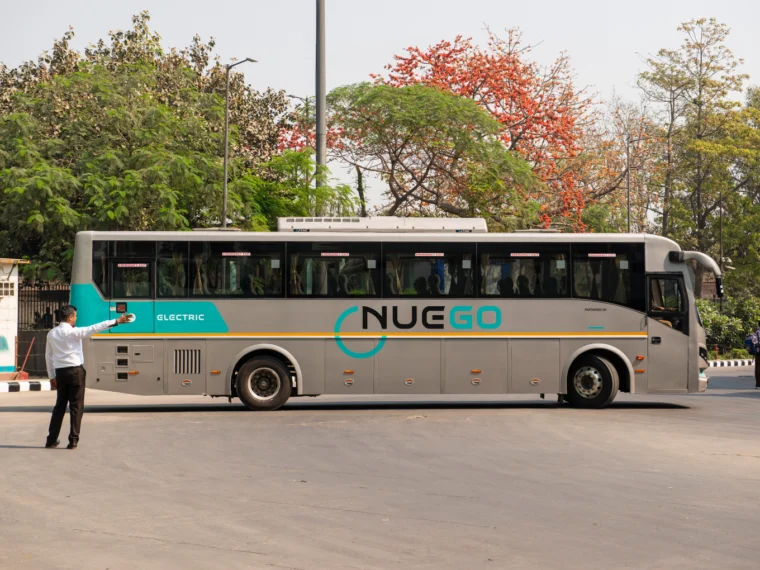
- 300 buses operating under its premium intercity brand, NueGo.
- 50 buses specifically deployed for the Maharashtra State Road Transport Corporation (MSRTC).
The new funding provides the "headroom" necessary to bridge the gap between their current operational footprint and their goal of 5,000+ vehicles. As Devndra Chawla, Managing Director and Chief Executive of GreenCell Mobility, noted: "Our focus is on executing our order book with rigour, strengthening service delivery, and ensuring that the organization keeps pace with the size and complexity of our operations."
Chronology of Growth: From Inception to Institutional Backing
GreenCell Mobility’s journey reflects the broader maturation of the Indian EV ecosystem—transitioning from pilot projects to institutional-grade, large-scale deployments.
- 2019: Incorporation of GreenCell Mobility with a mandate to revolutionize public transit in India.
- Early Development: The startup secured early backing from Eversource Capital, a prominent joint venture between Everstone Capital and Lightsource bp, establishing a strong foundation in the climate-tech space.
- Previous Funding Rounds: The company previously garnered international attention by securing $37 million from the International Finance Corporation (IFC), the private sector arm of the World Bank. This served as a validation of its business model on the global stage.
- Diverse Investor Base: Beyond the IFC and Eversource, the startup has attracted blue-chip institutional investors, including British International Investment (BII) and Tata Capital, further signaling confidence in their operational platform.
- 2024 (Present): The ₹330 crore infusion from Impact Fund Denmark marks the company’s latest effort to solidify its market leadership and capitalize on the government’s push for green public mobility.
Supporting Data and Operational Infrastructure
The transition to electric buses (e-buses) is not merely a vehicle procurement challenge; it is an infrastructure-heavy endeavor. GreenCell’s model recognizes that the success of the fleet is tethered to the availability of reliable, high-speed charging.
Currently, the company operates over 270 charging stations across the country. These stations are essential to maintaining the operational uptime of the fleet, especially for the NueGo brand, which serves time-sensitive intercity passengers. By controlling both the fleet and the charging infrastructure, GreenCell minimizes downtime and ensures a consistent, high-quality customer experience that distinguishes it from traditional, diesel-reliant state transport services.
Official Responses: Leadership Perspective
The leadership at GreenCell Mobility views this funding not as a finish line, but as a catalyst for professionalizing the operational layer of public transport.
Devndra Chawla emphasized the importance of maintaining standards amidst rapid scaling. "This equity investment gives us greater headroom to accelerate our plans while maintaining the standards of reliability, efficiency, and customer experience that are fundamental to our business," Chawla stated. The focus is now on "execution rigour"—ensuring that as the fleet scales to 5,000 vehicles, the quality of service, safety protocols, and technical reliability do not falter.
Implications: The Shift Toward the ‘Platform’ Economy
The most significant takeaway from this funding round is the changing appetite of global investors. Historically, capital flows into the Indian EV sector were concentrated on "asset financing"—essentially funding the purchase of the buses themselves.
Beyond Asset Financing
GreenCell’s success highlights a structural shift: investors are now betting on the operating platform. This implies that the value proposition of a company like GreenCell lies in its proprietary software for route optimization, fleet management, and energy consumption analysis. By backing the "platform," investors are demonstrating faith in the company’s ability to manage the complexity of large-scale, nationwide transportation grids.
The Broader Market Context
The electric bus market in India is witnessing a surge in competitive activity. The government’s FAME (Faster Adoption and Manufacturing of Electric Vehicles) schemes and various state-level tenders have created a massive pipeline for private players.
A prime example of this trend is the recent activity surrounding PMI Electro Mobility. In March, the manufacturer—along with its subsidiary platform, Allfleet—secured a definitive agreement with private equity giant KKR for an investment of up to $310 million. The fact that firms like KKR and Impact Fund Denmark are deploying such significant capital into these platforms suggests that the "e-bus as a service" model is becoming a preferred asset class for global institutional investors looking to meet ESG (Environmental, Social, and Governance) targets.
Impact on Public Infrastructure
The implications for the common commuter are profound. As private players scale, the reliance on aging, polluting, and unreliable state-run bus fleets is being challenged. GreenCell’s NueGo, for instance, offers features often found in airlines—such as scheduled arrivals, onboard entertainment, and high safety standards—thereby changing the public perception of bus travel from a "last resort" to a "preferred choice."
Future Outlook: Challenges and Opportunities
While the funding provides a strong tailwind, the road ahead for GreenCell Mobility is not without challenges.
- Supply Chain Volatility: As the company scales its contract manufacturing, it remains vulnerable to global battery prices and raw material fluctuations.
- Regulatory Hurdles: Operating across 105 cities means navigating 105 different sets of municipal regulations, state road transport requirements, and power grid constraints.
- Technological Obsolescence: With battery technology evolving at a rapid pace, the company must ensure its fleet remains competitive and energy-efficient over the typical 10-to-12-year lifespan of a bus.
However, the continued support from institutions like the World Bank’s IFC and Impact Fund Denmark suggests that these risks are viewed as manageable. The successful integration of data analytics into their operations will likely be the deciding factor in how efficiently they manage their charging network and route scheduling.
Conclusion
The ₹330 crore investment into GreenCell Mobility is a bellwether for the future of Indian public transportation. It confirms that the transition to electric mobility is moving from experimental phases to a mature, capital-intensive, and operationally sophisticated phase. With a clear roadmap to 5,000+ buses and the backing of some of the world’s most discerning institutional investors, GreenCell Mobility is well-positioned to drive the decarbonization of India’s roads, one city at a time. As the sector continues to attract billions in capital, the ultimate winner will be the Indian commuter, who stands to benefit from a cleaner, more reliable, and technologically advanced public transit network.