For decades, the bedrock of product marketing has been the art of positioning. It is a discipline defined by control: deciding exactly how a product is described, which market category it occupies, and which specific differentiators will resonate with the target buyer. Traditionally, this positioning was disseminated through a predictable mix of sales collateral, website copy, and strategic marketing campaigns.
However, the digital landscape has undergone a seismic shift. We have moved from an era of "search" to an era of "answers." Today, when a buyer initiates a search, they are increasingly met with AI-generated summaries synthesized from hundreds of disparate sources—reviews, third-party comparisons, competitor content, and industry forums. This new channel, the "answer engine," acts as a judge and jury, often rebroadcasting a brand’s positioning without ever asking for permission.
For product marketing teams, the stakes could not be higher. If your brand’s own authoritative content is not part of the source mix, your positioning is effectively being written for you by the rest of the world.
The Shift: From Traditional Search to AI Synthesis
The evolution of the search experience is not merely a change in interface; it is a fundamental shift in buyer behavior. When a potential customer asks an AI assistant to "compare the top CRM platforms" or "list the best software for supply chain automation," they are no longer clicking through a list of blue links. They are receiving a confident, synthesized narrative.
This narrative is the new front line of product marketing. If an AI engine draws on stale, inaccurate, or competitor-influenced data, that inaccuracy becomes the buyer’s baseline reality. Without a strategic approach to Answer Engine Optimization (AEO), companies risk losing control over their own brand identity.
The Three Pillars of AEO Success
Product marketing teams that have successfully integrated AEO into their workflows typically master three core competencies:

- Continuous Monitoring: Actively tracking how answer engines synthesize and frame their products.
- Authoritative Content Engineering: Producing high-quality, extractable content that AI models are likely to cite.
- Revenue Attribution: Connecting visibility metrics within AI engines to tangible improvements in pipeline velocity and lead quality.
Chronology of the AEO Revolution
The rise of AEO didn’t happen overnight, but its acceleration has been breathtaking.
- 2022-2023 (The Proliferation of Generative AI): With the public release of advanced LLMs, search engines began aggressively integrating generative summaries. For the first time, the "first answer" became the primary destination for the buyer.
- Early 2024 (The Visibility Crisis): CMOs and product marketing leaders began noticing a "positioning drift." Brands found their products described using legacy terminology or inaccurate features, often because the AI was scraping outdated third-party blog posts rather than the company’s updated landing pages.
- Late 2024-2025 (The Formalization of AEO): Tools like HubSpot’s AEO suite emerged to provide the "signals" that teams were missing. It became clear that AEO was not just an SEO sub-discipline, but a core strategic function for product marketing.
- Present Day: Leading organizations are now treating AEO as a critical revenue-driving activity, shifting from reactive "reputation management" to proactive "content engineering."
Supporting Data: The Case for AEO
The skepticism surrounding AI-driven traffic is waning as the data begins to emerge. While traditional SEO focuses on driving raw clicks, AEO focuses on driving qualified understanding.
According to recent industry research, organizations that implement a systematic AEO strategy see significant competitive advantages. Most notably, HubSpot research indicates that customers leveraging dedicated AEO tools generate 2.6x more leads compared to those relying on legacy content strategies.
The impact on pipeline quality is equally compelling. Buyers who arrive at a sales conversation via an AI-synthesized, accurate summary of a product are already better educated. They require less "baseline" education from sales representatives, leading to faster deal cycles and higher conversion rates. When the AI narrative aligns with the company’s internal positioning, the "sales education gap" is effectively bridged before the first meeting even occurs.
The Mechanics of Monitoring: Why Visibility Matters
Monitoring is the most common point of failure for modern marketing teams. It is relatively simple to track positioning drift in traditional channels—a marketing lead can read a competitor’s ad or check their own landing page. However, AI answer engines are "black boxes" that update their syntheses dynamically.
Identifying the Narrative Gap
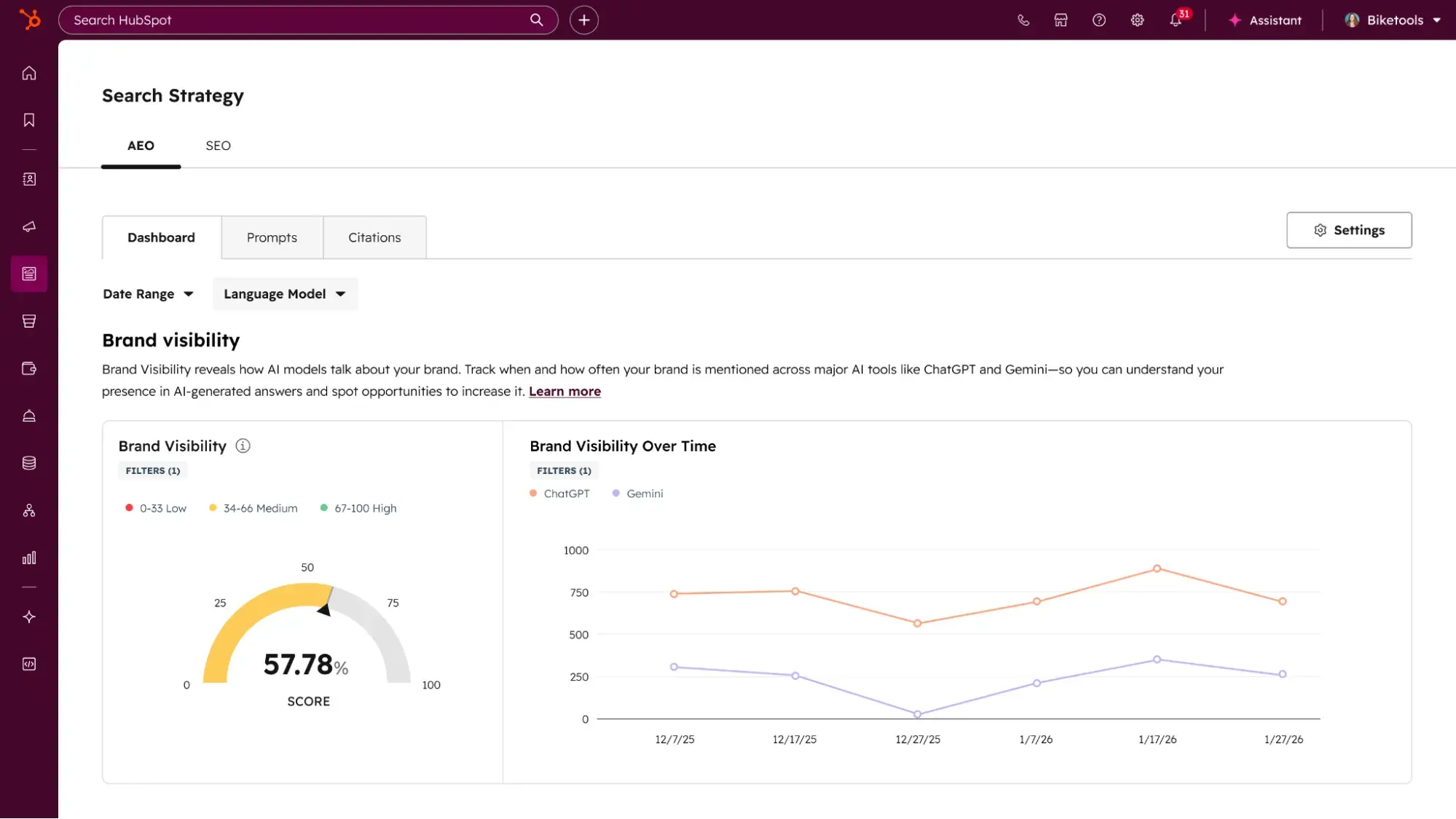
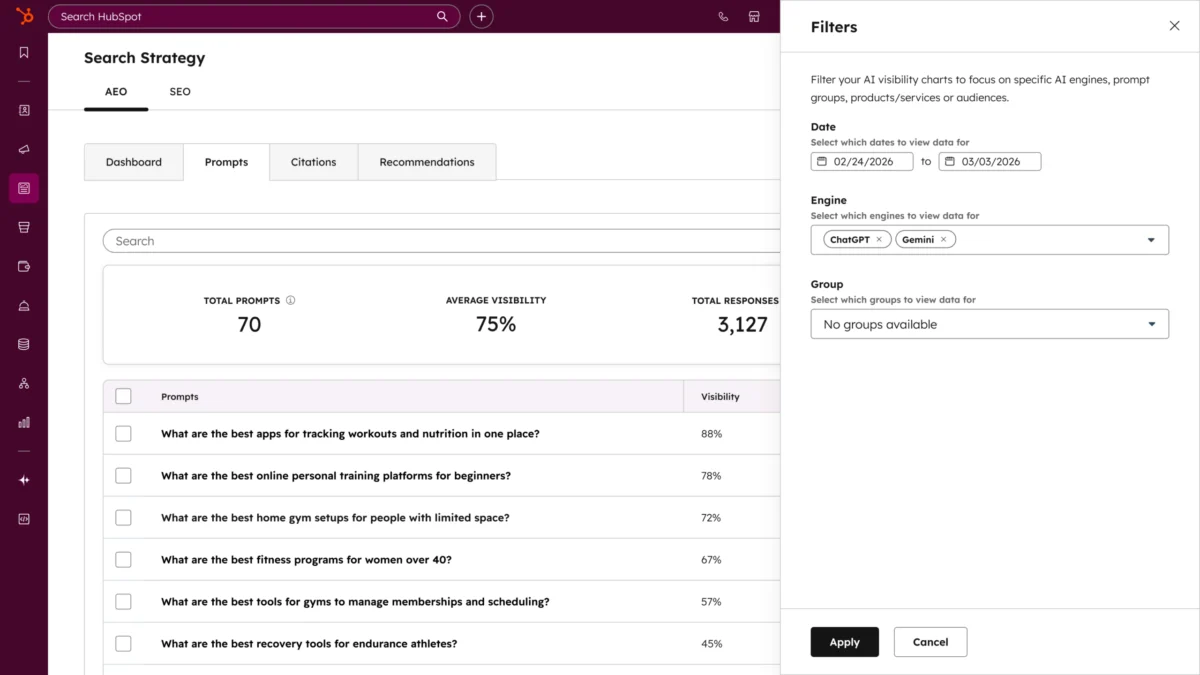
HubSpot’s AEO Brand Visibility Dashboard has become a critical instrument in this space. It allows teams to track exactly which prompts surface their brand and, more importantly, what context surrounds those citations.

If an AI engine identifies a brand but frames it as a "legacy solution" while positioning a competitor as an "AI-native disruptor," the company has an immediate, actionable insight. Without this visibility, a brand might be losing market share in the AI-summary layer while their own traffic metrics remain deceptively flat.
Engineering Content for AI Consumption
Answer engines are fundamentally biased toward "extractable" content. When an AI synthesizes a response, it is looking for factual, structured, and credible claims that it can confidently cite.
The "Marketing-Heavy" Trap
Many marketing teams continue to publish "fluff" content—high-level, emotive copy that lacks technical specificity. While this may resonate with human readers, it is often bypassed by AI engines that prioritize data-heavy, structured content.
To win in the age of AEO, content must be:
- Structured: Utilizing schemas, clear headers, and comparative tables that AI can parse.
- Authoritative: Containing specific claims about features, pricing, and use cases.
- Credible: Backed by clear source material that builds "authority" in the eyes of the AI’s ranking algorithms.
Tools like HubSpot’s content agent feature represent the next wave of this evolution. They allow teams to generate the specific, structured pages that answer high-intent queries with the brand’s positioning front and center. By providing high-quality source material, marketers can essentially "feed" the AI the exact narrative they want it to adopt.
Implications: Translating Visibility into Revenue
The final hurdle for AEO is the "Revenue Story." In many organizations, AEO is treated as a vanity metric—akin to "Brand Awareness" scores that are difficult to connect to the bottom line.

To secure budget and executive buy-in, product marketing teams must link visibility data directly to the CRM. By creating an attribution view that tracks the journey of a lead from an AI-referred channel, teams can demonstrate:
- Pipeline Velocity: How much faster AI-educated leads move through the funnel.
- Close Rates: Comparing conversion rates of AI-referred buyers versus traditional search buyers.
- Deal Quality: Measuring the average contract value and churn propensity of these segments.
When these metrics are aligned, the argument for AEO shifts from "we need better visibility" to "we need better commercial outcomes."
The Path Forward: Taking Control of the Narrative
For product marketers, the core job remains the same: positioning. But the medium has fundamentally changed. The era where you could simply publish a landing page and wait for organic search to deliver traffic is behind us.
We are entering an era of "Narrative Engineering." The brands that win will be those that view AI answer engines not as a threat, but as a distribution channel for their core value proposition.
By actively monitoring the AI-generated narrative, producing content engineered for machine extraction, and rigorously measuring the impact on the sales pipeline, product marketers can move from a state of reactive uncertainty to proactive control. The AI is going to talk about your product regardless of whether you participate in the conversation. The question is whether you will be the one providing the script, or whether you will be left to deal with the consequences of someone else’s interpretation.
The technology is ready, the data is clear, and the competitive landscape is shifting. The time to optimize for the AI-first buyer is not next quarter; it is today.