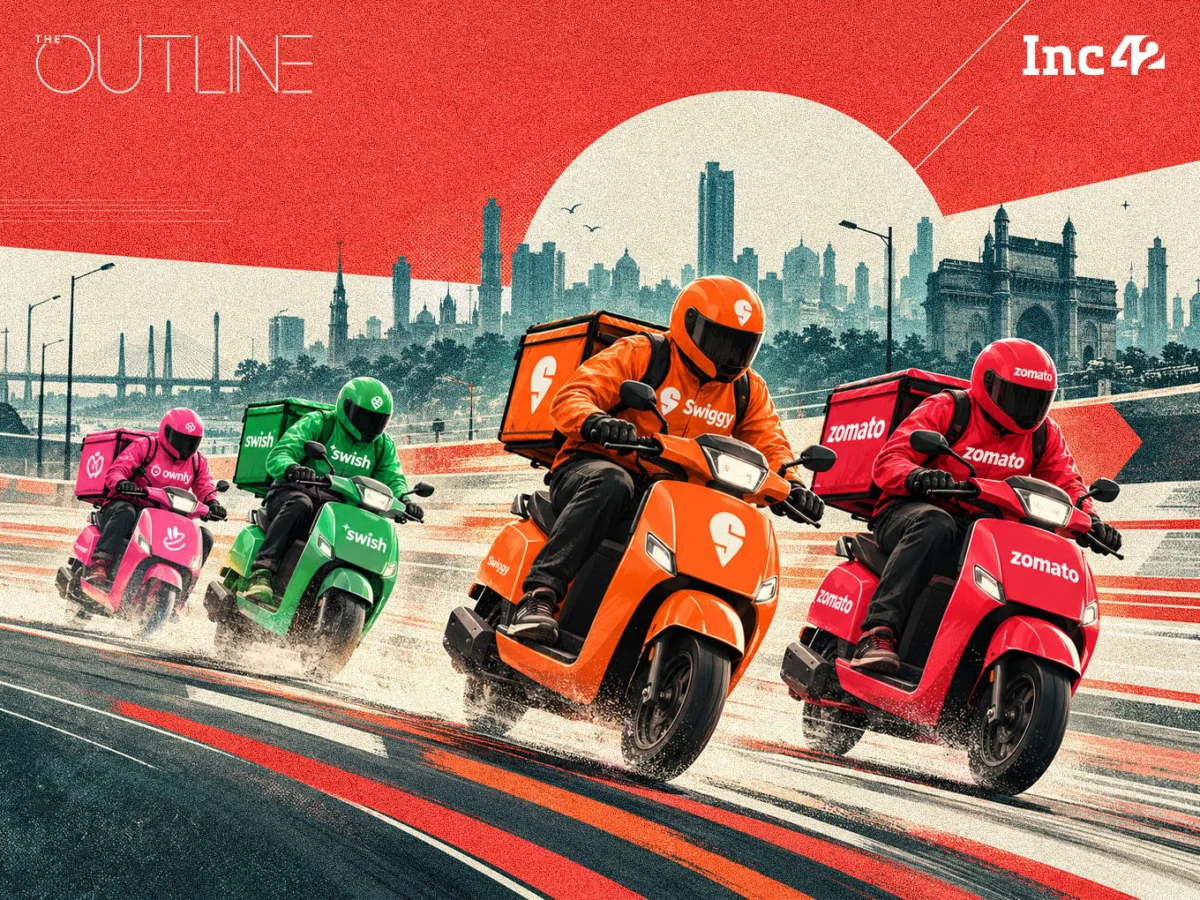
For years, the Indian food delivery landscape has been defined by a rigid, unyielding duopoly. Swiggy and Zomato have reigned supreme, utilizing their massive capital, sprawling logistics networks, and aggressive customer acquisition strategies to create a "moat" that appeared nearly impossible to breach. However, the equilibrium of this market is currently under its most significant stress test to date.
From the mobility-backed ambitions of Rapido’s ‘Ownly’ to the specialized marketplace model of Swish Go and the looming, massive footprint of Flipkart, the duopoly is facing a multi-pronged assault. As restaurant partners grow increasingly weary of high commission structures and consumers search for new value propositions, the narrative in Indian foodtech is shifting from one of total dominance to one of tactical competition.
The Cracks in the Duopoly: Why Now?
The fundamental tension driving this disruption is the relationship between food delivery platforms and restaurant partners. As online ordering transitioned from a luxury to a necessity—accelerated drastically by the COVID-19 pandemic—restaurants found themselves caught in a cycle of dependency.
Data from the National Restaurant Association of India (NRAI) paints a stark picture: for many establishments, delivery revenue has ballooned from a mere 10% of their total business pre-2020 to upwards of 50% today. This dependence has made the commission structures charged by Swiggy and Zomato a central pain point. Restaurant owners, operating on thin margins, are increasingly vocal about the "take rate" platforms command, prompting a desperate search for sustainable, lower-cost alternatives.
This dissatisfaction has provided an opening for three distinct types of challengers:
- The Mobility Disruptor: Rapido, already a household name in ride-hailing, has launched ‘Ownly.’ By leveraging its existing fleet and user base, Rapido is attempting to minimize the "cost of discovery" for its food vertical.
- The Niche Specialist: Swish, which gained traction through its quick-service delivery model, is pivoting into a full-scale marketplace with ‘Swish Go,’ aiming to blend convenience with competitive pricing.
- The E-commerce Titan: Flipkart, with its 500-million-strong user base and deep pockets, is reportedly testing its ‘Eat In’ service. Their entry represents a potential paradigm shift in the sheer scale of capital that could be funneled into the sector.
A Chronology of the Challenge
The current competitive climate did not emerge overnight; it is the culmination of years of market maturation and strategic experimentation.
- 2020-2022 (The Pandemic Consolidation): Swiggy and Zomato solidified their market share as lockdowns made them essential services. During this phase, they successfully fended off smaller players by expanding their reach to tier-2 and tier-3 cities.
- 2023-2024 (The Search for Profitability): Both giants shifted focus from "growth at all costs" to unit economics. They began experimenting with varied delivery formats, including quick-delivery services like Zomato Quick and Swiggy’s Snacc.
- 2025 (The Failure of Quick Food): A series of high-profile shutdowns—including Zomato’s ‘Everyday’ and Rebel Foods’ ‘Quickies’—signaled that the "15-minute food delivery" model was fraught with logistical and profitability challenges, even for the incumbents.
- 2026 (The New Guard Enters): Rapido begins scaling Ownly in Bengaluru, achieving 50,000 daily orders. Swish begins piloting Swish Go, and whispers of Flipkart’s ‘Eat In’ become industry-wide discourse.
Supporting Data: The Scale of the Incumbents
To understand the magnitude of the task ahead for these challengers, one must look at the financial and operational bedrock of the incumbents.
In Q1 FY27, Zomato reported an adjusted food delivery revenue of ₹3,537 Cr, a staggering 33% increase year-on-year. Swiggy, while maintaining a slightly different operational structure, reported revenue of ₹2,208 Cr for the same period. Beyond the revenue, the reach is astronomical: Zomato boasts an average of 3.28 lakh monthly active restaurant partners, while Swiggy services over 2.7 lakh partners across 720+ cities.
These figures represent a massive barrier to entry. For a new player, simply matching the inventory of a city-level restaurant network requires immense coordination, technology, and, most importantly, time.

The Strategic Playbook of the Challengers
Rapido Ownly: The Zero-Commission Bet
Rapido is banking on a simple, yet disruptive, value proposition: zero commissions for restaurants. By integrating food delivery into an existing app that users already open for bike taxis, they are attempting to lower the Customer Acquisition Cost (CAC). Having already onboarded 10,000 restaurants in Hyderabad with plans to reach 30,000, they are scaling rapidly. However, industry observers warn that the "zero-commission" model is likely a growth hack that will eventually need to evolve into a sustainable revenue model.
Swish Go: Tiered Pricing and Efficiency
Swish Go is taking a more nuanced approach, implementing a tiered commission structure based on order value. This flexibility has resonated well with smaller restaurants. Furthermore, by waiving common "nuisance fees" like packaging charges, they are positioning themselves as a more consumer-friendly, budget-conscious alternative.
The Flipkart Factor
Flipkart’s potential entry via ‘Eat In’ is the "wildcard" of the industry. With a massive logistics network already optimized for ecommerce, the company has the financial muscle to subsidize its entry for years. If Flipkart manages to integrate food delivery into its existing loyalty programs, it could theoretically move a significant chunk of the market overnight.
Implications: The Battle for Retention
The most critical question is not just how to acquire a customer, but how to keep them. The food delivery market is notoriously price-sensitive, and brand loyalty is often secondary to the availability of discounts.
Industry analysts emphasize that while restaurant aggregation is a viable entry point, the true moat for incumbents remains the integration of food delivery with their quick-commerce operations (Blinkit and Swiggy Instamart). Quick commerce requires a level of inventory management and supply chain sophistication that is significantly harder to replicate than a simple restaurant-to-customer courier service.
Will the Duopoly Crumble?
It is unlikely that the duopoly will collapse in the near term. Their scale provides a buffer that allows them to experiment, fail, and iterate without threatening their core business. However, the emergence of these new players forces a necessary evolution.
- For the Consumer: Competition is a win. We are likely to see reduced platform fees and more diversified service options as companies compete for market share.
- For the Restaurants: The existence of alternatives provides leverage. Even if a restaurant chooses to stay with a major platform, the presence of competitors like Ownly gives them a seat at the table when negotiating commission rates.
- For the Challengers: The "valley of death" lies between early adoption and sustained profitability. They must prove that their growth is not merely a result of burning venture capital to subsidize orders, but a result of a genuinely more efficient or better-valued service model.
Conclusion
The Indian foodtech sector is entering its most dynamic phase since the early days of the industry. While Swiggy and Zomato remain the titans of the space, their dominance is no longer unchallenged. The success of Rapido, Swish, and potentially Flipkart will depend on their ability to move beyond "growth hacks" and build systems that are as operationally robust as they are customer-centric.
The battle is no longer just about who can deliver the fastest; it is about who can build the most sustainable ecosystem for the millions of hungry Indians and the hundreds of thousands of kitchens that serve them. The duopoly has had its era of iron-fisted rule, but the era of the "foodtech renaissance" has officially begun.