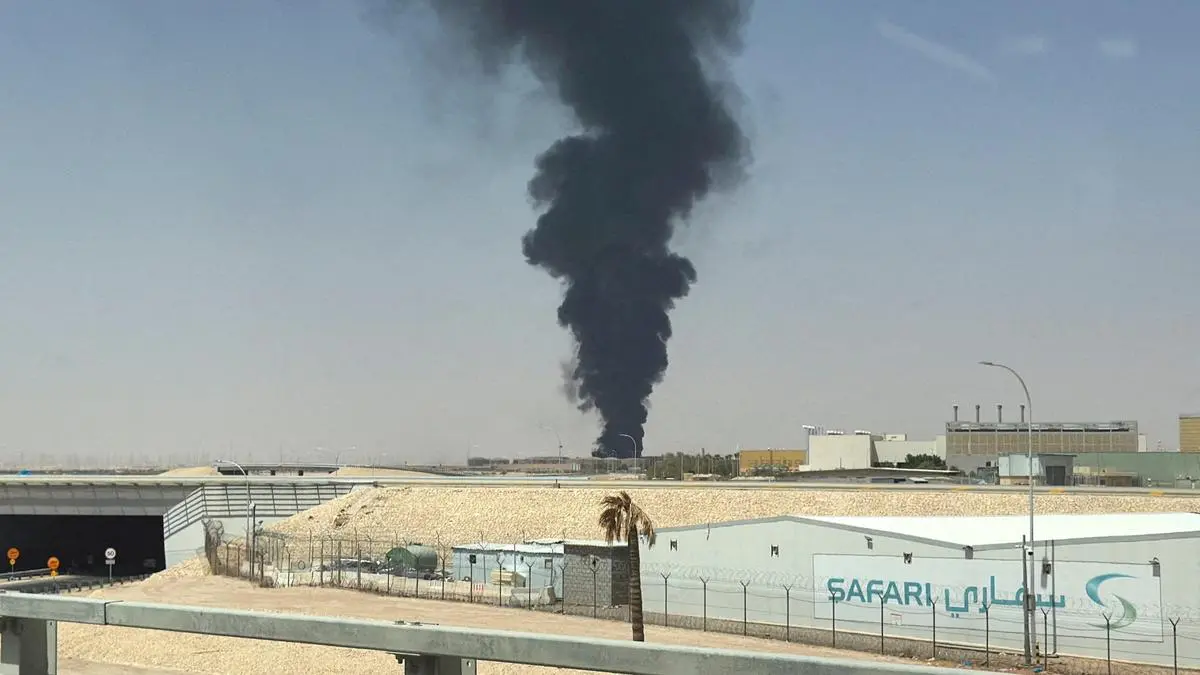
RIYADH — A devastating strike on King Khalid International Airport in the Saudi Arabian capital has left 12 people dead and over 300 injured, marking a grim escalation in the ongoing regional conflict. The attack, which occurred on Saturday, has triggered an emergency suspension of operations at one of the Middle East’s most vital transit hubs and prompted an urgent reassessment of military strategy among global powers.
Civil aviation authorities confirmed the toll early Sunday, noting that several victims remain in critical condition. The incident stands as the most lethal assault within a Gulf Arab nation since the commencement of the broader conflict involving Iran, a war whose frontlines have increasingly bled into the sovereign territory of the Kingdom of Saudi Arabia.
The Anatomy of the Attack
The strike targeted the busy transport complex, specifically impacting the area housing Terminals 3 and 4, which facilitate domestic flight operations. According to a regional official who spoke on the condition of anonymity, the terminal was struck by a projectile during peak Saturday afternoon hours.
The casualty list reflects the international nature of the facility: the victims include four Saudi nationals, two Bangladeshi citizens, and one individual each from Egypt, Jordan, Syria, Sudan, Palestine, and the United States. While Saudi authorities have not yet issued a formal attribution for the strike, the timing coincides with a rapid intensification of hostilities between the Saudi-led coalition and Iran-backed Houthi rebels based in Yemen.
This latest tragedy follows a week of repeated provocations targeting the Riyadh airport. Earlier in the week, Houthi-linked actions resulted in three deaths, including that of a Saudi pilot. The airport, now shrouded in a heavy police presence with all access roads sealed, has been effectively shuttered, with the Saudi General Authority of Civil Aviation issuing a Notice to Airmen (NOTAM) suspending all operations through midnight.
Chronology of Escalation
The atmosphere in Riyadh had been tense for several days prior to the Saturday massacre. The timeline of the recent surge includes:
- Early Week: A series of minor drone and missile attempts targeted King Khalid International Airport, resulting in three fatalities and signaling a shift in Houthi tactical objectives.
- Friday: The Saudi-led coalition launched a significant military offensive against Houthi positions in Yemen, aimed at reclaiming territory near the Red Sea.
- Saturday Morning: Houthi rebels accused the Saudi coalition of conducting an airstrike on Sanaa International Airport, the Houthi-held capital of Yemen.
- Saturday Afternoon: The catastrophic strike on Riyadh’s airport occurred, resulting in the highest casualty count of the current conflict.
- Sunday Morning: Regional markets reacted with volatility as Saudi officials scrambled to assess the damage while maintaining a public stance of normalcy, even as the international energy conference scheduled in the capital remained under a cloud of uncertainty.
Official Responses and Diplomatic Maneuvering
The international community has responded with both alarm and tactical caution. Following the news of the attack, U.S. President Donald Trump addressed the media, stating that his administration is actively evaluating whether the United States should participate directly in retaliatory strikes against the Houthis.
“We just found out about the recent attack. So we’ll make a decision. We move very quickly,” President Trump stated. The U.S. has been a primary provider of intelligence, target identification, and strategic planning for the Saudi coalition, but the prospect of direct kinetic intervention marks a significant potential shift in American involvement.
Meanwhile, behind the scenes, diplomatic channels are working frantically to prevent a total collapse of regional stability. Saudi Arabia’s foreign minister engaged in high-level discussions with his Omani counterpart, emphasizing the necessity of “supporting diplomatic solutions to de-escalate tensions.” Oman, historically a neutral broker in regional disputes, remains a key player in attempting to facilitate back-channel communications.

However, the domestic response in Saudi Arabia has been characterized by strict information control. Authorities have issued a stern warning to the public, declaring that “filming, publishing, or sharing information related to countering missiles and drones and their impact sites exposes you to legal liability,” an attempt to mitigate the psychological impact of the attacks on the Saudi populace.
Supporting Data: A Region Under Siege
The recent escalation is not limited to Riyadh. The conflict has seen an uptick in coordinated attacks on military installations and critical oil infrastructure. The strategic goal of the Houthi rebels appears to be the disruption of the Red Sea shipping corridor, a vital artery for global trade that serves as an alternative to the Strait of Hormuz—the latter already being a primary theater of conflict for Iranian naval forces.
The intensity of these attacks has exposed a critical vulnerability in the Saudi defense architecture. Regional officials have indicated that Saudi Arabia is currently experiencing a shortage of missile interceptors. In a desperate move to bolster its defenses, Riyadh has reportedly reached out to France, Britain, Pakistan, and Egypt, requesting the deployment of air defense systems to the region. The United States, having depleted its own stockpiles during the sustained conflict with Iran, is currently struggling to provide the level of hardware support that the Kingdom requires.
Implications for Global Security and Energy
As the world’s top oil exporter, Saudi Arabia’s stability is intrinsically linked to the global economy. The volatility in the region has sent shockwaves through energy markets. Despite the chaos, the Saudi energy ministry has persisted in promoting an upcoming international energy conference in Riyadh, a move interpreted by analysts as an attempt to project strength and stability in the face of persistent threats.
The Houthi narrative, which claims their actions are merely retaliatory to the blockade imposed by the coalition, is increasingly viewed with skepticism by Western intelligence agencies. While the Houthis previously claimed that their maritime attacks were a show of solidarity with the Palestinian cause following the outbreak of the war in Gaza, the current focus on the Saudi mainland suggests a broader, more aggressive regional strategy.
The Human Cost
The attack has led several nations, including the United Kingdom, Germany, Australia, and Canada, to issue urgent travel advisories, warning citizens to avoid the airport and, by extension, the capital city. The suspension of operations has caused a massive ripple effect in aviation, with Flightradar24 reporting significant diversions of international traffic.
As the death toll rises and the injured continue to fill hospitals across Riyadh, the Kingdom faces a defining moment. The military-first approach has thus far failed to deter the Houthi rebels, and the reliance on foreign interceptors suggests that the Saudi military capacity may be stretched to its limit.
Conclusion: A Precarious Path Forward
The path forward is fraught with uncertainty. Whether the United States decides to escalate its involvement or whether Saudi Arabia can pivot toward a successful diplomatic resolution remains to be seen. What is clear is that the security paradigm of the Gulf has been fundamentally altered. The "war" is no longer a distant skirmish on the Yemeni border; it is now a direct threat to the heart of the Saudi capital, challenging the status quo and demanding a global response that can address both the immediate humanitarian crisis and the long-term regional instability.
As the sun sets on Riyadh, the dimmed lights of the airport complex serve as a somber reminder that in the shadow of the current regional conflict, the cost of inaction is being paid in blood. The international community watches with bated breath to see if this tragedy will be the catalyst for a broader peace, or the precursor to a much larger, more devastating conflagration.