
For many homeowners, the kitchen serves as the heart of the home, yet the dream of a high-end, farmhouse-style kitchen often hits a hard financial wall when it comes to the cost of premium materials. Countertops and cabinetry are frequently the most expensive components of any renovation, often forcing DIY enthusiasts to compromise on their vision. However, for those with a bit of grit and a creative eye, there is an alternative that balances aesthetic charm with budget-conscious engineering.

Alyson, a seasoned faux painter and the creative force behind The Ragged Wren, recently showcased a transformative project that proves you don’t need a luxury budget to achieve a designer look. By utilizing new lumber and a meticulous distressing process, she successfully crafted "faux" reclaimed wood countertops that offer the warmth and character of aged timber at a fraction of the cost of genuine reclaimed materials or high-end stone.

The Financial and Structural Rationale
The primary motivation for this project was the prohibitive cost of premium materials. When planning her own kitchen remodel, Alyson initially envisioned black leathered granite for the island and a classic white-and-grey granite for the perimeter counters. After receiving the first professional quote, it became clear that the project would far exceed her allocated budget.

Refusing to compromise on the final look, she pivoted toward wood. While she initially researched using authentic reclaimed barn wood, the practical realities of the material intervened. Authentic reclaimed planks require significant "planing"—the process of smoothing and leveling the wood—which, in this case, would have stripped away the very texture and character that made the wood desirable in the first place.

The solution was to start with new, readily available wood and manually distress it to simulate decades of wear. For this project, Poplar was selected as the material of choice. While it is a softwood, it is notably harder than pine, making it a pragmatic middle ground between durability and affordability.

Chronology of the Transformation
The project was executed in distinct, methodical stages, beginning in late 2012.

Phase 1: Preparation and Base Construction
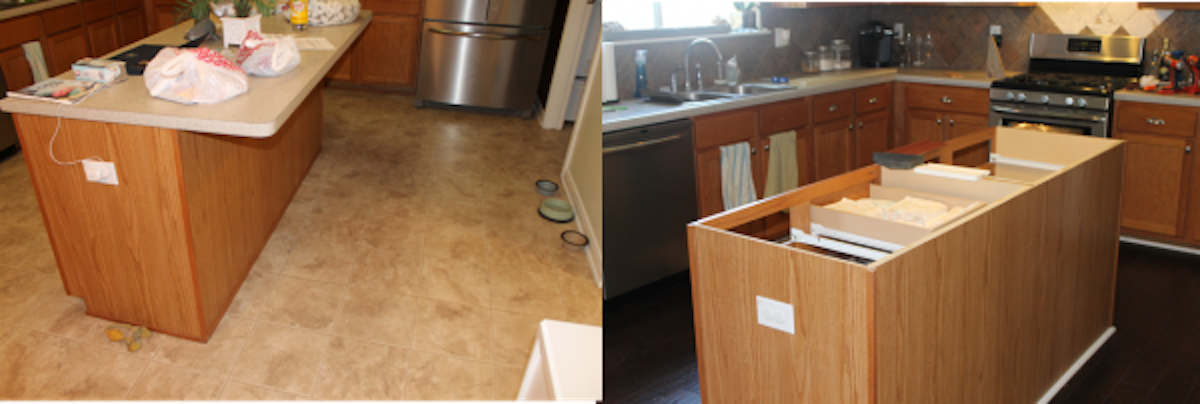
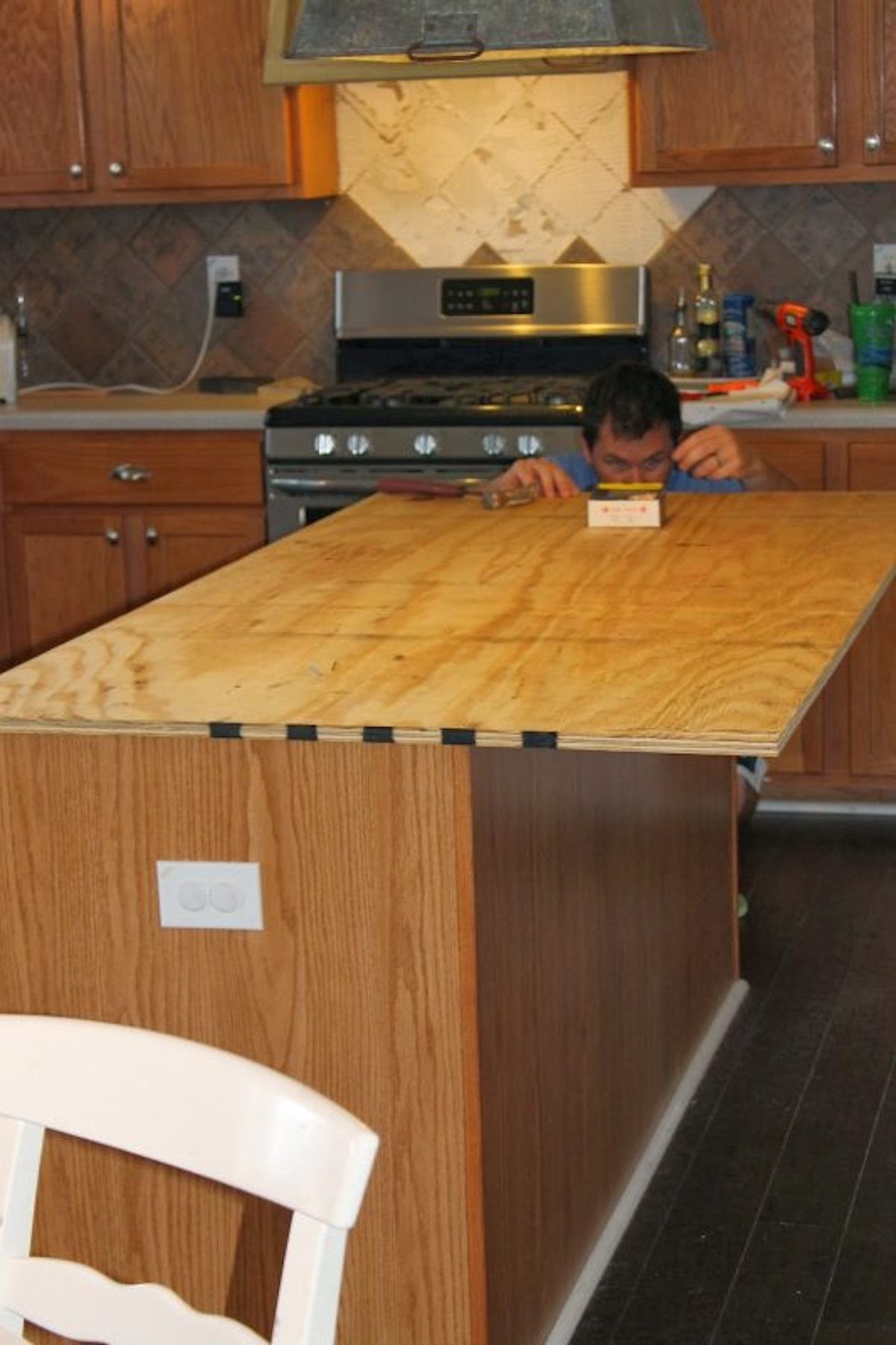
The process began with the removal of the outdated laminate countertops. Once the cabinets were cleared, the couple installed a new plywood base to serve as the foundation for the wood planks. This stage also allowed for structural modifications, such as extending the kitchen island by four inches and adding decorative molding and legs to provide a furniture-like aesthetic. To ensure stability for the island overhang, L-brackets were installed underneath.
Phase 2: Installing the Surface Planks
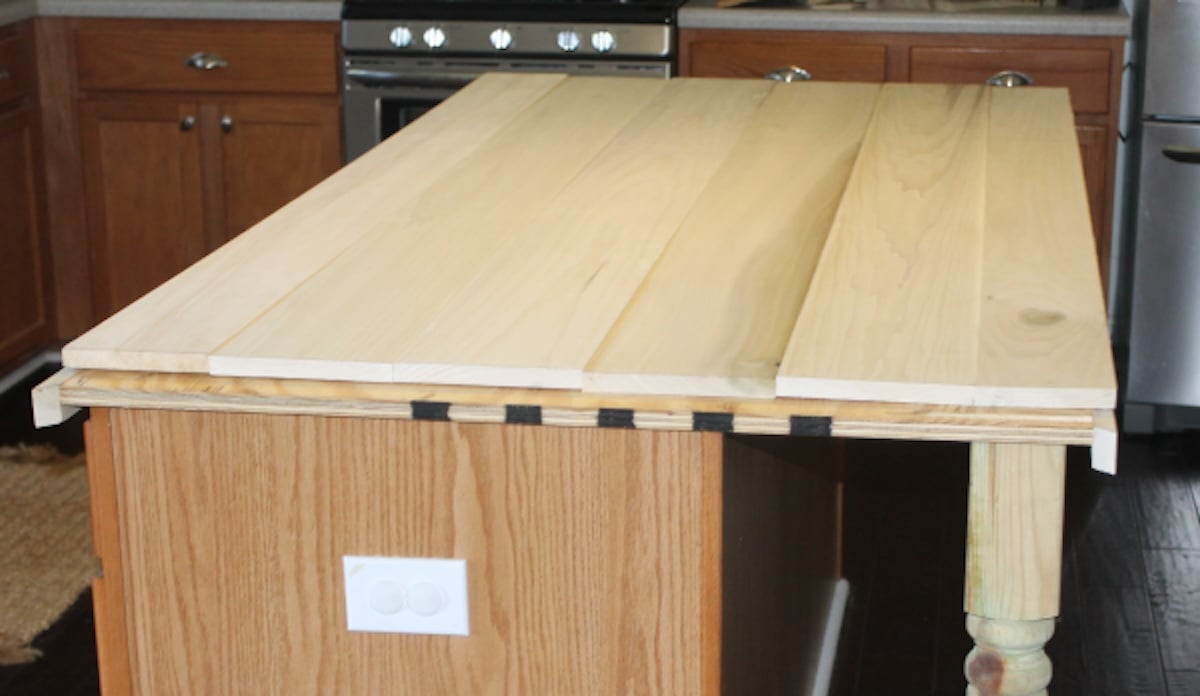
To avoid a uniform, "butcher block" appearance, Alyson opted for varying plank widths of 6 and 8 inches. Before laying the top surface, 1.25-inch thick pine trim was mitered and attached to the edges of the plywood. This crucial step provided the visual illusion of a thick, solid slab. The planks were then secured by screwing them through the underside of the plywood, ensuring the surface remained free of visible, unsightly screw heads.
Phase 3: The Art of Distressing
To bridge the gap between "new lumber" and "reclaimed character," the couple engaged in a series of deliberate distressing techniques. Using a palm sander, they softened sharp edges and created subtle grooves between the planks. To add authentic-looking damage, Alyson employed common household items: a chicken-wire basket was used to imprint texture, while a large garage hook and heavy screws were used to gouge and scratch the surface in patterns that mimicked natural wear and tear.

Phase 4: Staining and Aging
Achieving the right color was a study in patience. Alyson created numerous samples, testing various stain combinations under the specific lighting conditions of the kitchen. She ultimately landed on a custom blend of Rust-Oleum’s "Summer Oak," Minwax’s "Dark Walnut," and Rust-Oleum’s "Sun Bleached." By thinning the mixture with paint thinner (roughly a 2:1 ratio), she created a buildable color that allowed the wood grain to show through, rather than masking it under a heavy layer of pigment.
Phase 5: The Sealing Process
Perhaps the most critical step for longevity was the application of Waterlox, a specialized finish that seals wood pores against moisture. The couple applied four coats, allowing each to dry for 24 hours and sanding lightly between layers to address any "puckering" of the wood fibers. This meticulous process ensured the countertops were not only beautiful but also resistant to the inevitable spills and messes of a busy family kitchen.

Supporting Data: A Comparison of Costs
The financial argument for this project is compelling. By choosing a DIY approach, the homeowners were able to achieve a high-end aesthetic while maintaining total control over the budget.

Island Countertop Breakdown:

- Lumber and Plywood: ~$140
- Stains and Sealers: ~$85
- Fasteners and Miscellaneous: ~$47
- Total for Island: $272
Main Countertop Breakdown:

- Lumber and Plywood: ~$220
- Stains and Sealers: ~$100
- Fasteners and Miscellaneous: ~$52
- Total for Main Counters: $372
By keeping the total expenditure under $650, the homeowners saved thousands of dollars compared to the initial granite estimates.

The "Official" Perspective: Performance and Maintenance
A year after completion, the countertops have undergone rigorous real-world testing. Despite the initial concerns about using wood in a kitchen—a high-moisture environment—the use of Waterlox has proven highly effective. The homeowners report that the countertops have resisted staining from common kitchen spills and heavy use.

From a maintenance perspective, the "faux" reclaimed approach offers a distinct advantage: because the surface was distressed intentionally, any future dents or scratches from daily use merely blend into the existing texture, rather than looking like damage. The homeowners noted that they do not use the countertops as cutting boards, though the finish is durable enough to handle standard kitchen activity without the need for delicate, "kid-glove" treatment.

Broader Implications for DIY Renovation
The success of this project illustrates a growing trend in home improvement: the "democratization of design." As access to information and tutorials continues to expand, homeowners are increasingly willing to bypass expensive, outsourced labor in favor of high-effort, high-reward DIY projects.

However, this project also highlights the necessity of patience. Alyson’s account emphasizes that while the technical skills required—screwing boards to plywood, sanding, and staining—are relatively accessible, the time investment is substantial. The sealing process alone required nearly four days of work.

Furthermore, the project serves as a reminder that "reclaimed" style is often more about the process than the material itself. By manipulating new, affordable wood, homeowners can achieve the rustic, farmhouse aesthetic that is currently in high demand without the ethical or practical complications of sourcing genuine barn wood.

In summary, for those willing to dedicate the time to map out their project, select the right lumber, and endure the patient process of layering stains and finishes, the result can be a durable, character-rich centerpiece that rivals the aesthetic of luxury stone—all while leaving thousands of dollars in the bank. As Alyson noted, even if offered granite for a bargain price today, she wouldn’t trade her custom wood counters for the world.