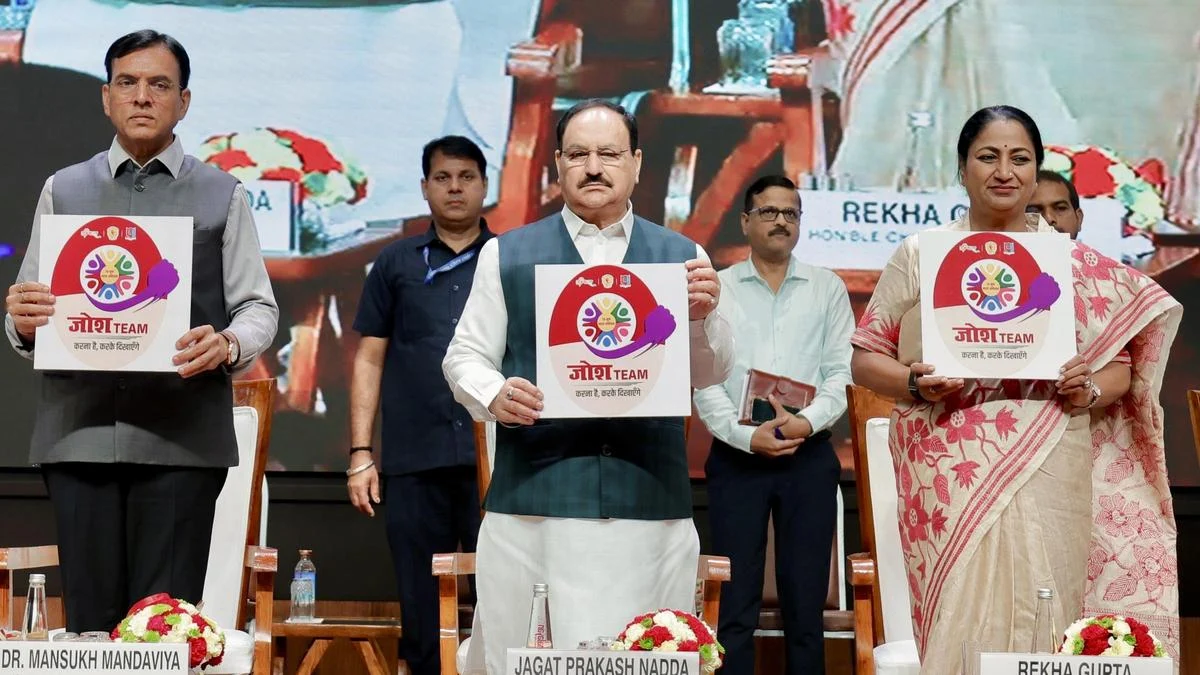
New Delhi: In a significant escalation of the national mission to eliminate tuberculosis (TB), the Union Government has unveiled a grassroots-level strategy designed to reach the "missing millions"—those individuals suffering from the disease who remain undetected and untreated within the formal healthcare framework. On October 8, 2026, Union Health Minister J.P. Nadda, alongside Minister Mansukh Mandaviya and Delhi Chief Minister Rekha Gupta, officially launched the JOSH (Joint Squad for Health) teams, a collaborative effort aimed at transforming TB surveillance from a facility-based approach to an active, community-led outreach program.
The Genesis of JOSH: Bridging the Healthcare Gap
The primary challenge in India’s ambitious goal of a "TB Mukt Bharat" (TB-Free India) has long been the identification of latent or undiagnosed cases. Many individuals living with TB remain asymptomatic in the early stages or ignore symptoms due to lack of awareness, social stigma, or geographical barriers to accessing diagnostic centers.
The JOSH initiative seeks to rectify this by deploying a unique workforce: a synergy between the disciplined ranks of the National Cadet Corps (NCC) and the energetic youth base of the MY Bharat (Mera Yuva Bharat) platform. By leveraging the social capital and reach of these volunteers, the government intends to conduct door-to-door screenings across 55 high-burden districts spanning 11 States and Union Territories.
The Structure and Operational Framework
The JOSH squads are meticulously structured to ensure both impact and accountability. Each unit consists of ten members—five NCC cadets and five MY Bharat volunteers—functioning under the direct supervision of a designated Class-I government officer. This structure ensures that the initiative remains disciplined, data-driven, and integrated with the formal health system.
The inter-ministerial cooperation is a cornerstone of this strategy. The program is being implemented through the combined efforts of:

- The Ministry of Health and Family Welfare: Providing diagnostic protocols and medical oversight.
- The Ministry of Youth Affairs and Sports: Mobilizing the vast MY Bharat network.
- The Ministry of Defence: Leveraging the logistical support and leadership training of the NCC.
These squads are tasked with mapping wards and blocks, identifying individuals exhibiting persistent symptoms, facilitating on-the-spot or referred testing, and, crucially, providing the emotional and logistical support necessary to ensure that patients do not drop out of treatment cycles.
Official Stance and Strategic Vision
During the launch ceremony, Union Health Minister J.P. Nadda emphasized that the fight against TB is not merely a medical challenge but a societal responsibility. "Awareness is important, and screening is essential, but our responsibility does not end there," Nadda stated. He highlighted that the "missing" TB cases represent a significant gap in the public health chain, as undetected individuals continue to inadvertently transmit the infection to others.
The Minister underscored that the government’s shift toward "active case finding" is designed to identify patients before their condition worsens or they become sources of community transmission. By bringing the diagnostic process to the doorstep, the government aims to reduce the "patient delay" that often characterizes TB diagnosis in remote or urban-slum settings.
Supporting Data and the Progress of TB Mukt Bharat
The launch of JOSH coincides with a broader celebration of progress within the TB Mukt Bharat Abhiyaan. During the event, the Centre felicitated 67,933 Panchayats across 697 districts that have been declared "TB Mukt" in 2026. This metric—based on the drastic reduction in notification rates and the successful completion of treatment protocols—serves as a benchmark for the efficacy of local governance in public health.
However, the Ministry is acutely aware that the path to complete eradication is complex. The decision to launch JOSH in 55 districts specifically is a strategic pilot; the government plans to scale the initiative to other districts nationwide following a thorough review of the volunteers’ orientation, mobilization efficiency, and the subsequent rise in successful case detection.

Chronology of India’s Anti-TB Efforts
To understand the current intervention, it is vital to view it within the timeline of India’s evolving healthcare strategy:
- 2017: The National Strategic Plan (NSP) for TB Elimination is launched, setting a goal to eliminate TB by 2025 (later extended in vision to align with global SDGs).
- 2020-2022: The COVID-19 pandemic causes a significant dip in TB notification rates as health systems are diverted, creating a "backlog" of undiagnosed cases.
- 2023: The "Pradhan Mantri TB Mukt Bharat Abhiyaan" gains momentum, emphasizing community participation and the "Ni-kshay Mitra" program for nutritional support.
- 2024-2025: Increased focus on molecular diagnostics and shorter, more effective treatment regimens is implemented nationwide.
- October 2026: The launch of JOSH teams marks the shift from passive reporting to aggressive, youth-led active case finding.
The Social and Economic Implications
The involvement of youth volunteers has a dual benefit. Beyond the immediate health outcomes, it fosters a sense of public health ownership among the younger generation. By interacting with the community, these volunteers act as conduits of information, helping to destigmatize TB.
From an economic perspective, TB remains a significant drain on India’s human capital. The majority of TB patients are in the prime working-age group. Every case identified and cured early translates into higher workforce participation and lower household economic distress. The JOSH initiative, by focusing on "treatment completion" rather than just diagnosis, acknowledges the reality that the biggest failure in TB control is not the lack of medicine, but the patient dropout rate due to the long, grueling nature of the treatment.
Challenges and Future Outlook
While the JOSH initiative is a robust step forward, experts note that the government must address several challenges to ensure its success:
- Training and Competency: Ensuring that volunteers can accurately identify symptoms without causing undue alarm or diagnostic confusion.
- Data Integration: Linking the ground-level data collected by JOSH teams seamlessly with the Ni-kshay portal, India’s national TB case-based web-based solution.
- Sustainability: Keeping the youth volunteers motivated and effectively supervised as the program expands from 55 districts to the rest of the country.
The collaboration between the Health Ministry and the Ministry of Defence is particularly noteworthy. By utilizing the NCC, the program benefits from a cadre that is already trained in logistics and community engagement. This "Joint Squad" approach could potentially serve as a template for other public health initiatives, such as malaria eradication or maternal health surveillance.

Conclusion
The launch of the JOSH teams represents a pivot toward a more proactive and inclusive public health model in India. By shifting the burden of search from the patient to the state—via empowered youth volunteers—the government is signaling a high-priority commitment to ending the TB epidemic.
As the JOSH squads fan out into the 55 designated districts, the eyes of the global health community will be on India. If this model succeeds in flushing out the "missing" cases and ensuring treatment adherence, it will not only save thousands of lives but also provide a scalable blueprint for developing nations struggling with similar infectious disease burdens. The mobilization of youth, combined with the administrative weight of the state, may well be the final push needed to consign tuberculosis to the history books.