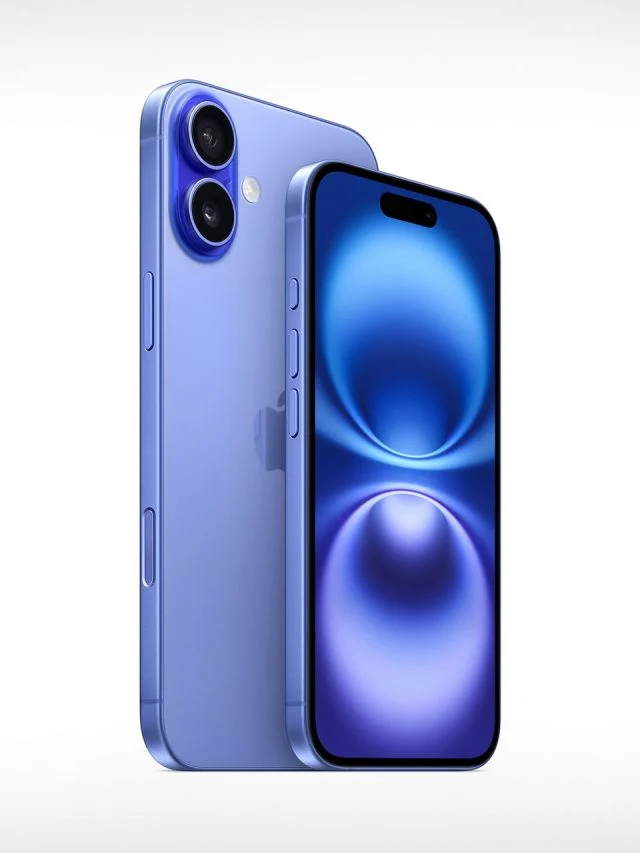
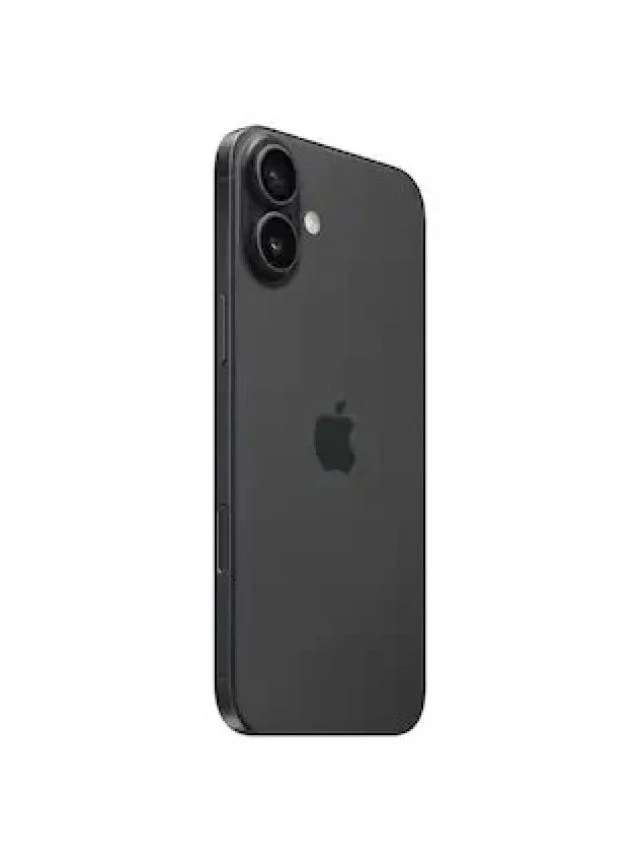
The premium smartphone landscape in India has witnessed a dramatic shift in consumer purchasing patterns. As smartphone manufacturers steadily raise the entry prices of their flagship lineups, savvy buyers are increasingly turning their attention to strategic discount cycles. In a highly competitive retail environment, e-commerce giant Flipkart has introduced a massive price cut on Apple’s iPhone 16 Plus.
By combining a flat promotional discount with targeted banking incentives, Flipkart has brought the effective price of this large-screen iOS device down by Rs 13,995. This significant price correction repositions the iPhone 16 Plus as a highly competitive option for consumers seeking flagship performance, expansive screen real estate, and exceptional battery life without crossing the psychological Rs 80,000 price barrier.
1. Main Facts: Breaking Down the Flipkart Deal Structure
The promotional campaign on Flipkart offers a dual-tier discount structure, comprising a direct retail price cut and a co-branded banking cashback offer. This combination allows buyers to maximize their savings on the standard 128GB base variant of the iPhone 16 Plus.
+-------------------------------------------------------------+
|               IPHONE 16 PLUS DISCOUNT BREAKDOWN             |
+------------------------------------+------------------------+
| Original Launch Price (M.R.P.)     | Rs 89,900              |
+------------------------------------+------------------------+
| Flipkart Flat Promotional Discount | Rs 10,000              |
+------------------------------------+------------------------+
| Promotional Sale Price             | Rs 79,900              |
+------------------------------------+------------------------+
| Bank Cashback (Axis/SBI Cards)     | Rs 3,995 (Approx. 5%)  |
+------------------------------------+------------------------+
| Final Effective Purchase Price     | Rs 75,905              |
+------------------------------------+------------------------+
| Total Combined Savings             | Rs 13,995              |
+------------------------------------+------------------------+
Direct Flat Discount
Upon visiting the Flipkart product page, consumers will find the iPhone 16 Plus listed at a promotional price of Rs 79,900. This represents a flat, unconditional reduction of Rs 10,000 from its original Indian launch price of Rs 89,900. Unlike trade-in schemes, this flat discount does not require buyers to surrender an older device to qualify.
Co-Branded Banking Cashback
To further lower the transaction cost, Flipkart has partnered with major financial institutions. Customers completing their purchase using a Flipkart Axis Bank Credit Card or an SBI Credit Card are eligible for an additional cashback/instant discount of Rs 3,995 (representing approximately 5% of the promotional price).
When both promotional levers are applied, the final effective price of the iPhone 16 Plus drops to Rs 75,905, resulting in total cumulative savings of Rs 13,995.
2. Chronology: The Journey of the iPhone 16 Plus in India
Understanding the context of this discount requires looking at the typical lifecycle of Apple’s hardware in the Indian subcontinent, where import duties and local assembly play a major role in pricing.
  September: Launch
  • iPhone 16 Plus debuts at Rs 89,900.
  • Targets buyers wanting a large screen without the Pro Max price.
        │
        ▼
  Mid-Cycle: Market Adjustments
  • Intense competition from premium Android flagships.
  • Shifting consumer preferences demand strategic price corrections.
        │
        ▼
  Current Phase: Flipkart Discount
  • Flat Rs 10,000 cut + Rs 3,995 bank cashback.
• Effective price drops to Rs 75,905, changing its market positioning.- The Launch (September): Apple officially introduced the iPhone 16 Plus alongside the standard iPhone 16, iPhone 16 Pro, and iPhone 16 Pro Max. The device was positioned as a premium choice for users who prioritize screen size and battery life over the specialized camera hardware and high-refresh-rate displays of the Pro series. It debuted at Rs 89,900 for the 128GB storage variant.
- Mid-Cycle Market Adjustments: In the months following the launch, the premium smartphone segment saw intense competition from Android manufacturers, who introduced flagships featuring high-refresh-rate displays and periscope zoom lenses at similar price points. This pressure, combined with shifting consumer preferences, prompted retail platforms to introduce promotional campaigns.
- The Current Promotion: Flipkart’s latest price correction represents the most significant discount on the iPhone 16 Plus since its debut. By lowering the entry barrier below Rs 76,000, the e-commerce platform aims to capture market share ahead of upcoming seasonal sales, making premium iOS hardware accessible to a broader demographic.
3. Supporting Data: Technical Specifications and Real-World Performance
To evaluate whether the discounted iPhone 16 Plus offers genuine value, it is essential to analyze its underlying hardware, performance benchmarks, and real-world capabilities.
Silicon Performance: The A18 Chipset
The iPhone 16 Plus is powered by Apple’s custom-designed A18 chipset, built on a second-generation 3-nanometer process. This processor features a 6-core CPU (comprising 2 performance cores and 4 efficiency cores) alongside a 5-core GPU and a 16-core Neural Engine.
- Multitasking & Everyday Usability: In daily operations, the A18 processor provides a highly fluid user experience. System navigation, app switching, and heavy productivity tasks run without lag.
- Gaming Capabilities: During hands-on testing, the device demonstrated excellent thermal management and sustained performance. High-fidelity, resource-intensive mobile titles such as Genshin Impact and Resident Evil Village ran smoothly at high graphical settings, maintaining stable frame rates over extended gaming sessions.
Display: A Large Canvas with a Notable Caveat
The device features a 6.7-inch Super Retina XDR OLED display with a resolution of 2796 x 1290 pixels at 460 ppi.
+-----------------------------------------------------------------------------+
|                          DISPLAY SPECIFICATIONS                             |
+-------------------------+---------------------------------------------------+
| Screen Size & Type      | 6.7-inch Super Retina XDR OLED                    |
+-------------------------+---------------------------------------------------+
| Resolution / Density    | 2796 x 1290 pixels at 460 ppi                     |
+-------------------------+---------------------------------------------------+
| Interactive Feature     | Dynamic Island integration                        |
+-------------------------+---------------------------------------------------+
| Peak Brightness         | Up to 2,000 nits (outdoor environments)           |
+-------------------------+---------------------------------------------------+
| Refresh Rate            | Standard 60Hz                                     |
+-------------------------+---------------------------------------------------+
The display integrates Apple’s Dynamic Island, which replaces the traditional notch with an interactive pill-shaped cutout that displays real-time notifications, live activities, and system alerts.
While the OLED panel delivers exceptional contrast, deep blacks, and a peak outdoor brightness of up to 2,000 nits, it is limited to a standard 60Hz refresh rate. In a market where competitors offer 120Hz refresh rates even on mid-range devices, the lack of Apple’s high-refresh-rate "ProMotion" technology remains a key point of consideration for potential buyers.
Camera Architecture
The rear camera module of the iPhone 16 Plus uses a dual-lens system optimized for everyday photography:
- Primary Sensor: A 48-megapixel "Fusion" camera with an f/1.6 aperture and sensor-shift optical image stabilization. This sensor supports high-resolution 24MP and 48MP photos and acts as a physical 2x optical-quality telephoto lens by cropping the center 12 megapixels of the sensor.
- Ultrawide Sensor: A 12-megapixel ultrawide camera with an f/2.2 aperture and a 120-degree field of view. This lens also supports macro photography, enabling detailed close-up shots.
In real-world testing, this camera system delivered highly accurate color reproduction, excellent dynamic range, and minimal noise in low-light conditions.
Battery Life and Charging Ecosystem
One of the main selling points of the iPhone "Plus" line has always been its battery life, and the iPhone 16 Plus continues this trend. Thanks to the power efficiency of the A18 chip and a large internal physical cell, the device easily delivers over a full day of heavy usage, often stretching into a second day under moderate use.
For charging, the phone uses a standard USB-C port, offering universal compatibility with modern chargers. It also supports MagSafe wireless charging up to 25W when paired with a compatible power adapter, alongside standard Qi2 wireless charging.
4. Industry Context and Market Dynamics
The aggressive pricing strategy seen on Flipkart highlights the evolving relationship between premium smartphone brands, third-party distributors, and financial institutions in India.
While Apple maintains strict control over its recommended retail prices (M.R.P.) across its physical Apple Store locations and official online store, third-party e-commerce platforms like Flipkart and Amazon India have more flexibility. These platforms often leverage high-volume inventory purchases, platform-specific exchange programs, and banking partnerships to offer targeted discounts.
By subsidizing cashback offers, financial institutions like SBI and Axis Bank drive higher transaction volumes on credit cards, while Flipkart secures a larger share of the premium smartphone market.
Additionally, Apple’s expanding local assembly operations in India have helped stabilize retail margins. By assembling a significant portion of its standard and Plus models within the country, Apple has mitigated some of the steep import tariffs on fully built units. This operational shift gives retail partners more headroom to offer deep promotional discounts, especially midway through a product’s lifecycle.
5. Implications: What This Deal Means for Consumers and Competitors
This substantial price drop has clear implications for both consumers and the broader smartphone market.
                              MARKET IMPACT
                                    │
         ┌──────────────────────────┴──────────────────────────┐
         ▼                                                     ▼
CONSUMER IMPLICATIONS                                 COMPETITIVE DYNAMICS
• Pro-level screen size for less.                     • Pressure on Android flagships.
• Best-in-class battery performance.                  • Challenges mid-tier premium devices.
• 60Hz display is the only major trade-off.           • Alters the value-for-money equation.
For the Consumer: A Balanced Value Proposition
At its original price of Rs 89,900, the iPhone 16 Plus faced tough competition, as buyers often chose to spend slightly more for a Pro model or opted for the more affordable standard iPhone 16. However, at an effective price of Rs 75,905, the value proposition changes significantly.
For buyers who want a large screen and top-tier battery life but do not need the professional-grade triple-camera array or the 120Hz display of the Pro Max, the iPhone 16 Plus becomes an excellent choice. It offers premium performance and a modern design at a much more accessible price point.
For Competitors: Increased Pressure in the Premium Segment
This discount puts pressure on premium Android devices, such as the Samsung Galaxy S-series and Google Pixel flagships. Android manufacturers have traditionally competed by offering richer feature sets—such as high-refresh-rate displays and dedicated telephoto lenses—at lower price points than Apple.
With the iPhone 16 Plus now available under Rs 76,000, Apple’s ecosystem becomes a much stronger competitor in this price bracket. This shift may prompt rival brands to run their own promotional campaigns to maintain their market share in the premium segment.