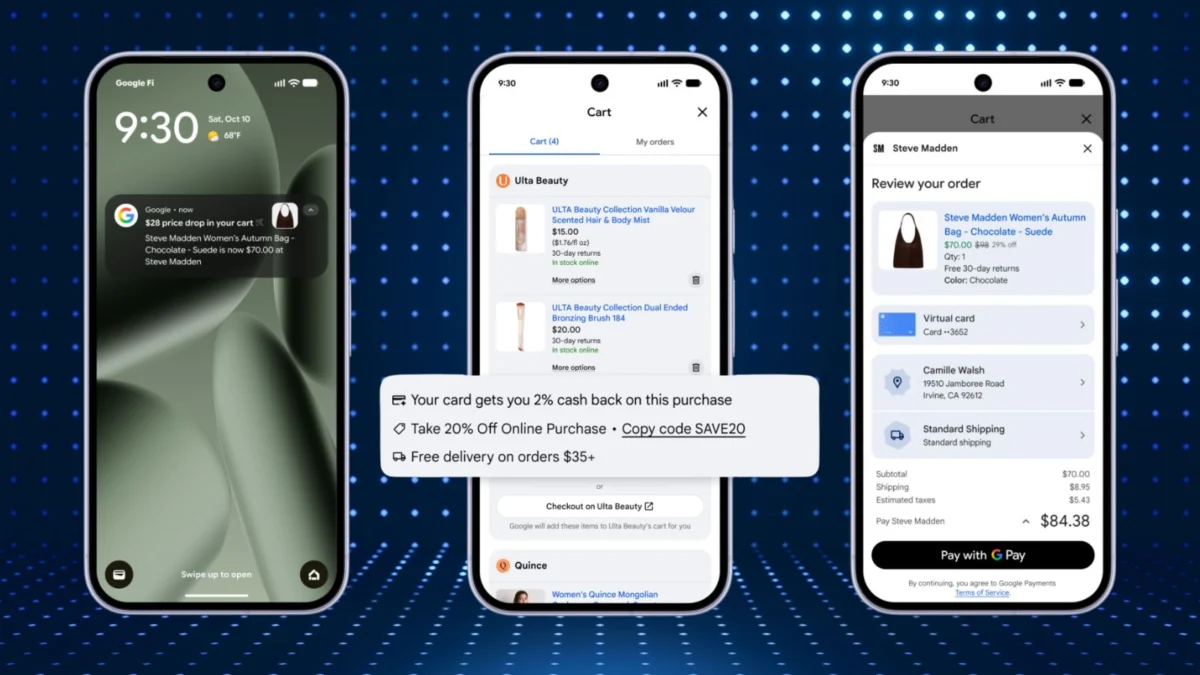
In an era where artificial intelligence is rapidly becoming the primary intermediary between consumers and the products they buy, Google has taken a decisive step to ensure it remains the gatekeeper of the digital storefront. This month, the tech giant officially launched "Universal Cart" in the United States, integrating it directly into the Gemini app and Google Search.
The move represents more than just a new feature; it is the culmination of a broader strategy to transform Google from a simple search engine into an end-to-end commerce engine. By streamlining the path from discovery to purchase, Google is positioning itself as an indispensable partner for brands that want to remain visible in an AI-dominated ecosystem.
The Core Facts: What is Universal Cart?
At its simplest, Universal Cart is a native checkout interface that allows consumers to purchase products directly within Google’s own properties. Previously, a search query for a product would typically result in a list of links directing the user to a third-party retailer’s website. With Universal Cart, the "conversion" happens within the Google ecosystem.
Powered by the Universal Commerce Protocol (UCP)—an infrastructure Google announced in January to bridge the gap between AI agents and real-world retail—the system allows users to browse, select, and pay for items without ever navigating to a brand’s landing page.
While Google manages the discovery, payment, and transaction data, the physical fulfillment of these orders remains the responsibility of the retailers. This "split" model—where Google handles the customer experience and the retailer handles the logistics—is designed to solve the friction inherent in mobile commerce, where slow-loading websites and fragmented checkout processes often lead to cart abandonment.
Chronology of a Commerce Pivot
Google’s journey toward becoming a direct-to-consumer shopping hub has been a gradual, calculated evolution:
- Pre-2024: The Comparison Era: For years, Google Shopping served primarily as a price-comparison engine, funneling traffic to retailers and collecting ad revenue through Cost-Per-Click (CPC) models.
- January 2026: Laying the Infrastructure: Google unveiled the Universal Commerce Protocol (UCP). This was the foundational "handshake" required for AI agents to interact with disparate retail databases. It signaled that Google was no longer interested in just linking to retailers; it wanted to talk to them on a backend level.
- Mid-2026: The Rise of Agentic Commerce: Throughout the year, as Gemini became more conversational, it began offering product recommendations based on complex, multi-layered queries (e.g., "Find me a waterproof hiking outfit under $200 that is sustainable and ships by Friday").
- October 2026: The Launch: Universal Cart hits the U.S. market, marking the shift from "AI-assisted search" to "AI-assisted transaction."
Supporting Data: Why the Shift Matters
The rationale behind Universal Cart is rooted in the shifting behavior of modern consumers. According to industry data, mobile conversion rates continue to lag behind desktop, largely due to the "clunky" nature of mobile web checkout flows.
Furthermore, the rise of "Zero-Click" searches—where users find the information they need directly on the search engine results page (SERP)—has put pressure on retailers. Brands have long relied on their websites to capture first-party data, but as AI agents begin to summarize shopping lists and suggest products, the traffic to those brand sites is at risk of evaporating.
For retailers, the trade-off is stark:
- The Benefit: Higher conversion rates. By leveraging Google’s frictionless checkout, retailers can capture sales that might have been lost due to poor mobile site performance.
- The Risk: Loss of the "Customer Journey." When a purchase happens in Google’s environment, the retailer loses the ability to upsell, cross-sell, or capture the user in their own loyalty ecosystem.
The Role of AI Agents in Product Discovery
We are entering the age of "Agentic Commerce." In the past, a consumer searched for a product; now, an AI agent acts as a personal shopper. This shift changes the fundamental nature of SEO (Search Engine Optimization).
Brands are no longer just competing to be the first blue link on a Google search results page; they are competing to be included in the "recommended set" provided by an AI. If a user asks Gemini to "find the best coffee maker," the AI’s recommendation algorithm becomes the new kingmaker.

Google’s Universal Cart ensures that once the AI has made that recommendation, the friction is minimized. If the consumer can click "Buy Now" inside the chat, the likelihood of a successful transaction skyrockets. This effectively turns Google’s Gemini into a personalized digital storefront for every major retailer integrated into the UCP.
Official Responses and Strategic Positioning
Google has framed the launch of Universal Cart as a win-win for both the consumer and the retailer. In previous statements regarding the UCP, Google executives emphasized that the protocol was designed to create a "standardized language" for commerce.
"Our goal is to make shopping as seamless as a conversation," a Google representative noted earlier this year. By reducing the steps between "I want this" and "I bought this," Google argues that it is helping retailers move more inventory.
However, industry observers are more cautious. Retailers are watching the balance of power closely. If Google begins to prioritize retailers who use the Universal Cart in its AI recommendations, it could effectively create a "pay-to-play" environment where those who don’t integrate with Google’s proprietary checkout are relegated to the bottom of the AI’s suggestions.
Implications: The Future of Retail Media
The launch of Universal Cart is a major milestone for Retail Media Networks (RMNs). It essentially turns Google into the world’s largest and most powerful RMN.
1. The Death of the Destination Website?
If consumers become accustomed to shopping through an AI agent, the necessity of visiting a specific retailer’s website diminishes. This could lead to a decline in brand equity for retailers who rely on their unique site experience to differentiate themselves.
2. The Data Tug-of-War
Data is the currency of the modern web. By capturing the transaction, Google gains unprecedented insights into consumer purchasing habits. While retailers will still receive order information to fulfill the product, the behavioral data—the search history, the comparison process, and the specific prompts that led to the purchase—remains firmly in Google’s hands.
3. Advertising and Personalization
With the launch of Universal Cart, Google’s advertising model is likely to evolve. We may soon see "Conversational Ads," where brands pay to have their products prioritized within the AI’s recommendations, with a direct path to purchase through the Universal Cart. This would be a massive revenue generator for Google, further cementing its role as the dominant intermediary in global retail.
Conclusion: A New Frontier
The launch of the Universal Cart is the latest proof that the "search engine" as we once knew it is dead. It has been replaced by a "decision engine"—a system that doesn’t just point you in the right direction but carries you through to the finish line.
For brands, the message is clear: the future of retail is not just about having a website; it is about having an API that can "talk" to Google. As AI agents become the primary way consumers interact with the digital world, the ability to integrate into these agentic workflows will define the winners and losers of the next decade of retail.
The question that remains for retailers is whether this increased conversion is worth the price of ceding the customer relationship to the world’s most powerful search giant. For now, with the Universal Cart live in the U.S., the industry is moving forward at full speed, leaving the traditional, link-based internet behind.