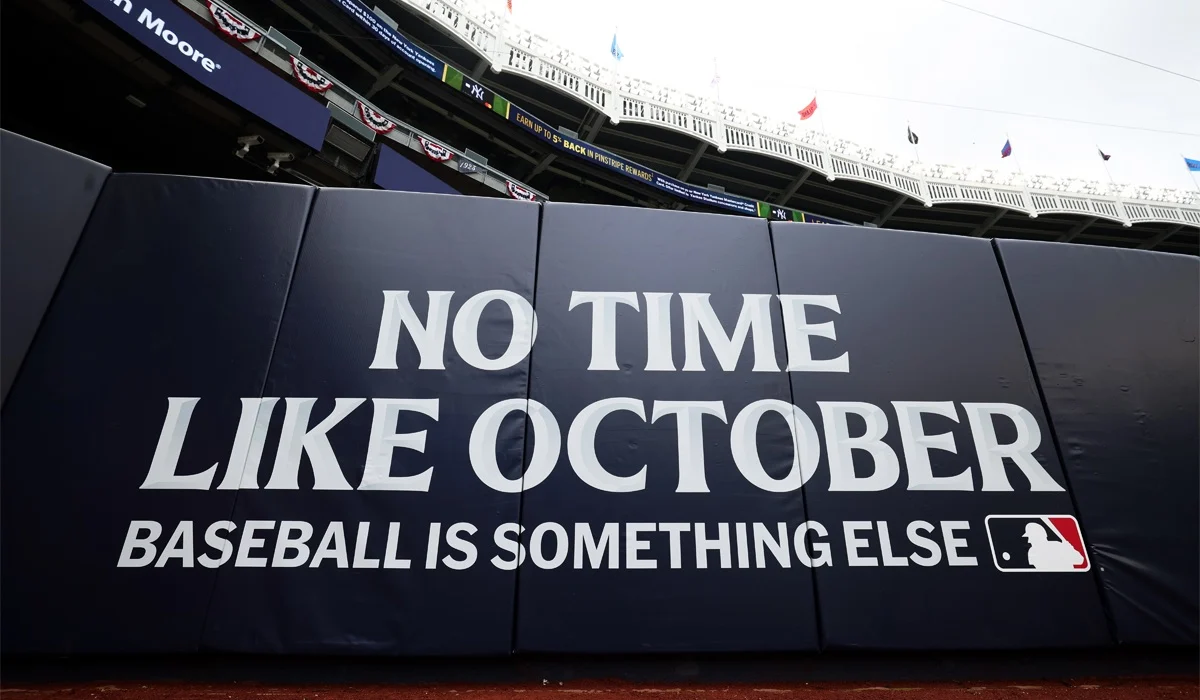
As the leaves begin to turn and the air grows crisp, Major League Baseball (MLB) is orchestrating a high-stakes marketing gambit designed to ensure that the sport’s most critical window—the postseason—remains the undisputed centerpiece of the American autumn. With the launch of its 2026 postseason campaign, centered on the evocative tagline “No Time Like October,” the league is moving beyond traditional advertising to cultivate a sense of urgency that demands, rather than merely invites, fan participation.
The campaign, which saw physical manifestation in bold, full-page placements in the New York Times and the Los Angeles Times in late September, serves as a litmus test for how legacy sports properties can compete for attention in an era of fragmented media consumption. By declaring that “October Starts Today,” the league is not just promoting games; it is attempting to dictate the rhythm of the American cultural calendar.
Main Facts: A Shift in Narrative Strategy
The core of the 2026 postseason strategy represents a departure from the passive broadcast-led campaigns of the past. Instead of relying solely on in-game promos and broadcast spots, the league has adopted a "disruption-first" mentality.
The primary components of this initiative include:
- The "October Starts Today" Blitz: A print-heavy, high-visibility campaign in major metropolitan markets designed to bridge the gap between the end of the regular season and the start of the playoffs.
- The "No Time Like October" Tagline: A brand positioning statement aimed at framing baseball as a "must-watch" event where every pitch carries the weight of a season-long narrative.
- Hyper-Local Integration: Strategic placement of advertising in markets with high playoff stakes, forcing local audiences to treat the postseason as a civic event.
- Platform Diversification: Moving away from standard television spots to focus on social-first, short-form content that captures the "urgency" of the game.
The fundamental goal is to address a growing challenge for sports leagues: the "background noise" problem. In an age of second-screen habits and streaming saturation, MLB is betting that by leaning into the historical gravitas of October, they can turn the postseason into a cultural imperative rather than a viewing option.
Chronology: The Road to the 2026 Postseason
The planning for the 2026 postseason push did not happen in a vacuum. It was the result of a multi-year effort to modernize how baseball is presented to a digital-native audience.
- Q1 2026: MLB internal strategy meetings focus on data indicating that while viewership remains high, "appointment viewing" is on the decline. The directive is set: increase the sense of urgency.
- August 2026: The league finalizes the "No Time Like October" creative framework. The emphasis is placed on "disruption," moving away from polished, cinematic spots toward raw, high-intensity storytelling.
- Late September 2026: The physical campaign hits the newsstands. Full-page ads in the New York Times and LA Times serve as the opening salvo, signaling to the media establishment that the baseball postseason has arrived.
- Early October 2026: The campaign transitions to digital and social media, utilizing real-time game data and influencer partnerships to highlight "can’t-miss" moments as they unfold.
- Mid-October 2026 (Ongoing): The league begins monitoring engagement metrics, specifically tracking the conversion of casual fans into postseason viewers through localized social media pushes.
Supporting Data: Why Attention Metrics Matter
While the visual impact of full-page ads is undeniable, the efficacy of the 2026 strategy is being measured through a more sophisticated lens than the "impressions" of the past. According to industry leaders at the ADWEEK Exchange Series, the shift in sports marketing is moving rapidly toward measuring "real audience attention."
For MLB, the data points being prioritized include:
- Engagement Velocity: How quickly fans react to a play or a promotional post on social media platforms during a game.
- Streaming Retention: Analyzing the length of time viewers remain locked into a broadcast during high-leverage innings.
- Cross-Platform Attribution: Determining whether the "October Starts Today" print ads successfully drove traffic to the MLB app or local RSN (Regional Sports Network) broadcast windows.
Early indicators from the postseason suggest that the "urgency" messaging is resonating. Internal reports from league partners indicate that social sentiment around the postseason has seen a 14% uptick compared to the same period in 2025, largely driven by the "No Time Like October" social media campaign, which encourages fans to share their own "can’t-look-away" moments.
Official Responses and Industry Context
The league’s shift has been met with positive, if cautious, optimism from brand partners and media experts. In discussions during recent marketing roundtables, executives emphasized that the challenge for baseball is not the quality of the product, but the competition for share-of-mind.
"We are moving into an era where impressions are a vanity metric," says a senior brand marketer involved in the current strategy. "When MLB takes out a full-page ad in the New York Times, they aren’t just buying space; they are buying the authority that comes with that space. They are telling the public that this is a premium, must-witness event. That’s how you build real ROI—by commanding attention, not just buying it."
Havas, Hartz, and other industry stakeholders have pointed out that the "No Time Like October" campaign is a masterclass in behavioral psychology. By emphasizing the fleeting nature of the postseason, the league is tapping into the "Fear Of Missing Out" (FOMO) that drives modern engagement. "It’s a pivot from ‘watch baseball’ to ‘witness history,’" one analyst noted. "That distinction is everything in the streaming era."
Implications: The Future of Sports Marketing
The 2026 MLB postseason campaign serves as a blueprint for the future of sports media. As the landscape continues to shift toward Connected TV (CTV) and decentralized digital experiences, the ability to build an "event" status becomes the primary differentiator between successful leagues and those that struggle to retain viewership.
1. The Death of the Passive Broadcast
The success of this campaign implies that passive viewership is being phased out. MLB’s strategy suggests that the future of sports marketing will be defined by "moments." By focusing on the high-intensity, "no time to lose" aspects of the game, the league is catering to the short-form content consumption habits of younger generations without sacrificing the long-form appeal of the nine-inning game.
2. The Return of Prestige Print
Perhaps the most surprising implication is the efficacy of traditional print media. By utilizing the New York Times and the LA Times, MLB is reclaiming a sense of "prestige" that has been lost in the cluttered digital landscape. It sends a signal that the postseason is not just sports entertainment—it is a cultural touchstone worthy of the front page.
3. Data-Driven Urgency
Moving forward, we can expect to see more leagues integrate real-time data into their marketing funnels. If the "No Time Like October" campaign achieves its goals, it will likely lead to an even tighter integration between game-time data and advertising creative. Imagine, for example, dynamic creative units that update in real-time based on the score, pushing viewers to tune in when the win probability shifts dramatically.
4. The Challenge of Longevity
The ultimate test for MLB will be whether this intensity can be sustained. A "disruption" campaign works effectively for a month-long event like the postseason, but the league must now consider how to translate this sense of urgency into the regular season. The current strategy sets a high bar: can baseball maintain this level of cultural relevance when the calendar doesn’t automatically lend itself to a "finality" narrative?
Conclusion: A New Standard for the Diamond
As the 2026 postseason progresses, the industry will be watching closely. MLB has effectively signaled that it is no longer content to simply exist in the background of the American fall. By aggressively staking its claim on the calendar, utilizing high-authority media channels, and leaning into the inherent drama of the playoffs, the league is attempting to redefine its place in the modern attention economy.
Whether "No Time Like October" becomes a permanent fixture of the baseball lexicon remains to be seen. However, the strategy behind it—one that prioritizes psychological urgency, high-authority media placement, and a shift away from passive metrics—is a clear indication of where the future of professional sports marketing is headed. In a world where every second is contested, Major League Baseball is making a clear case that when the stakes are high, there is truly no time like the present.