For decades, the “Holy Grail” of digital marketing was simple: rank on page one of Google, capture the organic click, and convert the visitor. Content marketers spent years mastering the nuances of SEO, keyword density, and backlink profiles. But the digital landscape has undergone a seismic shift. Today, the rise of AI-powered assistants—ChatGPT, Gemini, Perplexity, and others—has transformed how buyers conduct research.
In this new ecosystem, users often receive comprehensive answers directly within the AI interface, eliminating the need to click through to a website. This “zero-click” reality has rendered traditional SEO metrics insufficient. To maintain authority and demand generation, content teams must pivot to a new discipline: Answer Engine Optimization (AEO).
Main Facts: The Shift from Links to Answers
The fundamental premise of AEO is that the “search engine results page” (SERP) is no longer a list of blue links; it is a synthesis of information. When a potential buyer asks an AI tool for a solution to a business problem, they expect a distilled, accurate, and authoritative summary.
If your brand is not present in that summary—or worse, if the AI cites your competitor—you have lost the opportunity before the buyer has even visited your site. AEO requires a departure from traditional keyword-stuffing toward a focus on clarity, expertise, and source credibility.
Content teams now face a tripartite challenge:
- Visibility: Determining whether the brand appears in AI-generated responses.
- Authority: Identifying which sources the AI cites as the primary authority on specific topics.
- Conversion: Tracking the behavior of users who do click through from AI assistants to understand if these visitors are higher-intent leads.
Chronology: The Evolution of Search Behavior
To understand where we are going, we must look at the progression of search technology:

- Pre-2010 (The Directory Era): Search was about navigation. Users searched for a company name to find a URL.
- 2010–2022 (The Keyword Era): SEO dominated. Marketers optimized for specific search queries, focusing on ranking, click-through rates (CTR), and page-level authority.
- 2023–Present (The Answer Engine Era): We have entered the era of the Large Language Model (LLM). Search is no longer about finding a website; it is about gathering intelligence. AI agents perform the heavy lifting of synthesizing data from thousands of sources, leaving the user with a final answer.
This evolution has been rapid. Within 24 months, the market has shifted from "How do I rank #1?" to "How do I become the primary source cited by the AI?"
Supporting Data: Why AEO Matters Now
The transition to AEO is not merely a theoretical exercise; it is backed by significant performance data. According to recent internal findings from HubSpot, organizations that actively optimize for AI search see a dramatic uptick in lead quality.
Customers who integrate AEO into their marketing strategy generate 170% more Marketing Qualified Leads (MQLs) compared to those who continue to rely solely on traditional SEO methods. This staggering disparity suggests that AI-referred traffic carries a higher level of intent. When a user clicks a link provided by an AI assistant, they have already received a vetted, summarized answer and are clicking to deepen their knowledge or initiate a purchase. They are, in essence, "pre-qualified" by the AI’s recommendation.
Official Perspective: The HubSpot Approach
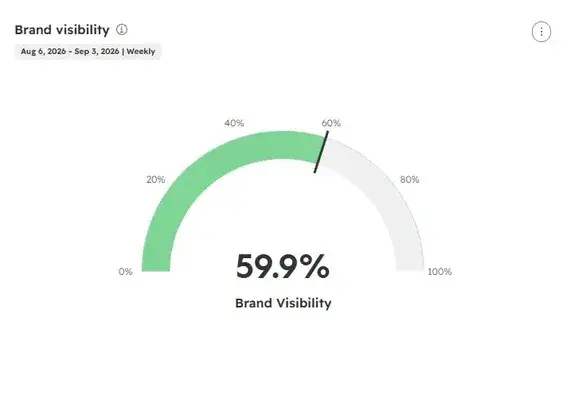
HubSpot has moved to the forefront of this shift by integrating AEO directly into the Marketing Hub. By providing a brand visibility score that tracks performance across major platforms like ChatGPT, Gemini, and Perplexity, HubSpot allows marketers to see the "hidden" side of search.
The platform tracks specific prompts—questions that potential customers actually ask—and monitors which brands appear in the answers. This gives marketers a baseline. Without this baseline, as experts note, it is impossible to determine whether a brand’s content strategy is actually resonating with the new generation of AI-driven searchers.
Implications for Content Strategy
The implications for content marketers are profound. The work is still grounded in the fundamentals: understanding the audience, answering questions clearly, and maintaining high-quality, current content. However, the feedback loop has changed.

H3: Redefining the Content Lifecycle
In the past, the lifecycle was: Research -> Create -> Optimize for Rank -> Measure CTR.
In the AEO model, the lifecycle is: Identify High-Value Prompts -> Analyze Citations -> Optimize for AI Synthesis -> Measure AI-Referral Traffic.
The "Recommendations" tab within modern AEO tools is critical here. It analyzes the citation patterns of top-performing content across the web. If a specific competitor is consistently cited for a "How to" question, the AI has deemed their content the most useful. Marketers can use this data to identify gaps in their own content—perhaps their answer is too long, lacks a clear list format, or is outdated.
H3: The Challenge of Attribution
One of the most complex implications is the issue of “dark social” or unclicked brand exposure. If a buyer searches for “best CRM software” and the AI lists your company as a top three recommendation, you have gained massive brand equity even if the user never clicks the link.
Measuring this "implied authority" is the next frontier of marketing analytics. While HubSpot allows teams to track specific "AI Referral" traffic sources, marketers must also account for the halo effect of being present in the AI’s response. This necessitates a shift in how we report ROI—moving away from pure click-based attribution toward a more holistic view of brand awareness and share-of-voice within AI interfaces.
Implementing AEO: A Step-by-Step Guide for Teams
For teams looking to operationalize AEO, the following framework is recommended:
1. Establish Your AI Visibility Baseline
You cannot improve what you do not measure. Start by curating a list of 50–100 high-intent questions your prospects ask during the research phase. Run these through the leading AI models and record your brand’s presence, the competitors present, and the sources cited.

2. Leverage Citation Patterns
Use your AEO tools to see why a competitor is being cited. Is it because of their technical documentation? Is it because they have a high-performing "Best of" article? Use this intelligence to structure your own content—typically favoring concise, expert-led, and easily scannable information that an LLM can easily ingest and prioritize.
3. Integrate AI Referral Tracking
Ensure your CRM is configured to categorize traffic from AI sources. HubSpot’s Original and Latest Traffic Source properties are essential here. By isolating "AI Referrals" from organic search, you can analyze the conversion rate of this specific traffic segment compared to traditional organic search.
4. Continuous Optimization
AEO is not a "set it and forget it" task. As AI models update their training data and preferences, your ranking in AI answers will fluctuate. Treat AEO as a monthly audit. Review the recommendations provided by your marketing platform, update your high-value assets, and ensure your brand’s value proposition is clearly stated in a way that is "AI-friendly"—using schema markup, clear headers, and direct, authoritative answers to common industry questions.
Conclusion: The Path Forward
The rise of AI search represents the most significant change to the internet since the invention of the search engine. While the transition may feel daunting, the core mission of content marketing remains the same: providing the most helpful, relevant, and trustworthy information to your audience.
The brands that will thrive in this environment are those that stop viewing AI as a threat to their traffic and start viewing it as a new channel for influence. By tracking visibility, acting on citation recommendations, and monitoring AI-referred traffic with precision, marketers can ensure that when the future asks a question, their brand is the one providing the answer.
The era of Answer Engine Optimization is here. It is time to refine your strategy to match the way your customers think, ask, and decide.