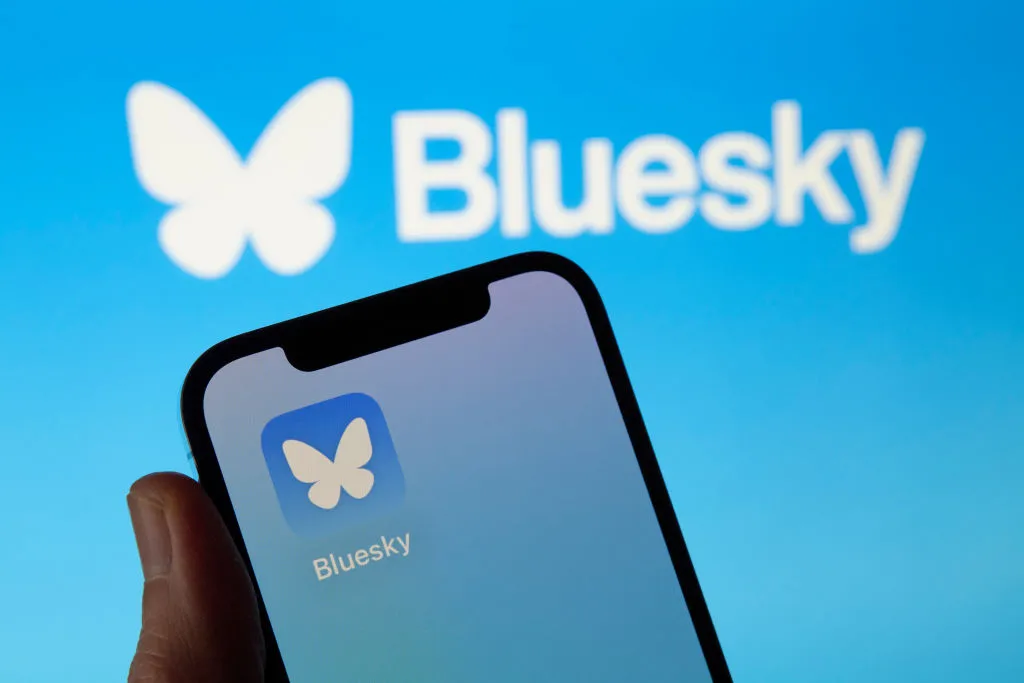
In a bold strategic maneuver that could fundamentally alter how users perceive their digital presence, Bluesky—the decentralized social media platform—has announced its intention to secure a dedicated internet domain suffix: .bsky.
The announcement, made on Monday by CEO Toni Schneider, marks a significant departure from the traditional social media model. By moving to become a Top-Level Domain (TLD) registrar, Bluesky aims to provide its users with a cleaner, more authoritative online identity. If the application is successful, the current handles—such as @username.bsky.social—could be streamlined into the punchier, more professional format of username.bsky.
This move represents more than just a rebranding of handles; it is a declaration of intent regarding the future of the open web and the portability of personal data.
The Mechanics of the .bsky TLD
How the Transition Would Work
For the average user, the shift from a sub-domain of the platform to a TLD is subtle but significant. Currently, users on Bluesky often utilize custom domains to verify their identity, which is a hallmark of the AT Protocol—the underlying architecture of the platform. By obtaining the rights to manage the .bsky namespace, the platform is essentially building its own digital infrastructure.
If approved, the platform envisions a future where a user’s profile is not merely a feed of posts or a static biography page. Instead, the handle username.bsky could function as a true "personal home page." This transformation would allow for a more comprehensive digital footprint, enabling users to bridge the gap between social networking and personal web hosting.
The Regulatory Hurdle: ICANN’s Process
The road to obtaining a TLD is neither short nor simple. Bluesky is currently navigating the rigorous application process managed by the Internet Corporation for Assigned Names and Numbers (ICANN), the non-profit organization that governs the global DNS (Domain Name System).
According to the current timeline provided by Schneider:
- October 7, 2026: ICANN will publicly release the list of all applicants for new TLDs.
- The Review Period: Once the applications are published, a lengthy evaluation process begins, which generally spans between 18 to 24 months.
- Final Approval: Should the application meet ICANN’s stringent technical and financial requirements, Bluesky will be granted the rights to oversee the .bsky registry.
A Chronology of Bluesky’s Vision
Bluesky’s journey toward this TLD application is consistent with its founding philosophy of decentralization.
- Initial Launch: Launched as an experiment within Twitter, the project was designed to solve the "centralized platform" problem.
- The AT Protocol: The introduction of the Authenticated Transfer (AT) Protocol allowed users to change providers without losing their followers or history—a "portable identity."
- Handle Customization: Early on, Bluesky allowed users to set their own domains (like
name.com) as their social handles. This was the first major step in conditioning users to view their handle as a piece of digital property rather than a platform-specific username. - Series B Funding: Following a significant $100 million Series B funding round in March 2026, the company gained the financial stability necessary to pursue large-scale infrastructure projects like the .bsky TLD.
- The TLD Application: With the formal submission of the application, Bluesky has moved from being a participant in the open web to an infrastructure provider.
The Economic Implications: Why Not Monetize?
In the world of internet startups, domain registration is typically a lucrative revenue stream. Companies like GoDaddy or Namecheap operate on high-volume sales of TLDs and sub-domains. Given that Bluesky is currently navigating the complexities of scaling a platform—and notably lacks a traditional advertising model—critics and market analysts might wonder why the company has explicitly stated it will not monetize the .bsky domain.
A Principled Stance
When asked about the potential for selling or auctioning premium .bsky handles, company representatives were firm: there are no plans to turn the domain into a profit center.
Rose Wang, Bluesky’s COO, articulated the company’s stance in a recent statement:
"Domains are a big part of the open web, as they allow users to control their own online identity. Bluesky was built on the belief that you should own your presence online, not rent it from a platform that can take it away."
This decision serves as a powerful differentiator. In an era where platforms like X (formerly Twitter) have faced backlash for seizing handles or charging for "verified" status, Bluesky is positioning itself as the "anti-platform." By refusing to monetize the namespace, they are reinforcing the idea that digital identity is a utility, not a luxury product.
Implications for the Future of the Open Web
The pursuit of a .bsky TLD has profound implications for how the internet will function over the next decade.
1. The Death of the "Walled Garden"
Social media has traditionally functioned as a "walled garden," where a user’s identity is locked into the company’s server. If a user is banned or the platform fails, their identity—and the relationships built on that platform—vanishes. By moving toward a domain-centric model, Bluesky is effectively telling its users: You own the keys. If the platform were to go offline, a user with a .bsky domain would theoretically be able to redirect their identity to another service provider that supports the AT Protocol.
2. Digital Sovereignty
The concept of "sovereignty" in the digital age is becoming increasingly important. As governments and corporations exert more control over online discourse, users are seeking ways to establish identities that are independent of centralized control. A domain is a form of property; a username on a platform is a privilege. By pushing for .bsky, the company is facilitating a transition toward a more decentralized, user-owned internet.
3. Impact on Competitors
How will this impact incumbents like Meta (Threads) or X? If Bluesky successfully integrates the .bsky domain, it sets a high bar for user-centric design. Competitors will be forced to explain why their own users cannot own their identities in the same way. This creates a "standard-setting" effect, where the platform that offers the most portability becomes the most attractive to creators, journalists, and high-profile figures who are tired of the volatility of corporate-controlled social media.
Official Responses and Industry Reception
The reaction to the announcement has been largely positive within the tech community, particularly among proponents of Web3 and decentralized protocols.
- Technical Community: Engineers praise the move as a logical extension of the AT Protocol. By becoming a TLD, Bluesky minimizes the technical friction for users who want to use custom domains but lack the technical expertise to set up DNS records for an external provider.
- Privacy Advocates: Advocates appreciate the focus on "identity ownership," noting that it aligns with the broader movement toward data portability and GDPR compliance in spirit, if not in letter.
- Financial Analysts: The financial community remains skeptical but intrigued. The lack of monetization is seen as a long-term play for "user acquisition and retention" rather than immediate cash flow. As one analyst noted, "Bluesky is building a moat made of users who are deeply invested in their identity, which is a form of brand loyalty that money can’t buy."
Looking Ahead: The 2026-2028 Horizon
As we look toward the 2026 publication date, the industry will be watching to see how ICANN handles the influx of new TLD applications. The internet landscape is becoming increasingly fragmented, and Bluesky’s entry into the registrar space will be a litmus test for whether "social" domains can coexist with traditional commercial domains.
The company’s focus for the next 18 to 24 months will likely remain on refining the AT Protocol and scaling its infrastructure to handle the influx of new users who are drawn to the promise of a more stable, user-owned social experience.
For the users, the message is clear: The platform is not just building a place to post; it is building the infrastructure for a permanent digital home. Whether or not this succeeds in the long run will depend on the platform’s ability to maintain its commitment to the open web while scaling to meet the demands of millions of users who are, for the first time, being offered the chance to truly own their names online.
Summary of Key Takeaways
- Strategic Goal: Bluesky wants to become an internet registry to offer .bsky domain suffixes.
- User Benefit: Simplified, professional-grade handles and enhanced personal home page capabilities.
- Non-Profit Ethos: The company has pledged not to sell or monetize these domains, prioritizing user sovereignty over profit.
- Timeline: ICANN will announce applicants in October 2026, with an 18-24 month window for approval.
- Long-term Vision: Strengthening the decentralized web by ensuring that users "own" their presence rather than "renting" it.
As Bluesky continues to evolve, its focus remains squarely on the user. By removing the friction of traditional domain management and embedding identity into the very fabric of the internet, the platform is betting that the future of social media isn’t just about sharing content—it’s about owning the space where that content lives.