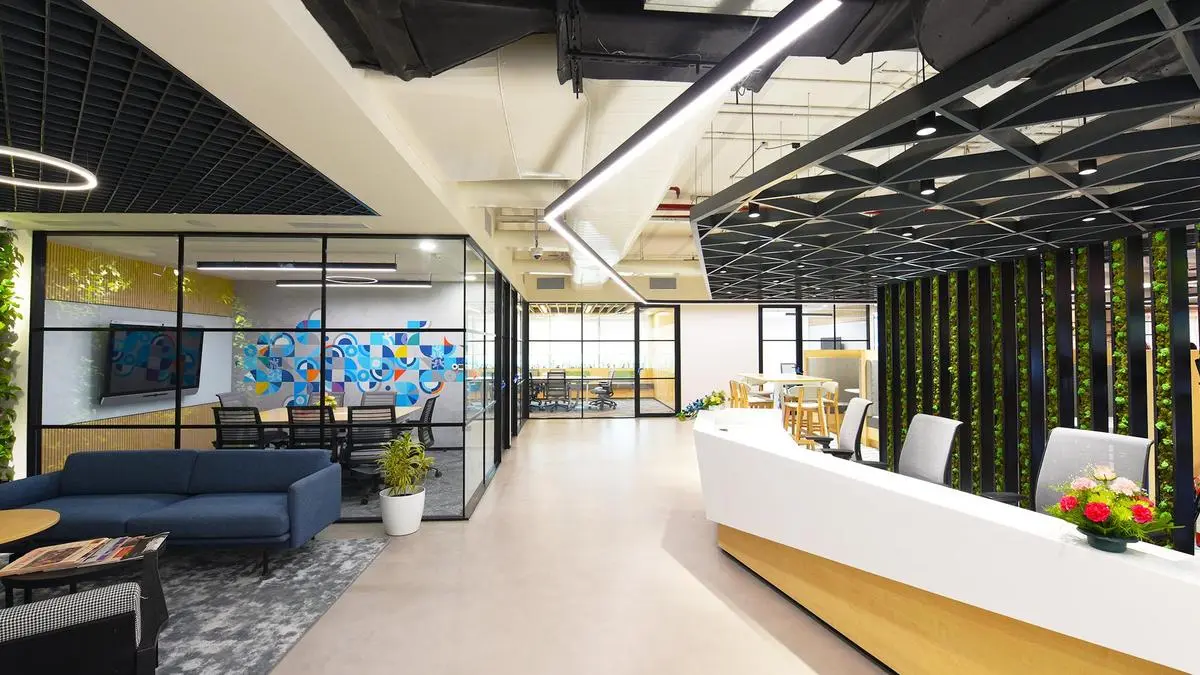

On a quiet, unassuming lane in Gurugram’s Udyog Vihar industrial hub, a two-storey office building houses a quiet revolution. To the casual observer, the structure appears to be just another corporate office. But step inside, and the atmosphere shifts. Two rooms have been converted into a high-stakes laboratory where engineers monitor the pulse of the future of cooling. In one room, sensors track the internal performance of an air-conditioner (AC) unit; in the other, technicians analyze the thermal dynamics and cooling efficiency of an external compressor.
This is the headquarters of Optimist, a nascent startup attempting the impossible: disrupting an Indian air-conditioning market dominated by multi-decade giants like Daikin, LG, Voltas, and Blue Star.
The Challenge: Entering a Market of Titans
For a brand that officially launched its debut product in the latter half of May, the intensity of this R&D focus might seem disproportionate. However, the founders—Ashish Goel, known for his success in building the furniture brand Urban Ladder, and co-founder Pranav Chopra—understand the gravity of their mission. They are not merely launching a product; they are attempting to build an air-conditioner brand from the ground up in an industry defined by massive barriers to entry.
The incumbents in the Indian AC sector have spent decades refining their manufacturing capabilities, cementing deep-rooted dealer relationships, securing lucrative financing partnerships, and establishing nationwide service networks. For a consumer, buying an AC is a high-involvement, infrequent purchase. Trust is the primary currency, and it is a currency that the industry giants have been minting for generations.
“The biggest challenge for us right now is building brand trust,” admits Chopra. In a market where a consumer buys an AC once every several years, the decision-making process is dictated less by raw efficiency numbers and more by the perceived reliability of the brand name etched on the plastic casing.
The Engineering Edge: A Technical Differentiator
Optimist’s debut offering is a 1.4-tonne split AC, and on paper, it is a formidable contender. The startup claims its product boasts the highest energy-efficiency rating currently available in the Indian market, achieving an Indian Seasonal Energy Efficiency Ratio (ISEER) of 6.05.
Beyond the efficiency metrics, the company has made a strategic bet on self-reliance. Over 90% of the unit’s components are sourced locally, a move that not only aligns with the "Make in India" initiative but also provides the startup with greater control over its supply chain in an era of volatile global logistics. Furthermore, the unit utilizes a specialized heat exchanger—a component design rarely seen in standard consumer air-conditioners—intended to maximize thermal exchange while minimizing power draw.

The Cooling Conundrum: India’s Looming Energy Crisis
The urgency behind Optimist’s technical obsession stems from a macro-level "cooling conundrum" facing India. As the country experiences increasingly severe heatwaves and rising average temperatures, air-conditioner sales are projected to skyrocket. Market forecasts suggest that total AC units in Indian households will nearly double, reaching 28 million by 2030.
This growth trajectory creates a massive strain on the national power grid. According to industry estimates, power consumption from household cooling is expected to more than treble, reaching 180 gigawatts (GW) by 2035.
“By 2045, air conditioners alone could account for 35–45% of India’s peak power demand,” says Chopra. This projection paints a grim picture of grid instability and environmental impact. The country is not just in need of more cooling; it is in desperate need of smarter, more energy-efficient cooling. If the average Indian home transitions to high-consumption legacy units, the energy infrastructure will be pushed to a breaking point.
Chronology: From Concept to Consumer
- The Inception Phase: The founders identified a gap in the market for high-efficiency, localized hardware. Unlike traditional players who often assemble imported parts, the vision was to engineer a solution that could withstand the unique Indian climate—characterized by extreme heat and varying humidity—while maintaining minimal power usage.
- The R&D Sprint: Over the last 18 months, the team at Udyog Vihar transitioned from whiteboard concepts to physical prototypes. The focus was on "nerdy" engineering: optimizing the refrigerant cycle and improving the heat exchange mechanism to hit the 6.05 ISEER threshold.
- The Launch (May 2024): With a starting price point of Rs 39,990, the company introduced its flagship unit, aiming to bridge the gap between "premium, high-efficiency models" and "mass-market affordability."
- The Go-To-Market Strategy: Unlike the traditional dealer-led model, Optimist is focusing on a digital-first approach, leveraging direct-to-consumer (D2C) channels to educate users on why the ISEER rating matters, effectively trying to flip the script on how ACs are sold.
The Implications: Can Efficiency Win Over Loyalty?
The success of Optimist will serve as a bellwether for the Indian consumer electronics landscape. For years, the industry has been characterized by "feature creep"—adding Wi-Fi connectivity, smart home integration, or aesthetic changes—without significantly moving the needle on the core function: efficient cooling.
If Optimist can demonstrate that an Indian startup can deliver a machine that lowers electricity bills significantly compared to the market incumbents, they may force the "Big Boys" of the industry to shift their focus from marketing gimmicks to true engineering innovation.
However, the hurdles remain significant. Air-conditioners require a robust after-sales service infrastructure. When an AC fails in the peak of an Indian summer, the customer does not want a firmware update; they want a technician at their door within hours. Establishing this level of service penetration is the "final boss" for any hardware startup.
Expert Analysis and Industry Response
While the incumbent brands have remained largely quiet regarding this new entrant, industry analysts suggest that the "efficiency-first" narrative is timely.

"The market is moving toward sustainability, but it’s a slow churn," says an analyst covering the consumer durables sector. "Companies like Daikin and LG have the advantage of scale, which keeps their production costs low. For Optimist, the challenge is maintaining high quality while scaling production. If they can get the service model right, they have a genuine shot at capturing the top-tier, environmentally-conscious urban segment."
Optimist’s leadership is well aware that they are the underdogs. By keeping their operation lean and their engineering centralized in their Udyog Vihar facility, they are betting that they can stay agile where the giants are rigid.
Looking Ahead
The battle for the Indian living room is heating up—quite literally. As the mercury rises, the demand for sustainable, high-efficiency cooling is set to become one of the most critical challenges of the next decade.
Whether Optimist becomes a household name or remains a niche player will depend on their ability to survive the brutal competition of the Indian retail sector. But regardless of their individual outcome, their entry has already succeeded in one aspect: it has highlighted that the future of the Indian AC industry cannot be built on the models of the past.
For now, the engineers in Gurugram continue to watch their monitors. The tests are ongoing, the data is being crunched, and a startup is banking on the idea that in a world of massive, established brands, there is still room for a better-engineered solution. The next few years will tell if the Indian consumer is ready to trade brand legacy for a higher energy rating—and if that trade is enough to redefine the market.
As India stares down a future of record-breaking heat and grid stress, the "nerdy" projects in industrial lanes might just be the most important work happening in the country today.