In the rapidly evolving landscape of African finance, a peculiar paradox has emerged. As Airtel Money makes its grand entrance on the London Stock Exchange, the company finds itself valued at approximately $7 billion. On the surface, the metrics are staggering: with roughly $1.35 billion in revenue for the 2026 fiscal year and a lean internal team of just over 300 employees, the company generates a jaw-dropping $4 million in revenue per head.
However, behind the polished prospectus and the high-valuation rhetoric lies a business model that is fundamentally tethered to the physical world. In a region where the digital infrastructure is still catching up to the aspirations of its populace, Airtel Money is not quite the "digital bank" the West might envision. Instead, it is a sophisticated, high-scale logistics network for the digitization of cash.
The Human Infrastructure: An Army of Agents
While the corporate headquarters may be lean, the actual engine of Airtel Money is vast and decentralized. The company operates through an army of more than 2.3 million agents—mostly small-shop owners scattered across 13 African nations. These agents represent the true backbone of the operation.
Consider the distribution of personnel: 57 in Uganda, 31 in Zambia, and 13 in Kenya. These figures are not signs of a failing company, but rather evidence of a hyper-efficient corporate structure that outsources its most labor-intensive tasks to the informal economy. In many of these markets, "Airtel Money" is synonymous with the local corner shop. The brand provides the digital ledger, but the shopkeeper provides the physical liquidity.
The "Digital Envelope" Phenomenon
To understand why a company with 53 million monthly users is valued at $7 billion, one must look at how the average user interacts with the platform. During the recent India Mobile Congress, a fintech founder operating in the African market offered a vivid illustration of the user journey.
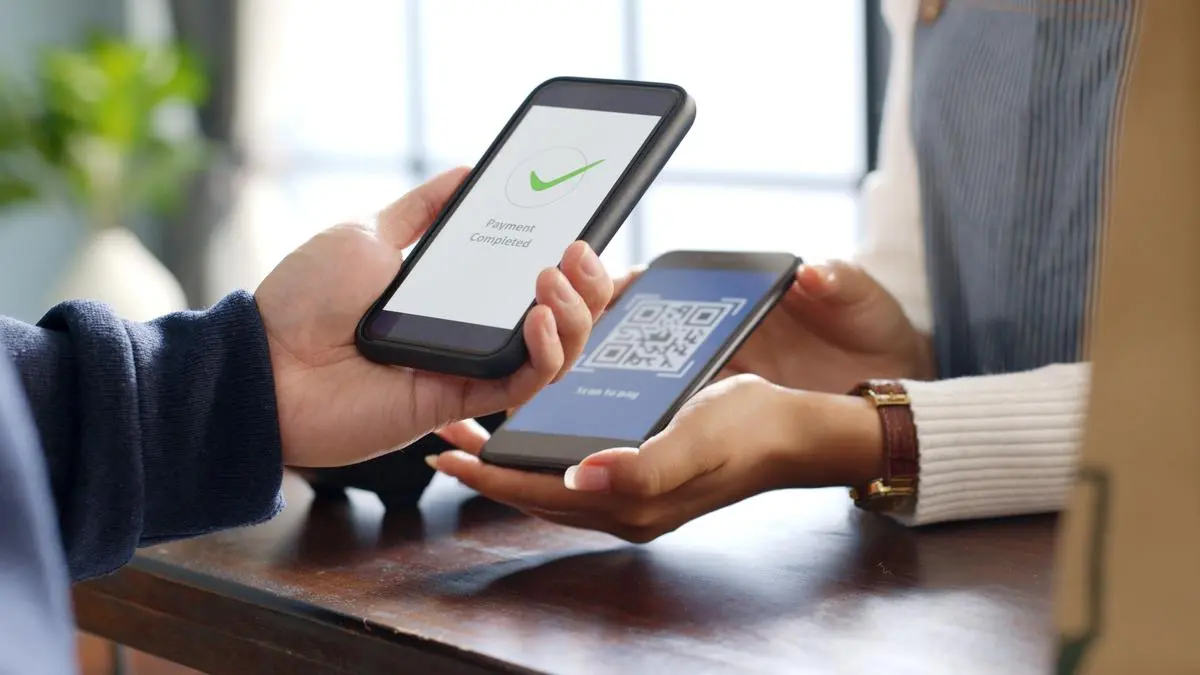
"I put 100 into my Airtel Money wallet, then immediately go to an agent’s shop, show my phone, and withdraw 100 in physical cash," he explained. "If I need to send money to someone else, I put cash back into the wallet, send it, and the recipient withdraws it again."

This is the "digital envelope" theory of African fintech. A report by Affinity Africa titled The State of Cash Dependency highlights a critical reality: more than 90% of the value circulating through mobile-money platforms is withdrawn as cash almost immediately upon arrival. The mobile wallet acts as a bridge, a temporary digital transit point, rather than a store of value or a medium for sophisticated investment. In an environment where the merchant ecosystem is largely cash-reliant, the wallet is a tool for transport, not for parking capital.
Market Positioning and Competitive Dynamics
Airtel Money operates in a crowded field, dominated by giants. Its 53 million monthly users place it firmly behind industry titans like MTN Momo, which boasts 70.8 million users, and Vodacom, which has scaled its M-Pesa service to a staggering 103 million users.
Despite trailing in pure user numbers, Airtel Money’s strength lies in its vertical integration with its parent company, Airtel Africa. The telecommunications giant provides an captive, built-in customer base. Because only Airtel mobile subscribers can open an Airtel Money wallet, the fintech arm benefits from the massive reach of the parent company’s mobile network.
The symbiosis is profound. In the last fiscal year, Airtel Africa entities paid approximately $265 million to Airtel Money—roughly one-fifth of the latter’s total revenue. These payments cover essential services: selling airtime, collecting utility bills, and facilitating bulk payouts. By capturing the internal transactional needs of its parent company, Airtel Money has secured a reliable, high-volume revenue stream that cushions it against the volatility of the broader consumer market.
The Absence of a "UPI Moment"
The valuation of $7 billion invites a comparison with other global fintech models, most notably India’s Unified Payments Interface (UPI). In India, UPI created a near-instant, zero-cost digital payment ecosystem that largely bypassed the need for a "cash-out" agent network. Africa has yet to experience a "UPI moment" of that scale.
In the absence of a unified, interoperable, and low-cost digital payment infrastructure that spans across all merchants and banks, mobile money remains the primary surrogate. Until such time as digital acceptance becomes as ubiquitous as the physical shopkeeper, companies like Airtel Money will continue to thrive by providing the necessary friction-reducing services that make cash-reliant economies function.

Implications for the Future
The London Stock Exchange listing marks a transition from a private, regional utility to a public, globalized entity. Investors are essentially betting on three core pillars:
- Network Density: The sheer difficulty of replicating a 2.3-million-strong agent network serves as a massive competitive moat.
- Parental Synergy: The tight integration with Airtel Africa ensures that the fintech arm remains the primary choice for millions of mobile subscribers who require daily transactional support.
- The Digital Transition: As African economies gradually move toward digital-first retail, the "digital envelope" will likely evolve into a "digital wallet" that holds value for longer periods. If Airtel Money can capture that shift, its revenue model will expand from transactional fees to high-margin financial products like credit, insurance, and savings.
However, the risks are equally pronounced. Regulatory shifts, the potential entry of truly decentralized payment protocols, or a sudden collapse in the willingness of shopkeepers to serve as agents could destabilize the current model. Furthermore, as telecommunications regulators begin to look closer at the "mobile money tax" (the high fees associated with withdrawing cash), the company may face pressure to lower costs, which would directly impact its bottom line.
Conclusion: A Business Built on Trust and Cash
Airtel Money is a testament to the fact that in emerging markets, technology does not always replace old systems; often, it formalizes them. By digitizing the movement of cash rather than attempting to eliminate it, the company has built a multi-billion dollar enterprise on the bedrock of the informal economy.
As it enters the public markets, the narrative will shift from "how many users" to "how much value can be extracted from each user." Whether Airtel Money can transition from being a digital conduit for cash to a holistic financial partner for the African consumer remains the central question of its next chapter. For now, it remains the essential, if analog-dependent, infrastructure of a continent in transition.
The $7 billion valuation is not just a reflection of its current revenue; it is a vote of confidence in the continued, long-term growth of the African digital economy, where the corner shop remains, for now, the most important bank in town.