
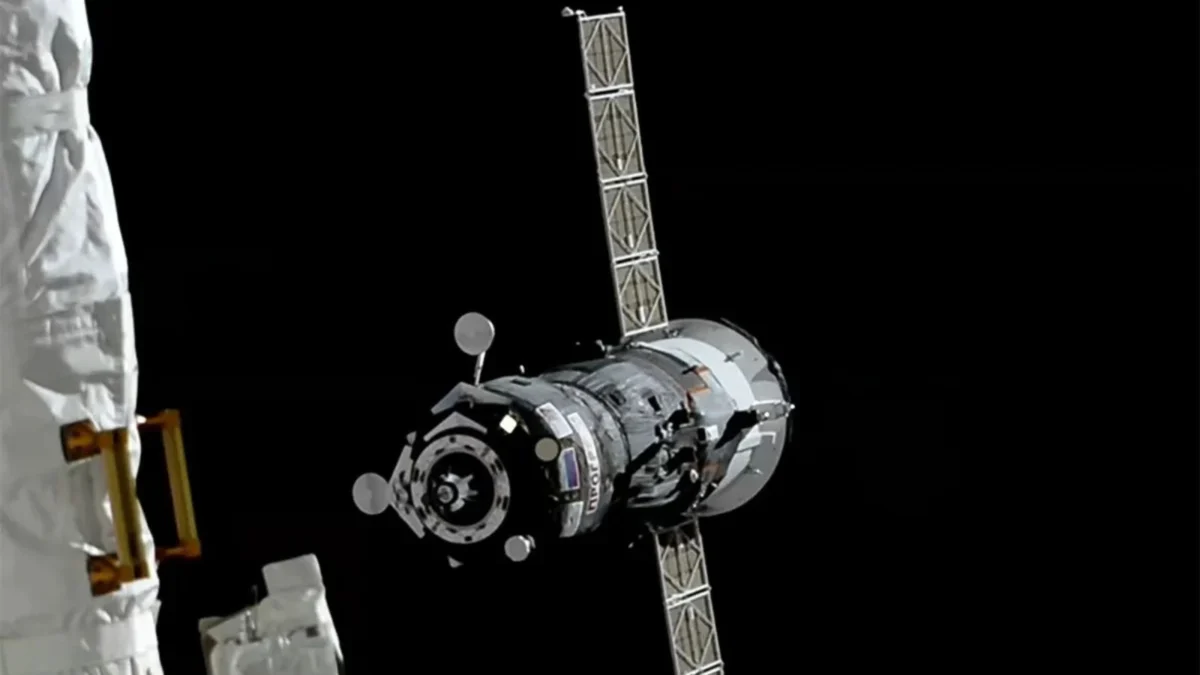
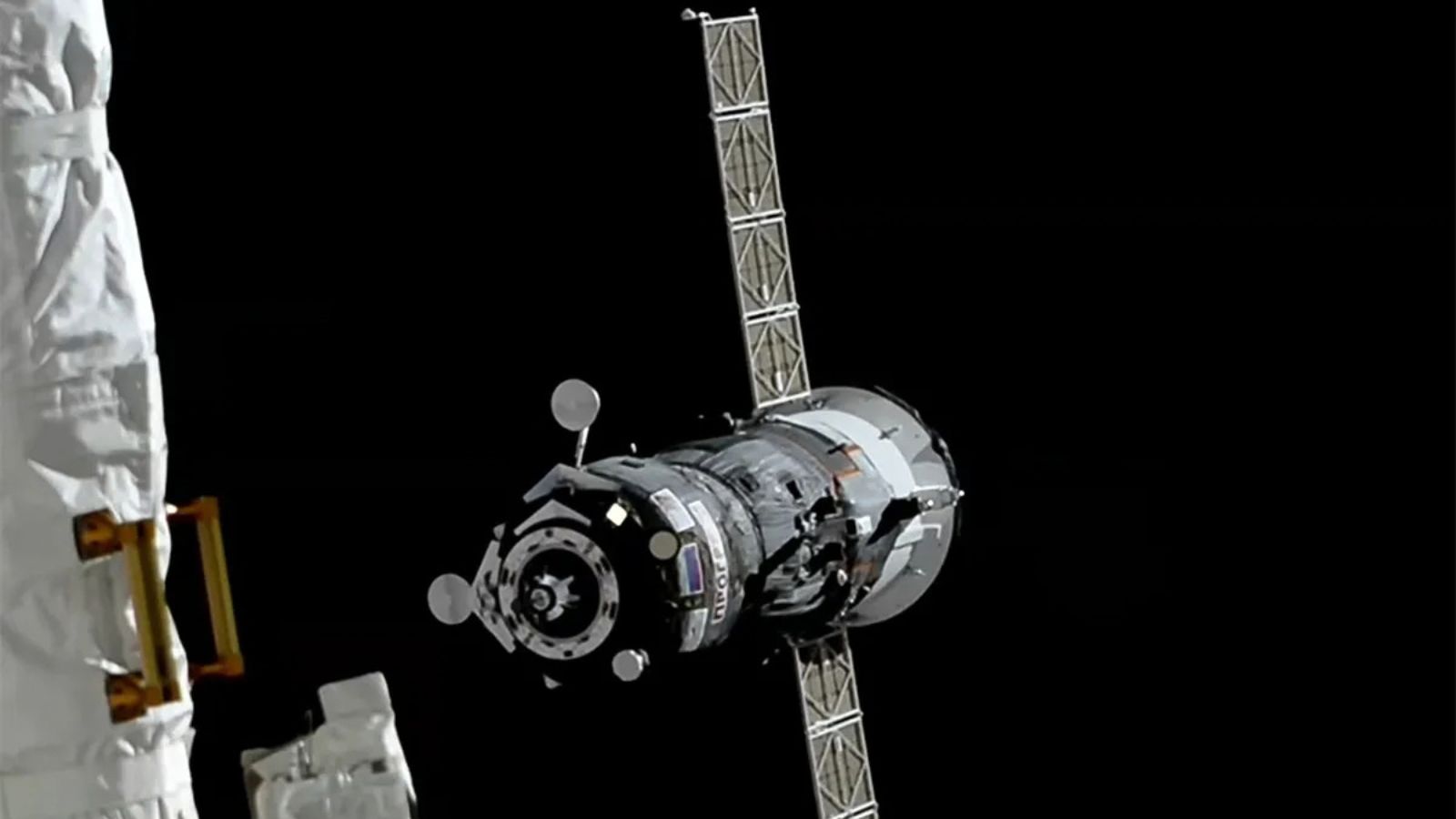
NEW DELHI — In a seamless execution of orbital mechanics and international cooperation, the Russian Progress 96 cargo spacecraft successfully moored itself to the International Space Station (ISS) on September 19, 2026. Carrying nearly three tonnes of essential supplies, the uncrewed vehicle has bolstered the station’s reserves, ensuring the continued operation of the orbiting laboratory and the well-being of its seven-member international crew.
The docking, which occurred high above the Black Sea, marks another milestone in the decades-long partnership between Roscosmos, NASA, and other global space agencies. As the ISS enters its twilight years of operation, these routine resupply missions remain the heartbeat of low-Earth orbit (LEO) exploration, providing the fuel, food, and scientific hardware necessary to push the boundaries of human knowledge.
Main Facts: A Precise Arrival in Low-Earth Orbit
The Progress 96 (also known by its Russian designation, Progress MS-28) achieved contact and capture with the ISS at 9:44 a.m. EDT (7:14 p.m. IST) on September 19. The spacecraft utilized its automated Kurs docking system to approach the Poisk mini-research module on the Russian segment of the station.
At the moment of docking, both the 7.4-ton spacecraft and the 450-ton space station were traveling at approximately 28,000 kilometers per hour, orbiting 418 kilometers above the Earth’s surface. Despite these staggering speeds, the final approach was characterized by a delicate "space dance," where relative velocities were reduced to centimeters per second.
The Payload: Three Tonnes of Survival and Science
The cargo manifest for Progress 96 was a comprehensive list of necessities required to sustain human life and scientific inquiry in a vacuum. The total payload of approximately 3,000 kilograms (6,600 lbs) included:
- Propellant: Roughly 700 kg of fuel for the station’s thrusters, essential for maintaining orbital altitude and performing debris avoidance maneuvers.
- Water and Gases: Over 400 kg of potable water and 50 kg of pressurized nitrogen to replenish the station’s internal atmosphere.
- Dry Cargo: Approximately 1,800 kg of food rations, medical supplies, personal hygiene kits, and hardware for the station’s life support systems.
- Scientific Hardware: Experimental kits designed to study the effects of microgravity on biological tissues and material science components for advanced manufacturing tests.
Chronology: From the Steppes of Kazakhstan to the Stars
The mission of Progress 96 began long before its arrival at the ISS, involving months of preparation at the Baikonur Cosmodrome.
The Launch: September 16, 2026
The mission commenced on September 16, when a Soyuz-2.1a rocket ignited its engines at the Baikonur Cosmodrome in Kazakhstan. The launch was a textbook ascent, with the rocket’s stages separating precisely as planned. Within nine minutes of liftoff, the Progress 96 was inserted into its initial parking orbit, deploying its solar arrays and communication antennas.
The Three-Day Pursuit
Unlike some "fast-track" profiles that allow docking in just three to six hours, Progress 96 followed a more traditional three-day rendezvous trajectory. This longer duration is often chosen to conserve fuel or to accommodate the specific orbital phasing required when the ISS is in a particular position relative to the launch site.
During these 72 hours, the spacecraft performed a series of engine burns to gradually raise its orbit and synchronize its speed with the ISS. Ground controllers at the Mission Control Center in Korolyov, Russia, monitored the vehicle’s health, ensuring that all telemetry remained within nominal parameters.
Final Approach and Docking: September 19, 2026
On the morning of September 19, the spacecraft entered the "approach zone" of the ISS. As it closed the distance from 1 kilometer to just a few meters, the automated Kurs system took the lead. While the crew aboard the ISS—specifically the Roscosmos cosmonauts—stood by at the TORU (Teleoperated Control Mode) station to take manual control if necessary, the automation performed flawlessly. The "soft dock" was confirmed at 9:44 a.m. EDT, followed shortly by "hard dock," where hooks and latches engaged to create a pressurized seal between the two vessels.
Supporting Data: The Logistics of an Orbital Outpost
The arrival of Progress 96 is part of a complex logistical web that keeps the ISS operational. To understand the significance of this mission, one must look at the current demographic and technical state of the station.
The Expedition Crew
Currently, the ISS is home to seven explorers representing three different space agencies. The arrival of fresh food and personal mail is a significant morale booster for the crew, which includes:
- NASA: Jack Hathaway, Jessica Meir, and Anil Menon.
- ESA (European Space Agency): Sophie Adenot.
- Roscosmos: Pyotr Dubrov, Andrey Fedyaev, and Anna Kikina.
This diverse crew is tasked with conducting hundreds of experiments in biology, physics, and astronomy. The supplies delivered by Progress 96 are vital for the "consumables" required by these experiments, ranging from specialized growth media for cells to replacement sensors for external monitoring equipment.
Comparative Resupply Vehicles
Progress 96 is one of several vehicles that service the ISS. Its role is distinct when compared to its international counterparts:
- SpaceX Dragon (USA): Unlike the Progress, the Dragon is reusable and can return cargo to Earth. It is the primary vehicle for bringing scientific samples back to laboratories on the ground.
- Northrop Grumman Cygnus (USA): A disposable craft similar to the Progress, but launched from American soil.
- Japan’s HTV-X: A high-capacity cargo vehicle used for larger hardware components.
- Progress (Russia): The "workhorse" of the fleet, known for its reliability and its ability to refuel the station directly through integrated plumbing in the docking mechanism.
Official Responses: Commending International Synergy
Following the successful docking, officials from the participating space agencies released statements emphasizing the continued reliability of the resupply chain.
Roscosmos Statement:
In a brief communiqué, the Russian space agency confirmed that "all onboard systems of the Progress MS-28 spacecraft operated normally" and that the docking was achieved on schedule. They highlighted the professionalism of the ground control teams and the importance of the cargo for the Russian segment’s planned research activities over the next five months.
NASA Commentary:
NASA spokespeople, during the live docking webcast, noted the significance of the Poisk module’s role as a frequent port for these missions. "The successful arrival of Progress 96 ensures that our crew has the resources they need to continue their vital work," a NASA official stated. "It remains a testament to the international partnership that has defined the ISS for over two decades."
ESA Perspective:
The European Space Agency highlighted the delivery of specific European experiments, noting that Sophie Adenot would be instrumental in setting up new biological research modules delivered in the "dry cargo" section of the spacecraft.
Implications: The Future of the ISS and Orbital Sustainability
The Progress 96 mission is more than just a delivery; it is a reflection of the current state of space exploration and the transition toward a new era in low-Earth orbit.
Five Months of Utility
Progress 96 will remain attached to the Poisk module for approximately five months. During this time, it serves as more than just a storage locker. Its engines can be used to boost the station’s orbit, countering the slight atmospheric drag that causes the ISS to lose altitude over time. Furthermore, it acts as a "trash can." As the crew unloads the three tonnes of supplies, they will replace them with waste, broken equipment, and used consumables.
The "Fiery" End and Environmental Considerations
In early 2027, Progress 96 will undock, carrying several tonnes of refuse. It will then perform a deorbit burn, plunging into the Earth’s atmosphere. Unlike the SpaceX Dragon, the Progress is designed to burn up completely over the uninhabited regions of the South Pacific Ocean. This method of "destructive reentry" is the standard for maintaining cleanliness aboard the station, preventing the accumulation of waste in a confined living environment.
Geopolitical Resilience
The continued success of the Progress missions underscores a unique geopolitical reality. Despite terrestrial tensions between Russia and Western nations, the ISS remains a sanctuary of cooperation. The technical dependencies—where the US segment provides power and the Russian segment provides propulsion—necessitate a level of collaboration that has persisted for nearly 30 years.
Transitioning to a Post-ISS Era
As the international community looks toward 2030—the planned retirement date for the ISS—missions like Progress 96 provide data on the aging of docking interfaces and the long-term viability of modular space stations. The lessons learned from the "standardized" docking of the Progress series are currently being used to design the next generation of commercial space stations, such as those proposed by Axiom Space and Blue Origin.
Conclusion
The successful docking of Progress 96 is a reminder that while space travel is becoming more frequent, it is never "routine." Every kilogram of fuel and every liter of water delivered to the ISS represents a monumental effort of engineering and international diplomacy. As the seven crew members begin the process of unloading their new supplies, the station continues its silent vigil over the Earth, a beacon of human ingenuity fueled by the steady arrival of these vital orbital lifelines.