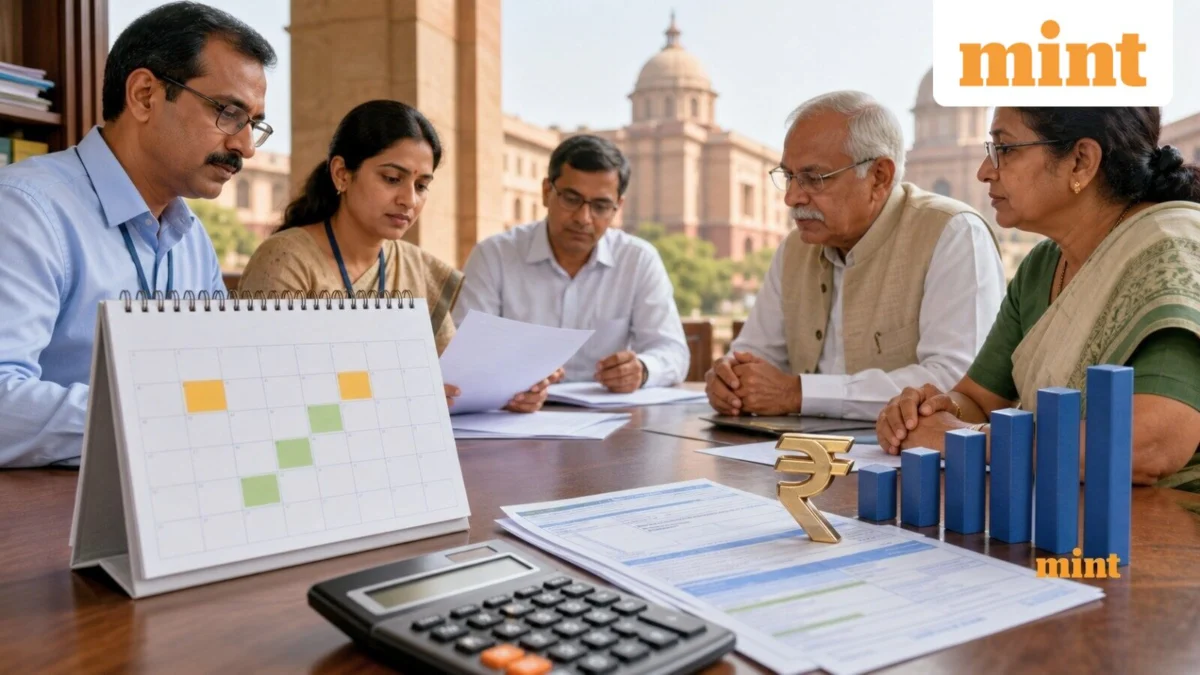
As the 8th Pay Commission (8th CPC) approaches its first anniversary on November 3, 2026, the anticipation among millions of central government employees and pensioners continues to build. Tasked with the monumental responsibility of recalibrating the salary structures, allowances, and pension frameworks for the nation’s workforce, the panel—headed by Justice Ranjana Prakash Desai—is now entering the final, critical stretch of its 18-month mandate.
With approximately six months remaining before the commission is slated to submit its comprehensive report to the Union government, the recent flurry of activity and administrative updates has caught the attention of stakeholders nationwide. While the commission’s official "What’s New" section has been busy with scheduling notices and procedural guidelines, many employees are looking beyond the bureaucracy, seeking clarity on the potential impact on their future earnings.
The Mandate and the Timeline: A One-Year Milestone
The 8th Pay Commission was officially constituted on November 3, 2025, with a clear mandate to address the evolving economic realities, cost-of-living adjustments, and the systemic grievances of government personnel. As a temporary, high-level body, its primary function is to study the current pay structure and recommend modifications that ensure government service remains competitive, attractive, and equitable.
By November 3, 2026, the commission will have completed one full year of its operations. Having utilized the first 12 months for research, stakeholder engagement, and data collection, the panel now faces a six-month window to synthesize its findings. The deadline for the submission of the final report is projected for May 2027. This timeline is significant because it allows the government sufficient time to review the recommendations before the next fiscal cycle, potentially setting the stage for a new pay structure that could reshape the financial landscape for public sector employees.
Strategic Consultations: A Pan-India Approach
A cornerstone of the 8th CPC’s methodology has been its inclusive approach to gathering feedback. Recognizing that the needs of a central government employee in Ladakh differ significantly from those in Mumbai or Delhi, the commission has embarked on a nationwide tour.
These consultations serve as a vital bridge between the policy-making body and the workforce. By engaging directly with unions, professional associations, and individual stakeholders, the commission ensures that the nuances of various sectors—ranging from defense and railways to administrative services—are adequately represented.
The recent conclusion of the Mumbai consultations on October 23, 2026, marks the latest in a series of high-stakes meetings. These interactions are not merely formal gatherings; they are opportunities for employees to present empirical data, raise concerns regarding inflation-adjusted pay, and advocate for structural reforms in the pension system.
Chronology of Recent Commission Updates
The commission’s official website serves as the primary repository for its procedural progress. Below is a breakdown of the recent administrative notifications:
| Date of Announcement | Event/Update | Scope |
|---|---|---|
| September 21, 2026 | Mumbai Visit | Finalized consultations for Oct 22–23, 2026. |
| August 24, 2026 | Bengaluru Visit | Consultations conducted on Oct 7–8, 2026. |
| August 11, 2026 | Consultant Guidelines | Partial modification to engagement protocols for experts. |
| August 3, 2026 | Jaipur Visit | Regional engagement held Aug 31–Sept 1, 2026. |
| July 28, 2026 | Chandigarh Visit | Regional engagement held Sept 16–18, 2026. |
These updates underscore a deliberate, phased approach to data collection. By systematically covering different geographical hubs, the commission ensures that regional economic disparities are factored into the final pay matrix.
Analyzing the "Consultant Engagement" Guidelines
One of the most technically significant, though often overlooked, updates from August 11, 2026, involves the modification of guidelines for engaging consultants. The 8th Pay Commission relies heavily on data analysts, economic forecasters, and legal experts to model the long-term fiscal impact of their recommendations.
The revision of these guidelines suggests that the commission is refining its internal capacity to handle complex economic variables. As the government seeks to balance fiscal prudence with the legitimate demands for salary hikes, the quality of data-driven modeling becomes paramount. By tightening the criteria for external experts, the commission is ensuring that the final report will be backed by robust, defensible economic arguments that can withstand intense scrutiny from the Finance Ministry.

What This Means for Employees and Pensioners
For the average government employee, the lack of an immediate announcement regarding a "fitment factor" or a "revised basic pay" might seem underwhelming. However, it is essential to understand the procedural nature of the commission’s current work.
1. The Fitment Factor Myth vs. Reality
Much of the discourse in employee forums revolves around the "fitment factor"—the multiplier used to adjust the basic pay of employees when moving from one pay commission to the next. Historically, the 6th Pay Commission utilized a factor of 1.86, while the 7th Pay Commission raised this to 2.57.
It is crucial to note that current updates do not confirm a new multiplier. The commission is still in the consultation phase; any discussion of a specific fitment factor at this stage is speculative. The final decision will be a outcome of complex negotiations between the commission, the government’s fiscal planners, and employee representative bodies.
2. The Pensioner’s Perspective
Pensioners, in particular, are looking for adjustments that reflect current inflationary pressures. The commission’s focus on long-term financial sustainability means that they are likely exploring not just basic pay increases, but also improvements in retirement benefits, healthcare allowances, and the potential for a more efficient pension disbursement mechanism.
3. Allowances and Structural Reforms
Beyond the basic salary, the 8th Pay Commission is expected to review the entire gamut of allowances—House Rent Allowance (HRA), Transport Allowance (TA), and Dearness Allowance (DA). The integration of DA into the basic salary, a long-standing demand of many unions, remains a focal point of these discussions. Should the commission recommend such a merger, it would result in a significant shift in the pay structure, potentially altering the eligibility thresholds for various other benefits.
The Road to May 2027: A Period of Vigilance
As we move toward the final six months of the commission’s term, the intensity of its work will likely shift from consultation to drafting and review. The following areas are expected to dominate the conversation in the coming months:
- Fiscal Space Assessment: The Finance Ministry will be working in tandem with the commission to assess the impact of a pay hike on the national budget. The recommendations must be fiscally responsible to avoid triggering inflationary pressures.
- Performance-Linked Pay: There is growing chatter about incorporating performance-based components into the pay structure, which would be a departure from the traditional seniority-based salary increments.
- Modernization of the Pay Matrix: The current matrix, which has been in place since the 7th Pay Commission, may undergo a total overhaul to better align with the skill sets required in a digital-first governance model.
Conclusion: Patience is the Current Strategy
The 8th Pay Commission is a deliberate, methodical process designed to ensure that the compensation of India’s massive civil services workforce remains both fair and sustainable. While the updates published on the commission’s website may appear to be strictly procedural, they are the essential building blocks of a report that will dictate the financial trajectory of millions of households.
For employees and pensioners, the coming months will require patience. The commission is not in a position to make premature commitments, and any speculation regarding specific percentages or formulas is premature. The focus for stakeholders should remain on participating in the consultation process, providing accurate feedback, and awaiting the official release of the final report in mid-2027.
As Justice Ranjana Prakash Desai and her team continue their work, the government’s commitment to the 8th Pay Commission remains a testament to its intent to keep the civil service competitive. The journey from the constitution of the panel in 2025 to the expected submission in 2027 is a long one, but it is a necessary process to ensure that the nation’s administrative backbone is well-supported and future-ready.
Disclaimer: The information provided in this article is based on the current procedural updates released by the 8th Pay Commission. No official announcements regarding salary hikes, fitment factors, or pension revisions have been made as of October 2026. Readers are advised to rely on official notifications from the government for any changes to their compensation.