By Editorial Desk
October 25, 2026
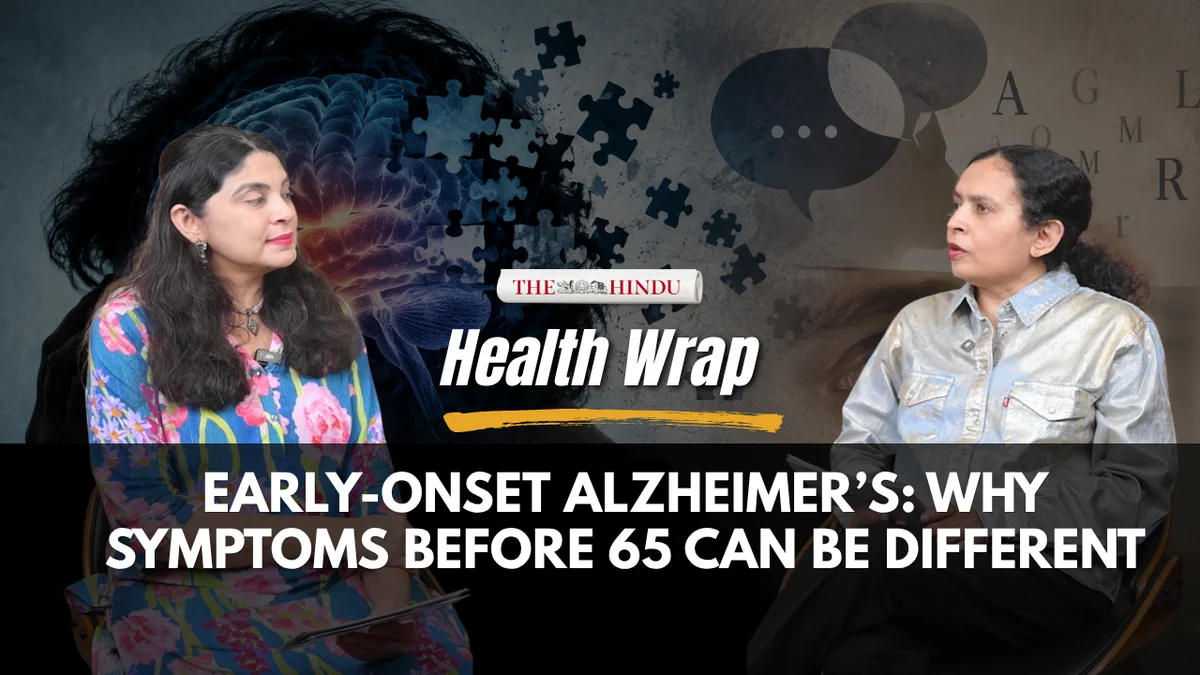
In the 56th edition of Health Wrap, The Hindu’s Health Editor, Ramya Kannan, and Senior Assistant Editor, Zubeda Hamid, dissect the complex landscape of modern medicine. From the diagnostic nuances of early-onset Alzheimer’s disease to the systemic crisis of integrity within oncology research and the desperate plea for accessible treatments for rare diseases, this episode underscores a singular truth: the architecture of modern healthcare relies entirely on the pillars of early intervention, scientific veracity, and equitable access.
1. Main Facts: The Triple Challenge in Modern Medicine
The current healthcare narrative is dominated by three distinct yet interconnected crises that threaten both individual patient outcomes and the global scientific framework.
The Diagnostic Enigma of Early-Onset Alzheimer’s
Unlike the traditional presentation of Alzheimer’s disease, which is typically associated with memory loss in patients aged 65 and older, early-onset Alzheimer’s—manifesting before the age of 65—presents a radically different clinical profile. In these younger patients, the disease often spares memory in its initial stages, instead targeting executive functions, language processing, and visual-spatial abilities. Because these symptoms mimic stress, burnout, or psychiatric conditions, patients frequently face a diagnostic odyssey, often going years without a definitive answer.
The Integrity Crisis: Paper Mills in Oncology
Perhaps more alarming is the systemic erosion of trust in oncological research. A recent audit has flagged over 4,000 cancer research papers for suspected links to "paper mills." These entities function as illicit academic factories, manufacturing fabricated data and manipulating findings to sell ready-made research papers to academics under pressure to publish. This undermines the very foundation of cancer treatment, as clinical protocols and drug development are predicated on these foundational studies.
The SMA Treatment Crisis in Kerala
In a stark reminder of the human cost of drug policy, families of children suffering from Spinal Muscular Atrophy (SMA) in Kerala have raised urgent concerns regarding the introduction of generic versions of life-saving medications. SMA, a debilitating genetic condition that destroys nerve cells controlling muscle movement, requires consistent, high-quality, and safe therapeutic interventions. The shift toward generics has sparked a debate over regulatory transparency, safety, and the burden of cost on families managing a chronic, rare condition.
2. Chronology: Mapping the Developments
The issues discussed in Health Wrap 56 are not isolated events but are the culmination of years of shifting health paradigms:
- Mid-2024: Global scientific communities begin intensifying their scrutiny of peer-review processes as AI-generated and fabricated research papers flood journals at an unprecedented rate.
- Early 2025: Increased awareness campaigns regarding "atypical" Alzheimer’s symptoms gain momentum, with neurologist associations pushing for updated screening protocols for patients under 65.
- August 2026: The scale of the "paper mill" industry in oncology becomes impossible to ignore, with major publishing houses launching massive investigations into thousands of manuscripts.
- October 2026: Families of SMA patients in Kerala hold public demonstrations and engage with state health authorities, demanding clarity on the procurement and safety profile of generic alternatives to standard-of-care drugs.
3. Supporting Data: The Scale of the Crisis
The Alzheimer’s Spectrum
According to recent clinical data, approximately 5% to 10% of all Alzheimer’s cases are classified as early-onset. Among this cohort, visual-spatial symptoms (Posterior Cortical Atrophy) account for nearly 20% of initial presentations. The diagnostic delay for these patients currently averages 3.5 years, compared to roughly 1.5 years for those presenting with memory-first symptoms.
Oncology and Research Integrity
The 4,000 flagged papers represent a significant percentage of the total output in certain sub-sectors of oncological research. Independent audits suggest that as many as one in every 50 papers published in niche, lower-tier journals in the last three years may contain "recycled" or "synthetic" data. The financial incentive for paper mills—which can charge anywhere from $2,000 to $10,000 per manuscript—has created a multi-million dollar shadow industry that threatens to derail decades of progress in chemotherapy and immunotherapy.
The SMA Landscape
In Kerala, the cost of standard SMA therapy has historically been prohibitive, often running into lakhs of rupees per dose. The introduction of generic alternatives, while theoretically aimed at reducing the financial burden, has been met with skepticism due to a lack of publicly available "Bioequivalence Studies" in the regional context, leaving parents in a state of medical uncertainty.
4. Official Responses and Regulatory Posture
The response from the scientific and governmental communities has been mixed, characterized by a tension between the need for rapid progress and the necessity of caution.
On Research Fraud: Leading scientific publishers and the Committee on Publication Ethics (COPE) have initiated "mass retractions." While this is a necessary step, the editorial consensus remains that retractions are often too little, too late. Governments are now under pressure to mandate stricter verification of data provenance before funding is released for clinical trials.
On SMA Access: State health officials in Kerala have defended the introduction of generics as a necessary measure for long-term sustainability of the public health budget. However, following the outcry from parents, the health ministry has promised a "Safety Review Committee" to oversee the quality control of these generics. The families, represented by various advocacy groups, continue to demand that no drug be introduced without a transparent disclosure of its clinical efficacy data.
5. Implications: The Path Forward
The issues raised in Health Wrap 56 highlight a fundamental fragility in the healthcare ecosystem.
The Imperative of Specialized Diagnostics
For early-onset Alzheimer’s, the implication is clear: the medical community must transition away from "memory-only" diagnostic criteria. Primary care physicians require better training to recognize cognitive impairment in younger patients, and there must be a broader investment in biomarkers that can identify Alzheimer’s before behavioral symptoms become irreversible.
Restoring the Scientific Contract
The "paper mill" crisis is not merely an academic concern; it is a matter of life and death. If the evidence base for cancer treatment is corrupted, patients are being subjected to treatments based on lies. The future of medicine requires a "blockchain-style" approach to research data—where raw data is publicly verifiable, timestamped, and audited before publication. Without a systemic overhaul of the "publish or perish" culture, the progress of oncology will remain compromised.
Equity and Transparency in Rare Diseases
The SMA crisis in Kerala serves as a microcosm for the global struggle to balance affordability with safety. When a drug is "affordable" but its safety profile is opaque, it places the burden of risk on the most vulnerable. True equity in healthcare is not just the presence of a pill on a pharmacy shelf; it is the presence of rigorous, transparent, and accessible data that allows families to make informed decisions about their loved ones’ lives.
Conclusion
As Ramya Kannan and Zubeda Hamid conclude in their discussion, the path forward requires a multi-stakeholder approach. Patients must be empowered with knowledge, the scientific community must re-embrace the rigor of peer review, and policymakers must ensure that the drive for cost-effective care does not come at the expense of patient safety. Health, at its core, is built on trust—and restoring that trust is the most urgent medical priority of the decade.
For further insights on these topics, listen to the full episode of Health Wrap 56 on The Hindu’s digital platforms.