For daily puzzle enthusiasts, the rhythm of the morning often begins with the familiar blue interface of the New York Times Games suite. As of October 26, 2026, players worldwide are logging in to tackle Strands—the grid-based word search that has solidified its position as a staple of the modern digital puzzle diet alongside Wordle and Connections.
If you are navigating the grid for Game #967 and finding yourself stumped, you are not alone. Today’s puzzle offers a deceptive simplicity that can trip up even the most seasoned word-game veterans. This guide provides a comprehensive breakdown of the theme, the critical Spangram, and the solutions, ensuring you can maintain your winning streak without losing your sanity.
The Core Objective: Understanding the "Strands" Mechanic
Before diving into today’s specifics, it is worth noting why Strands has captured the gaming zeitgeist. Unlike Wordle, which focuses on letter elimination, or Connections, which demands lateral thinking to categorize disparate items, Strands is a tactile, spatial puzzle.
The game presents a 6×8 grid of letters. Players must find specific words related to a hidden theme. Once a word is identified, it is highlighted and removed from the board. The true challenge lies in the "Spangram"—a unique word that touches two opposite sides of the board, essentially acting as the "glue" that describes the puzzle’s central theme. The game concludes only when all words are found and the entire board is cleared.
Game #967: Decoding Today’s Theme
Theme: "Please, be my guest!"
For today’s puzzle, the New York Times has opted for an idiomatic approach. The phrase "Please, be my guest!" serves as the gateway to the solution. While initial reactions might drift toward the musicality of Disney’s Beauty and the Beast—specifically the iconic "Be Our Guest" number—the actual puzzle requires a more grounded interpretation.
If you find yourself stuck, remember that the hints system is your friend. By playing any sequence of letters that forms a valid word (even if it isn’t part of the final solution), you can accumulate points toward a hint, which will eventually highlight the position of a word on the board.
The Spangram: The 11-Letter Key
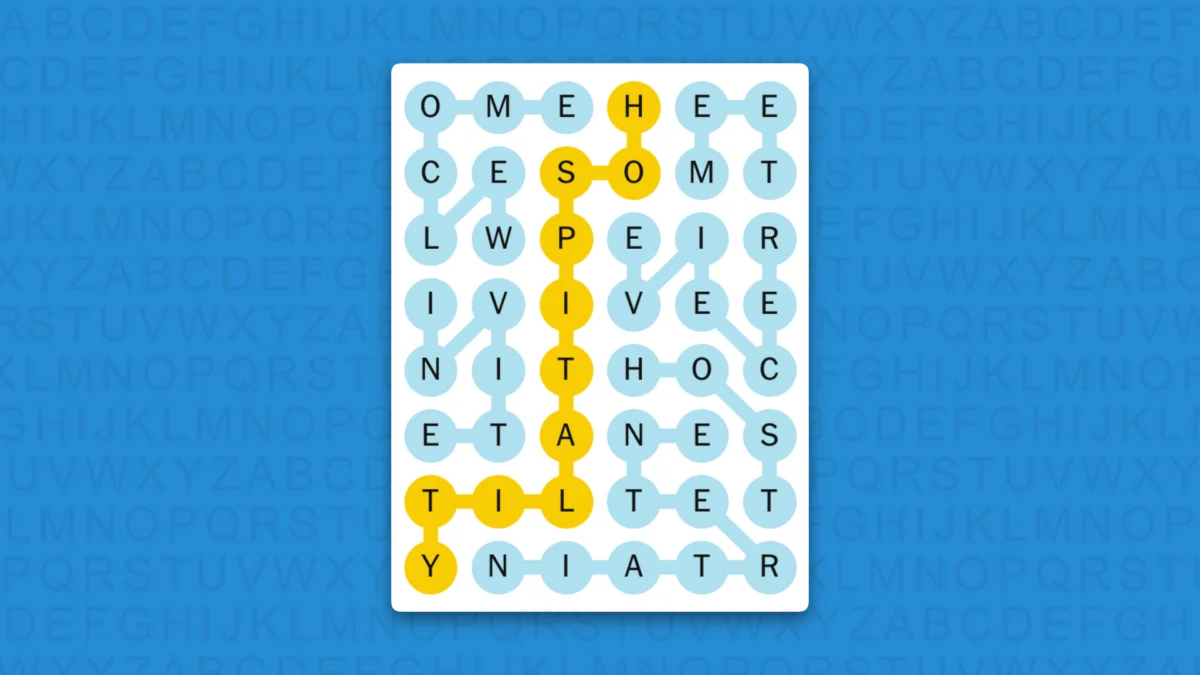
The Spangram is the backbone of any Strands game. For Game #967, the Spangram is 11 letters long, providing a substantial roadmap for the rest of your play session.
- Spangram Length: 11 Letters
- Spangram Position: The word stretches from the top of the 4th column down to the bottom of the 1st column.
Strategic Insight: If you struggle to find the Spangram, look for common prefixes or suffixes that might bridge the gap between the upper and lower halves of the grid. Today’s Spangram is particularly helpful because it cuts diagonally across the board, forcing you to reconsider the structure of the remaining letters once it is identified.
Navigating the Frustration: A Personal Account
In the interest of transparency, today’s puzzle proved to be a formidable adversary. Even for those of us who write about these games daily, there are moments where the brain refuses to align with the grid.
I initially fell into a trap, convinced that the Spangram involved the word "WELCOME." After laboriously tracing the letters and feeling a surge of triumph, I was crestfallen to realize that "WELCOME" was merely a standard word, not the thematic anchor. This is a common pitfall in Strands; the game designers often include "decoy" words that share thematic relevance but do not span the board.
The lesson here is simple: Do not commit too early to a perceived pattern. If a word seems too obvious, it might just be a regular entry. The real breakthrough comes when you identify the Spangram, as it defines the boundaries of the puzzle’s internal logic.
Yesterday’s Recap: Game #966 (October 25)
For those who are just now circling back to yesterday’s challenge, it is important to ensure you aren’t confusing your progress. If you are still attempting to solve the October 25th grid, ensure you are navigating to the correct archives.
Yesterday’s puzzle was a classic example of category-based grouping, requiring players to identify specific items within a broad set. If you are looking for the solutions for Game #966, ensure you check the dedicated archive page, as the layout for today’s grid is entirely distinct.
Why "Strands" Has Become a Cultural Phenomenon
Since its inception, Strands has successfully carved out a niche that sits between the rapid-fire excitement of Wordle and the complex, often frustrating, logic of Connections. Its success can be attributed to several factors:
- Low Barrier to Entry: The rules are intuitive. If you have ever played a word search, you understand the fundamental premise.
- Satisfying Visual Feedback: The way the grid "collapses" and adjusts as words are cleared provides a tactile satisfaction that is absent in pure text games.
- The "Spangram" Hook: This mechanic provides a genuine "aha!" moment that creates a sense of accomplishment, even for players who typically shy away from more complex logic puzzles.
Tips for Mastering the Grid
If you find your daily streak threatened, consider these three professional strategies:
- Scan for Common Combinations: Look for standard English endings like -ING, -TION, or -ED. These are often the easiest way to start clearing space on the board.
- The Peripheral Strategy: Start by identifying letters on the edges of the grid. Because the Spangram must touch two opposite sides, clearing the periphery first often reveals the path of the Spangram.
- Take a Break: It sounds cliché, but the "incubation period" is real. If you have been staring at the board for ten minutes without success, walk away. The brain often identifies patterns more effectively after a period of cognitive rest.
Final Thoughts and Looking Ahead
As we look toward the remainder of the week, it is clear that Strands will continue to be a primary focus for the New York Times’ gaming division. The engagement metrics for these puzzles are consistently high, suggesting that users are increasingly looking for "micro-challenges" that fit into a coffee break or a commute.
Whether you are a casual player looking to keep your mind sharp or a competitive solver aiming to maintain a 100-day streak, the key to Strands remains patience. Don’t be afraid to use the hint system—that is precisely what it is there for. After all, the joy of the game is not just in winning, but in the process of discovery.
Note: The answers provided in this guide are intended to assist in moments of extreme frustration. If you want the full satisfaction of solving the grid on your own, take a deep breath, re-examine the theme "Please, be my guest," and look at the board with fresh eyes.
Frequently Asked Questions (FAQ)
Q: How often is a new Strands puzzle released?
A: A new game is released every day at midnight in your local time zone.
Q: Where can I play Strands?
A: It is available directly on the official New York Times Games website and within the NYT Games mobile application.
Q: Is there a penalty for using hints?
A: No, the game is designed to be played at your own pace. Using hints does not invalidate your progress or prevent you from completing the puzzle.
Q: What happens if I make a mistake?
A: Unlike Wordle, where incorrect guesses are limited, Strands allows you to attempt words freely. The only "penalty" is a slight delay in progress as you look for the correct path.
Johnny is a freelance pop culture journalist who has been writing about the internet, music, and digital trends for over a decade. When he isn’t decoding the latest word games, he can be found cycling through North London or debating the finer points of pop music history.