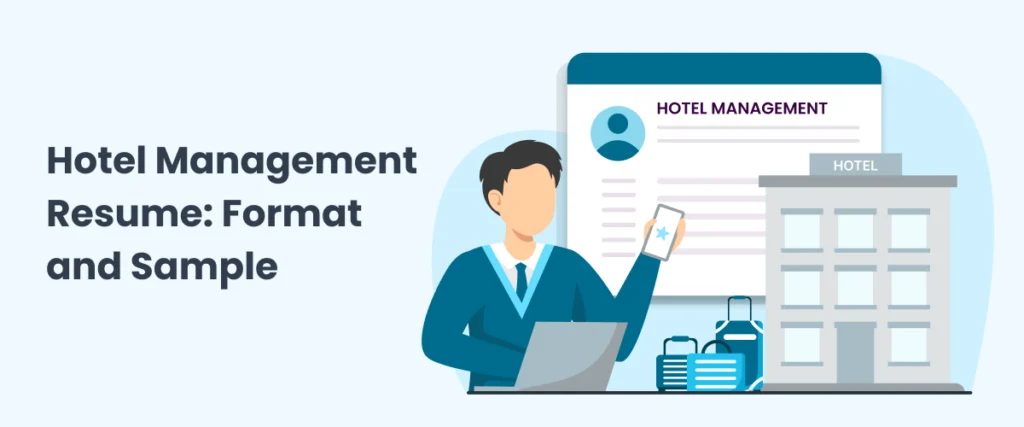
In the high-stakes, fast-paced world of hospitality, your resume is more than a mere list of qualifications—it is your professional ambassador. As India’s tourism and hospitality sector continues to soar, contributing an staggering ₹15.73 lakh crore (over $190 billion) to the national economy, the demand for polished, service-oriented professionals has never been higher. Whether you are a fresh graduate stepping out of the classroom or an aspiring manager aiming for a luxury hotel chain, your resume must bridge the gap between academic theory and the high-pressure reality of guest service.
A hotel management resume must be a masterclass in precision. It is the document that convinces a hiring manager—within seconds—that you possess the technical acumen to handle operations and the soft skills to manage human emotions.
The Anatomy of a Standout Resume: Core Elements
A successful resume in the hospitality sector is structured to allow recruiters to scan for specific competencies. Because the industry values efficiency, your layout must be intuitive.
I. Contact Information: The Professional Gateway
Your contact details should be at the very top, formatted for immediate accessibility. Include your full name, a professional mobile number, a clean email address (avoid nicknames), and your current city. In the digital age, a link to your LinkedIn profile is essential. Ensure your LinkedIn page is updated with your internships and a professional headshot, as this serves as an extension of your resume.
II. The Strategic Summary or Objective
Think of your summary as your "elevator pitch." For experienced professionals, a summary should condense your years of service, highlighting key achievements like "increased guest satisfaction scores by 15%." For freshers, an objective is more appropriate. Focus on your intent: "Detail-oriented Hotel Management graduate seeking to leverage strong communication skills and industrial training experience to contribute to the front-office team at [Hotel Name]."

III. The Chronology of Experience
The "Work Experience" section is the backbone of your application. Use reverse-chronological order, placing your most recent role first. If you lack formal employment, do not leave this section blank. Instead, reframe it as "Professional Experience" or "Internship Experience." Detail the hotel’s name, your specific title, and bulleted accomplishments. Use action verbs—managed, facilitated, resolved, coordinated—to describe your impact.
IV. Bridging the Gap: Internships and Training
For students, internships are the "work experience" that proves your mettle. Employers want to know that you have survived a busy check-in shift or handled a high-pressure banquet event. Clearly list your internship venue, the department (e.g., Housekeeping, F&B, Front Office), and the duration. Quantifiable results—such as "Handled 50+ check-ins daily"—carry significant weight.
Supporting Data: Why Your Skills Matter
The hospitality industry thrives on a unique blend of "Hard" and "Soft" skills. While hard skills—like operating a Property Management System (PMS) or understanding food safety standards—get you the interview, soft skills keep you employed.
Essential Technical Proficiencies
- Property Management Systems (PMS): Familiarity with software like Opera, IDS, or eZee.
- Food & Beverage Knowledge: Understanding of menu planning, hygiene standards (HACCP), and table service.
- Operational Proficiency: Mastery of housekeeping protocols and front-desk documentation.
The Power of Soft Skills
In the guest-centric economy, emotional intelligence is the most valuable currency. Your resume should implicitly and explicitly highlight:
- Communication: The ability to convey information clearly to guests and colleagues.
- Problem-Solving: The capacity to turn a guest complaint into a loyal customer experience.
- Adaptability: Thriving in shift-based work environments with varying peak demands.
Chronology of Career Development
For a student entering the hospitality field, the journey to a professional resume follows a logical progression. Understanding this timeline helps you track your growth:

- Academic Foundation: Completion of a BHM or Diploma. This is the period to focus on theoretical mastery.
- The Industrial Training (IT) Phase: A crucial bridge. This is where you transform classroom knowledge into operational efficiency.
- Entry-Level Roles: The phase of gaining real-world experience. Even a short stint as a front-desk associate provides invaluable insights.
- Specialization: As you gain experience, your resume should shift from being a "generalist" document to one that highlights expertise in a specific niche, such as Revenue Management, Event Planning, or Luxury Guest Relations.
Implications of an ATS-Friendly Resume
In modern recruitment, your resume must first pass the "Applicant Tracking System" (ATS). These algorithms scan for keywords relevant to the job description.
Pro-Tip: If a job description asks for "Guest Relationship Management," ensure that exact phrase appears in your "Key Skills" or "Experience" section. Avoid overly complex graphics, tables, or columns, as these can confuse ATS software. A clean, single-column layout is the safest bet to ensure your profile reaches human eyes.
Expert Insights and Industry Standards
Industry experts emphasize that a resume should never be "one size fits all." Every hotel has a different brand identity. A boutique resort expects a different tone than a global business hotel chain.
What do recruiters look for?
- Language Proficiency: In a global industry, being multilingual is a massive asset. Explicitly list languages and your level of proficiency (e.g., "Spanish: Conversational," "French: Fluent").
- Certifications: Beyond your degree, certifications in Food Safety, Customer Experience Management, or even specialized software certifications can set you apart from a crowded field of candidates.
Frequently Asked Questions (FAQs)
Q: Can I apply for hotel jobs with a non-hotel management degree?
A: Absolutely. Hospitality is fundamentally about service and management. If you possess a degree in business, communications, or even liberal arts, you can highlight transferrable skills like conflict resolution, customer service, and administrative organization.

Q: Should I include a photograph on my resume?
A: In India and many parts of Asia, a professional photograph is sometimes standard, but in Western markets, it is often discouraged to avoid unconscious bias. Unless the job advertisement explicitly asks for a headshot, focus on the substance of your experience rather than your appearance.
Q: How long should my resume be?
A: For freshers and entry-level professionals, keep it to one page. For those with over five years of experience, two pages are acceptable. Remember, recruiters spend seconds scanning; conciseness is a virtue.
Conclusion: The Path Forward
Your hotel management resume is a living document. It should evolve as you gain new certifications, finish internships, and take on more responsibility. By aligning your education with practical experience and framing your skills in the context of guest satisfaction, you transform a simple document into a powerful narrative of your career potential.
As the hospitality sector in India expands, it is not enough to simply be qualified; you must be prepared to demonstrate that you can handle the intensity of the industry. Start by auditing your current resume, cleaning up the formatting, and ensuring your achievements are quantifiable. In an industry built on the quality of service, your resume is the first test of how well you can serve your own career goals. Stay professional, keep it concise, and let your passion for hospitality shine through every line.