By Editorial Staff
Meta, the parent company of Instagram and Facebook, has issued a formal apology to the No Kings Coalition—a prominent social justice movement—following the abrupt and unexplained suspension of the group’s Instagram account. The outage, which occurred during a high-stakes weekend of nationwide protests, has reignited a fierce national debate regarding algorithmic censorship, the fragility of digital organizing, and the extent to which automated content moderation tools are inadvertently stifling political dissent.
The suspension, which Meta later characterized as an “incorrect enforcement” action, serves as a flashpoint in a broader narrative concerning the tech giant’s influence on civic engagement. As movements increasingly rely on social media to mobilize voters, document police interactions, and disseminate real-time information, the vulnerability of these accounts to automated "glitches" has become a matter of democratic concern.
The Chronology of the Shutdown
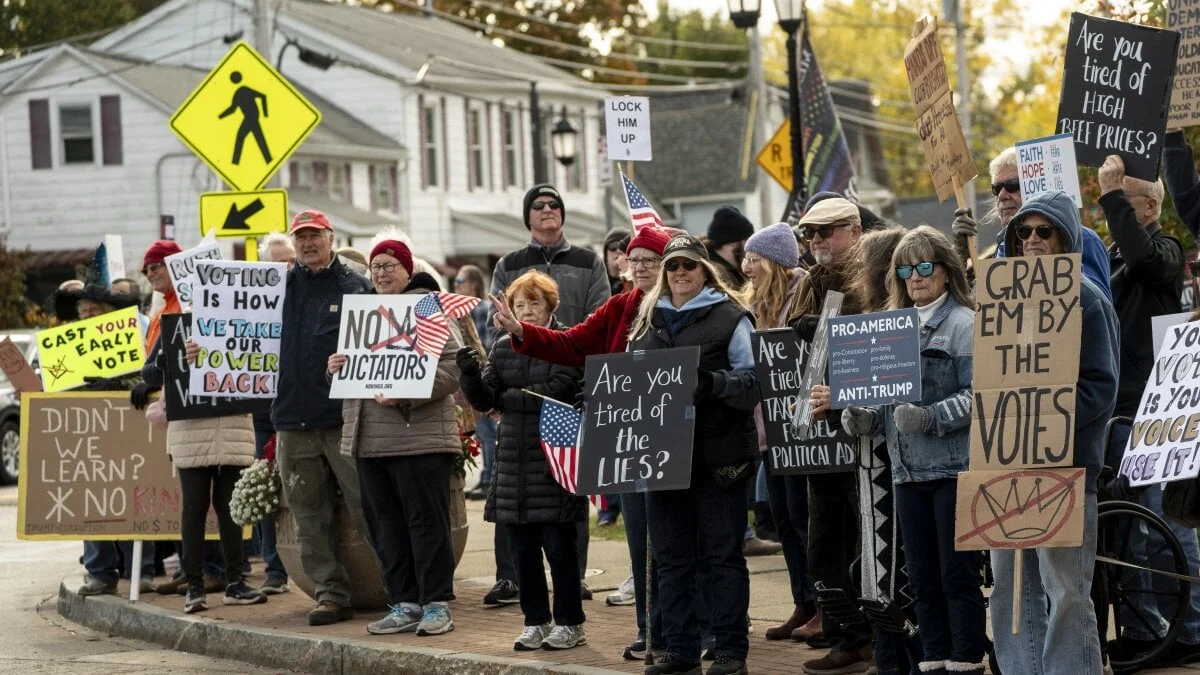
On October 17, as the No Kings Coalition prepared to coordinate a series of voter activations and public demonstrations ahead of the midterm elections, their primary digital megaphone went dark. For approximately 90 minutes, the account—which serves as a hub for real-time updates and community organization—was inaccessible to both the public and its administrators.
The timing was particularly damaging. In the digital age, social media is the central nervous system of modern protest; losing access during a live event is the equivalent of a megaphone being snatched away in the middle of a rally. Even after the account was restored, the coalition reported that its administrators were unable to regain access to the platform, further complicating their ability to manage the narrative or provide safety instructions to participants.
The ripple effects were immediate. Allies of the No Kings Coalition, including the League of Women Voters, leveraged their own platforms to demand transparency. “The timing matters,” the League noted in a statement released on October 18. “When people are gathering, organizing, and seeking information about civic participation, cutting off a movement’s primary communication channel—even temporarily—is deeply troubling.”
Technical Failure or Algorithmic Overreach?
Following a surge in public outrage and media inquiries, Meta released a statement clarifying the mechanism behind the outage. Andy Stone, a spokesperson for Meta, explained that the incident was triggered by “abrupt, high-volume” traffic that the company’s automated systems mistook for a malicious bot attack.
Specifically, Meta’s security architecture flagged an external tool—identified as a Claude tool—which was reportedly scraping profiles, posts, and hashtags at an accelerated rate. The company’s automated protective measures, designed to thwart spam and platform manipulation, interpreted this activity as a security threat. Consequently, the system triggered an automatic suspension of the No Kings Coalition account.
“This activity caused our automated protections to incorrectly take the No Kings Instagram account offline,” Stone stated. “It unfortunately took additional time for us to straighten out the situation with admin access to the IG account. We want to reiterate our sincere apology for the error.”
While Meta maintains that this was a technical error rooted in security protocols, privacy advocates and digital rights groups argue that the incident highlights a dangerous reliance on opaque, automated moderation. When security tools are calibrated to suppress high-volume activity, they often fail to distinguish between malicious bot-nets and legitimate, high-traffic grassroots movements.
A Pattern of Disquiet: Contextualizing the Censorship Claims
The suspension of the No Kings Coalition is not an isolated event; it arrives at a time when Meta is facing mounting criticism for its handling of sensitive political and social content. Over the past month, the company has been the subject of multiple allegations regarding platform censorship.
Earlier this year, a coalition of feminist organizations alleged that Meta was suppressing content related to the Cornell sexual assault case, sparking a debate about whether the platform’s algorithms are being manipulated to minimize controversial or distressing news. These claims have been bolstered by a long-standing pattern of complaints from reproductive health advocates and LGBTQ+ activists, many of whom have reported their pages being shadow-banned, restricted, or outright removed for posting content that they argue is well within community guidelines.
These recurring incidents have led to a crisis of confidence among activists who rely on Meta’s ecosystem. Many small businesses and community organizations have reported that their visibility on the platform is subject to the whims of algorithms that prioritize certain types of engagement while suppressing others, often without clear justification or an accessible appeals process.
The Shift in Policy: The Post-2025 Landscape
The tension between Meta and the activist community has been further exacerbated by a strategic shift in the company’s moderation policies. In 2025, Meta moved to remove several key protections against hateful conduct, a decision that many political analysts view as a direct response to the anti-DEI (Diversity, Equity, and Inclusion) pressure campaigns spearheaded by the Trump administration.
By weakening these guardrails, critics argue, Meta has fostered an environment where marginalized groups are more vulnerable to harassment, while their own attempts to organize are increasingly subject to “incorrect enforcement.” This duality—a reduction in protection for marginalized voices coupled with an aggressive stance against the tools they use to organize—has created an atmosphere of profound distrust.
For those within the No Kings Coalition, the question remains: if a major, high-profile organization can be erased by an automated error, what chance does a smaller, grassroots group have when their voice is silenced?
The Implications for Democracy and Digital Rights
The incident involving the No Kings Coalition raises fundamental questions about the role of private corporations in the public square. When a handful of Silicon Valley companies serve as the primary infrastructure for public discourse, the "terms of service" essentially become the laws of the digital land.
1. The Erosion of Public Trust
When a platform admits to an error but cannot provide a timely restoration of access, it reinforces the perception that these companies are either indifferent or incompetent when it comes to the needs of civil society. The 90-minute blackout may seem short in the context of a 24-hour news cycle, but for organizers on the ground, it was an eternity.
2. The Algorithmic Black Box
The use of AI-driven moderation tools is meant to address the impossible scale of content on Meta’s platforms. However, the No Kings case demonstrates the inherent flaws in this approach. When the "black box" of an algorithm makes a mistake, the damage is often irreversible. The public deserves greater transparency regarding how these tools are calibrated and what safeguards exist to prevent the silencing of legitimate political activity.
3. The Need for Regulatory Oversight
There is an growing call among lawmakers and digital rights advocates for stricter oversight of how social media platforms handle political content. As platforms become more integral to the electoral process, the argument for treating them as common carriers—or at least subjecting them to higher standards of transparency—is gaining momentum. If the "town square" is digital, the rules governing it cannot be entirely at the discretion of the owner.
Conclusion: Moving Forward
Meta’s apology to the No Kings Coalition is a necessary step, but it is unlikely to satisfy those who view the incident as part of a systemic problem. As the nation moves deeper into the midterm election cycle, the pressure on Meta to prove that its platforms are not being used to stifle political participation will only intensify.
For the No Kings Coalition and their allies, the takeaway is a sobering one: digital organizing is essential, but it is also fragile. The reliance on centralized platforms for the mobilization of movements carries significant risks, and the fight to keep these spaces open and accessible is likely to remain a central pillar of the broader struggle for digital rights in the 21st century.
As Meta looks to rebuild its relationship with activist communities, the company will need to move beyond formulaic apologies. True accountability will require a fundamental reassessment of how their automated systems prioritize safety over speech, and a commitment to ensuring that the next time a movement takes to the streets, their digital voice remains loud, clear, and uninterrupted.