Introduction: The Passing of a Chronicler
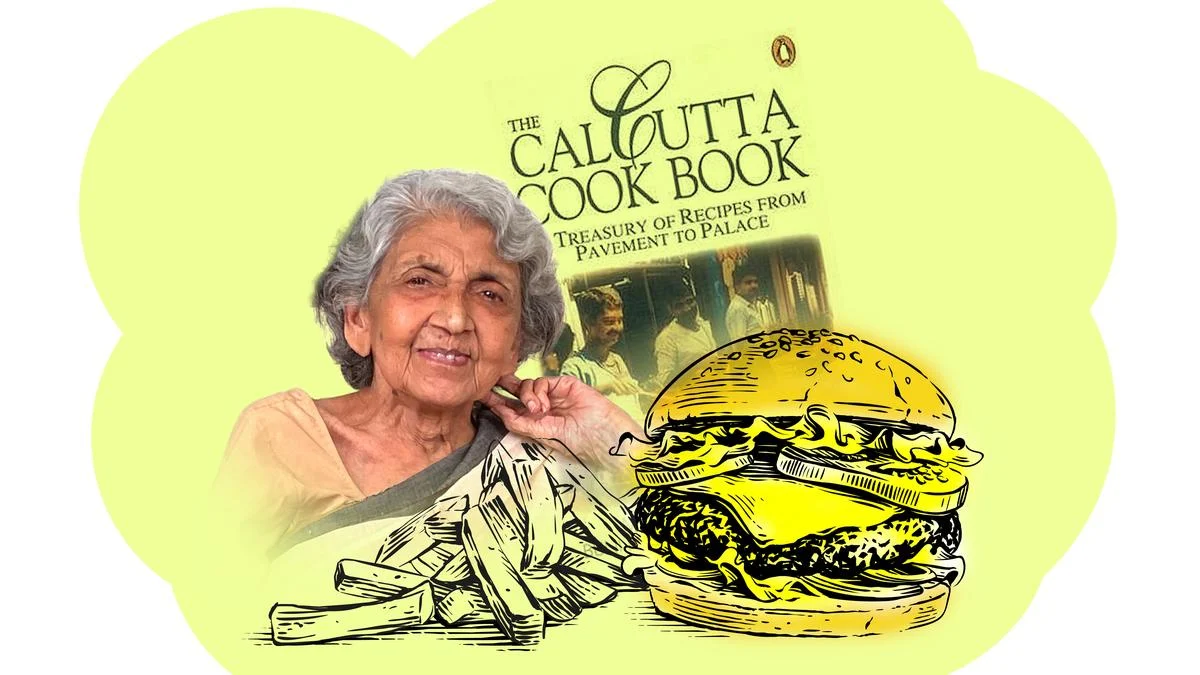
Last month, the literary and culinary landscape of Kolkata suffered a quiet, profound loss with the passing of Bunny Gupta. To many, she was a byline in local newspapers, a name associated with the investigative rigor of urban history. To others, she was the co-author of a foundational text—The Calcutta Cook Book: A Treasury of Recipes from Pavement to Palace—a volume that transformed how the city viewed its own plate.
Though she may not have been a household name in the way celebrity chefs are today, Gupta’s legacy is woven into the very fabric of Kolkata’s identity. Her work, alongside co-authors Jaya Chaliha and Minakshie Dasgupta, did not merely provide instructions for cooking; it provided a map of the city’s soul. In an era obsessed with the digital curation of "hidden gems," the passing of someone like Bunny Gupta serves as a sobering reminder of the difference between superficial novelty and the deep, archival labor of memory-keeping.
Chronology: From Old Notebooks to a Cultural Testament
The journey of The Calcutta Cook Book, published in 1995, was an act of cultural salvage. In the mid-nineties, the culinary world was beginning to shift toward high-gloss, stylized food photography. The authors of this volume, however, chose a different path. They bypassed the polished aesthetic of modern cookbooks to focus on the grit and grace of the kitchen.
- The Research Phase (Early 1990s): Gupta, Chaliha, and Dasgupta embarked on a quest to document the city’s food philosophy. They interviewed the elders of diverse communities, seeking out the "hidden gems" of the city—not in the sense of viral hotspots, but as human repositories of history.
- The Compilation (1994–1995): The recipes were sourced from yellowing family notebooks, the lived experiences of khansamas (traditional cooks), and the oral histories of families whose lineages spanned continents.
- Publication (1995): The release of the book established a new benchmark for food writing in India, treating recipes as historical documents rather than mere instructions.
- The Legacy (1995–Present): For nearly three decades, the book has functioned as a testament to the "cosmopolitan jigsaw" that is Kolkata.
Supporting Data: The Mosaic of a Metropolis
The genius of The Calcutta Cook Book lies in its roster of contributors. The names alone—Sofia Bibi, Renukana Das Gupta, Caroline Fernandes, Sita Pasricha, Lt. Col. Hamilton, Sohinder Grewal, and Begum Jani of Avadh—read like a demographic census of a city built by migration.
The Cosmopolitan Jigsaw
The city’s menu, as recorded by the authors, is a masterclass in cultural adaptation. It is a place where a "sample Calcutta menu" might include:
- Chinese chicken corn soup.
- Baawarchee’s smoked fish paired with American coleslaw.
- Jewish mahashas.
- Moghlai shami kebabs.
- Bengali mishti doi or tipari (gooseberry) phool.
This is not a chaotic menu; it is a heritage menu. It reflects a city that was open-hearted enough to accommodate a roast stuffed turkey alongside a murgh musallam with equal reverence. This was the city Bunny Gupta spent her life documenting—a place where every dish was an encounter between cultures.
The "Aloo Posto" Controversy: Innovation vs. Appropriation
Recently, a firestorm erupted in the culinary circles of Kolkata, sparked by a Durga Puja campaign from the multinational coffee giant, Starbucks. The brand introduced an "Aloo Posto" burger, a fusion attempt that sought to capitalize on the deep emotional resonance of the traditional Bengali potato-and-poppy-seed dish.
The Public Outcry
For many Bengalis, aloo posto is not just food; it is an emotion. It is a dish born of the complex, often dark, colonial history of the opium trade. Its preparation is a ritual, and its consumption is strictly tied to the texture and comfort of steamed rice. To many, the act of stuffing this delicate, homely dish into a fast-food hamburger bun felt like a form of culinary blasphemy—a sterile commodification of a cultural pillar.
The Authorial Intent
However, the debate invites a nuance found in the introduction of The Calcutta Cook Book. Gupta and Chaliha famously wrote: "If you are at a loss for the prescribed ingredient, let your imagination find a substitute and invent a new recipe for the cooking pot."
This suggests that the authors were not culinary fundamentalists. They understood that evolution is the lifeblood of cuisine. So, why does the aloo posto burger feel different? The answer lies in the distinction between "migration" and "gimmickry."
Implications: Memory, Migration, and the Commodity
The difference between the historical innovations of Kolkata’s past and modern corporate fusion lies in the memory attached to the food.
The Love Child of Migration
Consider the Jewish aloo makallah (turmeric-coated, deep-fried potatoes) or the potoler dolma (striped gourd stuffed with fish or paneer, a nod to the Middle Eastern dolma). These dishes were the "love children of migration." They were born of necessity and the longing for home, representing the synthesis of a displaced culture adapting to a new geography. They hold the stories of families who crossed oceans and borders.
The Gimmick of the Chain
Conversely, the aloo posto burger comes with no memory. It is a novelty gimmick designed to trigger a superficial sense of "local pride" to move units of product. It co-opts a familiar element of culture, strips it of its context, and throws it into a mass-produced bun. As the late Bunny Gupta would have likely noted, this is not an evolution of cuisine; it is the dilution of it.
The Essential Work of the Chronicler
Bunny Gupta was, at her core, a guardian of the city’s distinct taste. Her work was rarely glamorous. When she spent humid, grueling afternoons in the Scottish Cemetery, painstakingly transcribing the inscriptions on crumbling tombstones, she was often viewed as an eccentric.
Yet, it is precisely this "eccentricity" that preserves the uniqueness of a city. By documenting the names of forgotten sahibs and memsahibs, by tracking the evolution of a recipe, and by fighting for the preservation of historic neighborhoods, she ensured that Kolkata remained a place of substance.
If we lose the memory-keepers—the people who document why a building stands the way it does or why a spice is used in a particular way—we are left with a city that is easily flattened. Without the deep, archival, and often difficult work of people like Bunny Gupta, we are left only with the hollowed-out versions of our culture, served in cardboard boxes.
Conclusion: A Legacy of Integrity
The passing of Bunny Gupta is a call to action for those who care about the authenticity of our urban spaces. We live in an age where everything is documented on Instagram, yet very little is truly understood. We are drowning in content but starving for context.
Bunny Gupta taught us that if you do not define your own history—through your food, your architecture, and your stories—the market will define it for you, usually in the form of a burger. To honor her memory is not merely to read her book, but to engage in the same work she did: to look closely, to document the stories of those around us, and to recognize that the true "hidden gems" of a city are not the products we consume, but the people and the memories that define us.