At its core, a gallery is far more than a commercial storefront for canvas and sculpture; it is a vital, breathing encounter between the creator and the community. As Sakshi Gallery marks its 40th anniversary, it does not merely celebrate a milestone in longevity. Instead, it invites the public to engage with a history that mirrors the trajectory of India’s modern and contemporary art landscape.
To commemorate this landmark, curator Manan Shah has transformed the historic Travancore Palace in New Delhi into a sprawling, immersive archive of artistic evolution. By situating four decades of Indian art within the storied, regal corridors of the palace, the exhibition serves as a profound meditation on the gallery’s role as both a cultural institution and an active interlocutor in the national discourse.
A Legacy of Audacity: The Founding Years
The story of Sakshi Gallery is intrinsically linked to the vision of its founder, Geetha Mehra. Before the white-cube galleries of Mumbai became the standard, Mehra was already a pioneer of the "roving" exhibition model.
"I was 30 when I started the gallery in its physical space," Mehra recalls, "but I had been doing roving exhibitions in different venues in Madras and Bangalore for years prior." Her transition to Mumbai—then Bombay—was an act of sheer, calculated intuition. At the time, the city was an uncharted territory for a contemporary gallery of this scope.
"Bombay, for me, was an unknown and uncharted territory, which I entered fearlessly!" Mehra reflects. Looking back through the lens of four decades, she admits to the sheer audacity of the venture. "Now, when I look back, I feel it was such a huge gamble, and perhaps I would not do it if I were to go back in time!" Yet, that gamble paid off. Sakshi became a cornerstone of the Indian art market, providing a platform for artists who would go on to define the aesthetic language of a post-liberalization India.
Curating the Past: Manan Shah and the Travancore Dialogue
The decision to house this retrospective at the Travancore Palace was not merely a matter of convenience or prestige; it was a deliberate curatorial intervention. Manan Shah, the curator tasked with weaving this four-decade narrative, sought a venue that possessed its own memory.
"Travancore Palace has a history of its own, and we wanted to create something in dialogue with it," Shah explains. The exhibition is designed to transcend the visual arts, incorporating a multidisciplinary approach that honors the complexity of the last forty years. "I did not intend to limit the exhibition to the visual arts alone, but also wished to look at other forms of expression, and a place like Travancore Palace offered that possibility."
By inviting contemporary artists to create site-specific works that respond to the architecture of the palace, Shah has bridged the gap between the historical weight of the venue and the shifting perspectives of the current generation. The result is an environment where the viewer is forced to reconsider the relationship between the art object, the architectural setting, and the passage of time.
The Responsibility of the Institution
In an era where the art market is often criticized for prioritizing transaction over transformation, Sakshi Gallery’s anniversary serves as a reminder of the institution’s broader civic duties. When asked about the responsibility of a gallery beyond the act of buying and selling, Manan Shah is unequivocal.
"We should not limit our approach to sales or aesthetic value alone, but should also respond to and acknowledge social realities and shortcomings," Shah asserts. For him, the curatorial act is a form of witnessing. It is the process of narrating a story that emerges from rigorous observation, social inquiry, and genuine concern for the cultural climate of the nation.
This philosophy has been the bedrock of Sakshi Gallery’s endurance. Throughout its four-decade history, the gallery has functioned as a contributor to the growth of visual arts in India, often running parallel to the country’s own socio-political transformation. For Shah, who admits he was initially surprised to be invited to curate the anniversary show, the experience has been a masterclass in institutional longevity. "Working with a gallery that has evolved over four decades, not only as a distinctive brand but also as a contributor whose journey runs parallel to the growth of visual arts in India, has been both a rewarding and fulfilling experience."
Chronology of Influence: Milestones in Indian Art
The evolution of Sakshi Gallery is a microcosm of the evolution of the Indian art market.
- 1984–1990: The Formative Years: Moving from roving shows in Southern India to establishing a permanent presence in Mumbai. This era saw the discovery and promotion of artists who would eventually become the pillars of the Indian art canon.
- 1990s: The Liberalization Shift: As the Indian economy opened, the gallery played a crucial role in bringing Indian contemporary art to international attention, participating in global art fairs and fostering dialogue with curators from the West.
- 2000s: The Institutional Expansion: The gallery moved into larger, more ambitious exhibition formats, hosting major retrospectives and supporting experimental media, including video art and large-scale installations.
- 2010–2024: The Digital and Site-Specific Era: Recognizing the limitations of the traditional white-cube space, the gallery shifted its focus toward site-specific interventions and digital discourse, culminating in the current 40th-anniversary exhibition at Travancore Palace.
Supporting Data: The Impact of Long-Term Stewardship
The longevity of a gallery like Sakshi provides more than just historical prestige; it provides a longitudinal view of value. In an art market that often fixates on the "next big thing," institutions that have survived for forty years provide the necessary infrastructure for sustained artistic careers.
Data from the Indian art market suggests that galleries with over 30 years of history—often referred to as "legacy galleries"—are responsible for the majority of the archival work that protects the legacy of modern masters. By maintaining extensive records, producing scholarly catalogs, and facilitating museum-grade exhibitions, Sakshi Gallery has acted as a custodian of India’s visual heritage.
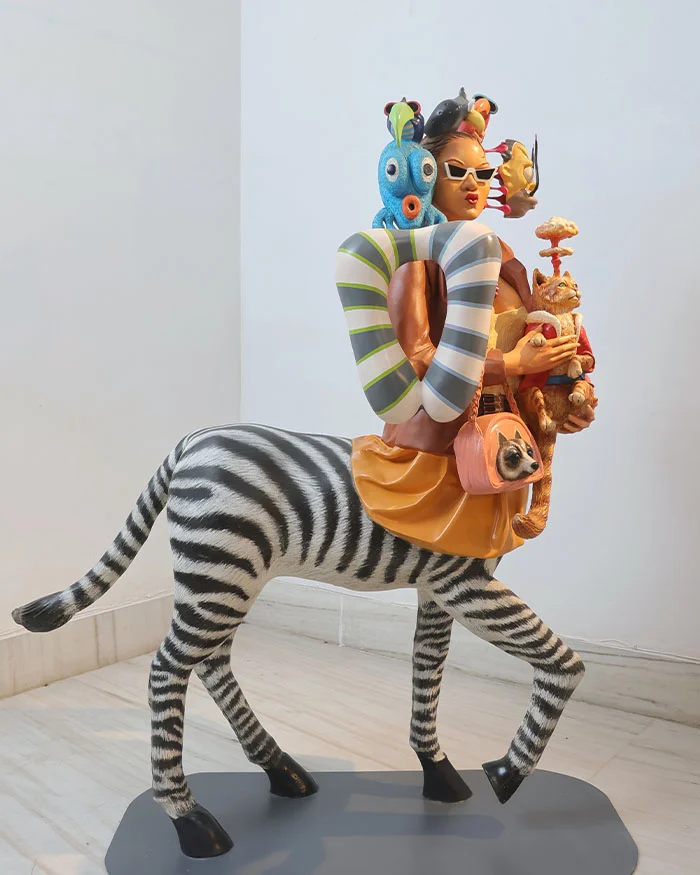
The current exhibition, which brings together works from various stages of the gallery’s timeline, highlights how these artists responded to the changing times. From the anxieties of the post-Independence generation to the globalized aspirations of the early 2000s, the art on display serves as a historical record of the Indian experience.
Official Responses and Curatorial Intent
The anniversary exhibition is being heralded as a milestone for the Indian art scene, not just because of the gallery’s tenure, but because of the maturity of the curatorial vision. Industry peers have noted that by choosing an off-site location like Travancore Palace, the gallery is signaling a move away from the "market-centric" model of the 2010s toward a more "thought-centric" model.
"The curation is an inquiry," says Shah. "It is an attempt to ask: How do we remember? How do we archive the intangible?"
Geetha Mehra, for her part, remains humble about the legacy. She views the anniversary not as a victory lap, but as a point of reflection. The "gamble" she took at 30 has transformed into a living, breathing network of relationships—between collectors, artists, curators, and the public.
Implications: The Future of the Gallery
What does the next decade hold for a gallery that has seen it all? The implications of the Sakshi anniversary are clear: the future of the art gallery lies in its ability to adapt.
The traditional model—exhibiting art in a neutral, white-walled space—is increasingly being challenged by the desire for immersive, site-specific, and experiential art. By utilizing the Travancore Palace, Sakshi is demonstrating that the "gallery" is not a building, but a capacity to curate experiences that move the needle of public discourse.
Furthermore, the emphasis on "witnessing" rather than just "selling" suggests a shift in the role of the gallerist. As the world becomes increasingly fractured, the gallery must function as a space of dialogue, a place where the difficult questions of identity, history, and social reality are confronted through the lens of artistic expression.
As the doors of the Travancore Palace close on this exhibition, the legacy of Sakshi Gallery remains firmly cemented. It stands as a testament to the fact that with enough conviction, an "unknown and uncharted territory" can become the heart of a national cultural movement.
For those looking to understand the last forty years of Indian art, this exhibition is not merely a trip down memory lane. It is a rigorous, deeply moving look at how art responds to the pressures of time, and how a single institution can serve as the connective tissue between the artists of yesterday and the audiences of tomorrow.