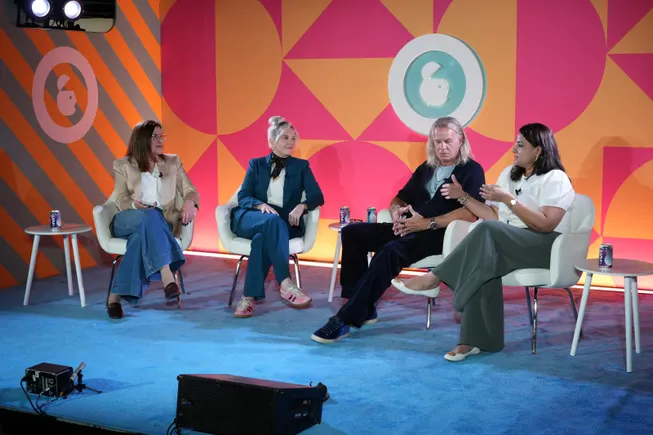
At the recent Advertising Week New York, the industry’s brightest minds converged to discuss a shift that is fundamentally rewriting the playbook of consumer engagement. While Gen Z has dominated the cultural conversation for nearly a decade, the spotlight is shifting toward their successors: Generation Alpha. Born between 2010 and 2025, this cohort is not merely the next wave of consumers; they are digital-native architects of a new economic reality.
As the industry grapples with the integration of artificial intelligence and the decline of traditional media, Gen Alpha has emerged as a primary focus. With an estimated global population of 2 billion, this generation is projected to command an economic impact of $5.46 trillion by 2029. For marketers, the mandate is clear: Gen Alpha is no longer a "future" target—they are the "household CMOs" of today.
The Paradigm Shift: Gen Alpha as Household CMOs
Traditionally, marketing to children and young teenagers was an exercise in "pester power"—trying to get a child to convince their parent to make a purchase. However, the data from Advertising Week suggests a more sophisticated power dynamic. According to research from DKC, Gen Alpha already commands over $100 billion in direct spending power and influences roughly 42% of all household purchases.
"I think Gen Alpha has been deemed the ‘household CMO’ because they have so much influence," noted Emma Witkowski, Vice President of Media Solutions at WildBrain, the powerhouse behind brands like Teletubbies. "For brands that are thinking, ‘Oh, we’ll think about Gen Alpha in 10 years’ time or when they’re teenagers,’ you’re missing the opportunity, which I really see as both short-term and long-term."
This transition means that brands can no longer rely on age-gated, parent-only strategies. Instead, they must create value that resonates simultaneously with the child’s digital lifestyle and the parent’s purchasing priorities.
Chronology of Influence: From Niche to Necessity
The ascent of Gen Alpha’s influence has been accelerated by three distinct technological and cultural events:
- The Digital Baptism (2010–2016): As the first generation born entirely within the 21st century, they were raised on iPads and interactive touchscreens. Unlike Millennials, who migrated to digital platforms, Gen Alpha was born into an environment where technology was an extension of the self.
- The Pandemic Acceleration (2020–2022): The COVID-19 lockdowns forced education and social interaction onto screens. This accelerated their adoption of platforms like Roblox, Minecraft, and YouTube, turning them into the primary gatekeepers of family digital entertainment.
- The Generative AI Boom (2023–Present): With over one-fifth of the cohort using AI daily, Gen Alpha is the first generation to treat artificial intelligence as a utility rather than a novelty. This has fundamentally altered how they discover products, research brands, and form identities.
Supporting Data: By the Numbers
The economic and behavioral landscape of Gen Alpha is backed by compelling metrics that inform the current strategies of top-tier brands:
- Market Valuation: $5.46 trillion potential economic impact by 2029.
- Direct Spending Power: Over $100 billion currently controlled by those under 16.
- Household Influence: 42% of all household purchasing decisions are influenced by Gen Alpha.
- AI Engagement: 14% of the demographic currently uses AI as a primary tool for brand discovery.
Official Responses and Strategic Insights
During the sessions at Advertising Week, a recurring theme was the friction between AI-driven discovery and the need for human authenticity. Donna Tuttle, Vice President of Marketing and Communications at Whataburger, emphasized that despite their technological aptitude, Gen Alphas are resistant to being labeled the "AI generation."
"They are irritated by that because they don’t feel like we’re giving them their individuality," Tuttle said. "AI is crawling for anything that’s human. They’re looking for those stories, they’re looking for those authentic things that already live out there."
The "Invisible Layer" of Marketing
Channan Sawhney, Associate Vice President of Digital, Media, and Measurement at Church & Dwight, introduced the concept of the "invisible layer." As AI models become the primary gateway for information, brands must optimize their presence not just for human eyes, but for the algorithms that summarize the web for consumers.
"At least in my mind, it has almost come to a point where you’re marketing to humans and then you’re marketing to machines," Sawhney explained. "Visibility becomes really critical. How do you convince the invisible layer to let you go through to who’s on the other side?"
The solution, according to the experts, lies in the creator economy. Influencers on platforms like YouTube and Roblox serve a dual purpose: they build the authentic, human-centric content that AI models crave, and they maintain the parasocial trust required to influence Gen Alpha’s purchasing behavior.
Implications for the Future of Advertising
The findings from Advertising Week point to three critical implications for marketers looking to stay relevant in the coming decade.
1. Stop Trend-Hopping; Start Licensing IP
Many brands have been burned by attempting to capitalize on short-lived memes like the "six-seven" phenomenon, which quickly devolved from viral sensation to "cringe" content. Instead of chasing fleeting trends, brands should pivot toward supporting or licensing high-value, long-form intellectual property. As traditional television networks like Cartoon Network see their influence wane, the rise of "microdramas"—short-form, high-quality narrative content—offers a new frontier for brand integration.
Bryce Adams, U.S. influencer lead at WPP’s The Goat Agency, advocates for this strategy: "There’s a tremendous opportunity to go license some of this really credible IP and maybe work with some creative voices that have permission that your brand does not."
2. The Return of Co-Viewing
The death of the "family TV night" has been greatly exaggerated. While the medium has shifted from linear cable to YouTube and streaming, the occasion of co-viewing—parents and children watching content together—remains a goldmine for advertisers.
"I talk about co-viewing as the most undervalued audience segment in advertising right now," said WildBrain’s Witkowski. The challenge is measurement. Because digital platforms are fragmented, there is no standardized "rating" for co-viewing. Industry groups, such as the Coalition for Innovative Media Measurement, are now prioritizing the development of new metrics to help brands recapture this space.
3. Opt-In Environments vs. "Brain Rot"
As parental concerns grow regarding "brain rot"—low-quality, algorithmically generated content designed to keep kids addicted—brands must differentiate themselves by creating or sponsoring "opt-in" environments. High-quality podcasts, educational creator-led content, and interactive gaming experiences that provide substantive value are the most effective ways to build long-term brand equity.
Conclusion: The Human-First Mandate
The overarching takeaway from Advertising Week is that while the tools of the future are increasingly automated and algorithmic, the path to Gen Alpha’s heart remains profoundly human.
For the modern marketer, the goal is not to force a brand into the Gen Alpha ecosystem through aggressive, machine-optimized advertising. Instead, it is to provide the raw material—the stories, the community, and the creative IP—that both the AI and the "household CMOs" will naturally prioritize. By moving away from empty trends and toward authentic, co-viewing-friendly, and value-driven content, brands can ensure they remain relevant in an era where the youngest consumers are, ironically, the ones calling the shots.