By Editorial Staff
October 15, 2026
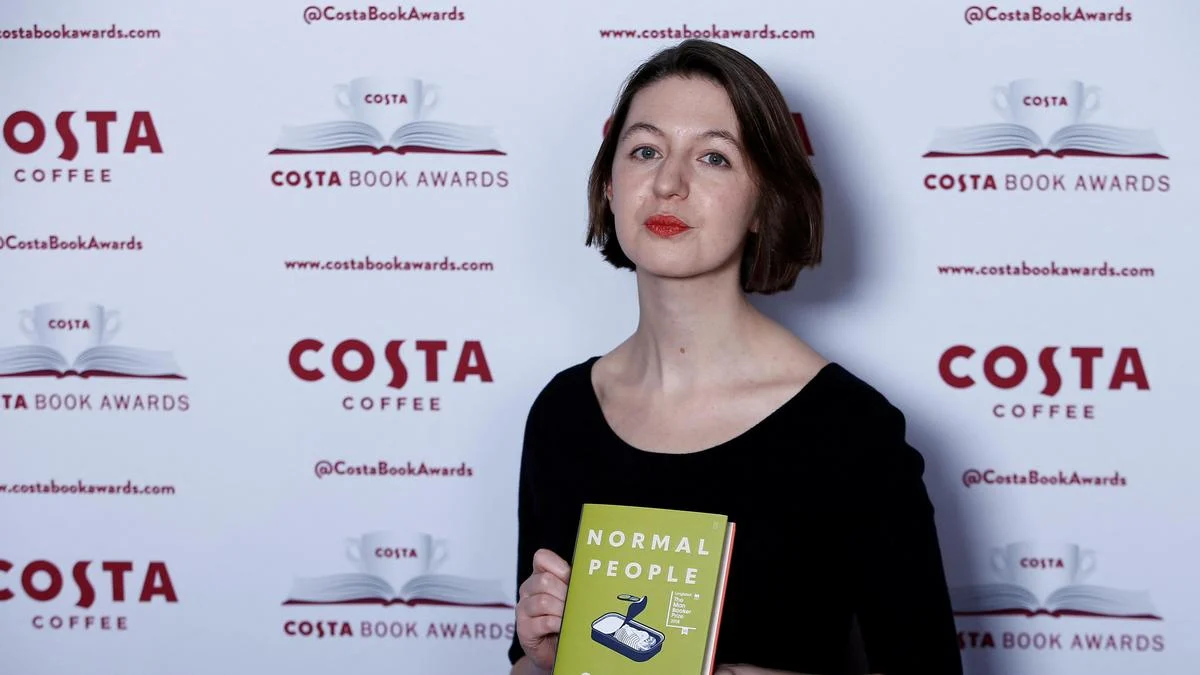
In a move that has sent shockwaves through the literary world and ignited a fierce debate over the intersection of art, activism, and national security, Irish novelist Sally Rooney has seen her works effectively removed from the British market. The unprecedented decision, confirmed by both the author and her publisher, Faber, follows Rooney’s public commitment to funneling her literary royalties toward Palestine Action—a group currently proscribed by the British government as a terrorist organization.
This development marks a rare and sobering intersection of contemporary fiction and hard-line domestic policy, forcing a confrontation between intellectual freedom and the stringent legal frameworks governing anti-terrorism in the United Kingdom.
The Core Conflict: A Publisher’s Dilemma
The suspension of sales in the United Kingdom, announced on Wednesday, October 14, 2026, is not, according to Faber, a censorship-driven initiative. Rather, the publisher characterizes the move as a logistical and ethical impossibility born of legislative necessity.
Under current UK counter-terrorism legislation, providing financial support to a proscribed organization is a criminal offense. Given that Rooney has explicitly stated her intent to direct her royalties to Palestine Action, Faber found itself in a position where the standard business practice of paying an author her dues would constitute a breach of law.
“Current legislation in the UK has led to circumstances where Faber cannot pass on UK earnings to Sally Rooney for her work,” the publishing house stated in an official release. “To sell a writer’s work and not be able to pass on earnings is an unconscionable situation for a publisher.”
Consequently, Faber and Rooney reached an agreement: the supply of her works—including her breakout hits Normal People and Conversations with Friends, as well as her more recent literary contributions—would cease in the UK in all formats, including digital and print. The books will, however, continue to be distributed globally.
Chronology of the Crisis
The road to this unprecedented withdrawal has been marked by a series of legal and political escalations that began in the summer of 2025.
- June 2025: Palestine Action, an activist group known for direct-action tactics against defense companies with ties to Israel, carries out a high-profile break-in at the Royal Air Force’s Brize Norton base. This event serves as a catalyst for the British government to officially proscribe the group under terrorism laws.
- Late 2025: Sally Rooney, long a vocal critic of the occupation of Palestinian territories, publicly pledges her support for the organization, even as the government’s ban takes effect.
- February 2026: In a significant legal victory for the activists, the High Court rules in favor of Huda Ammori, the co-founder of Palestine Action, challenging the legality of the group’s proscription.
- June 2026: The Court of Appeal overturns the High Court’s ruling, reinstating the ban on Palestine Action.
- October 2026: Sally Rooney testifies in a witness statement to the High Court, explicitly detailing her plans to donate royalties to the group, anticipating that her stance might force her books off British shelves.
- October 14, 2026: Faber and Rooney formalize the decision to cease UK sales, citing the legal inability to process payments without violating anti-terrorism funding laws.
- November 2026: The UK Supreme Court is scheduled to hear a final appeal regarding the legality of the ban on Palestine Action.
The Activism of Sally Rooney: A Principled Stand?
Sally Rooney has never been an author who shies away from the political. From her earliest novels, her work has interrogated the structures of power, class, and interpersonal dynamics. However, her involvement with Palestine Action represents a departure from traditional literary activism into the realm of direct-action support.
In her statement following the announcement, Rooney remained resolute. "I have made every effort to be honest with the public about my beliefs and intentions," she stated. "I am wholly prepared to accept the consequences."

For supporters of the author, this move is viewed as a courageous alignment of her personal ethics with her professional life. For her critics, and indeed for the British government, her support for a group classified as a terrorist organization—particularly one that has targeted military infrastructure—is seen as a dangerous crossing of a red line.
Implications for Civil Liberties and the Publishing Industry
The withdrawal of Rooney’s books from the UK market raises profound questions about the state of civil liberties in Britain. Since the proscription of Palestine Action, more than 3,000 individuals have been arrested for varying levels of support for the group, including the simple act of displaying signs.
Civil liberties groups have expressed alarm, noting that the legislative climate in the UK is becoming increasingly hostile toward dissent. The "chilling effect" on authors, artists, and academics who wish to voice support for controversial political movements is now a tangible reality. If an author as commercially successful as Rooney can be effectively "de-platformed" by her own publisher due to financial regulations, observers wonder who might be next.
Furthermore, the publishing industry now faces a complex precedent. If publishers are legally required to audit the political affiliations of their authors, or if they are prohibited from paying authors who fund causes deemed "terrorist" by the state, the publishing landscape could undergo a fundamental shift. Writers may find themselves forced to choose between their political convictions and their ability to reach their domestic audience.
The Legal Horizon: The Supreme Court Appeal
The future of both Palestine Action and the availability of Rooney’s books in the UK hinges on the upcoming Supreme Court hearing. The legal community is watching the case closely, as it pits the government’s broad powers under the Terrorism Act against the fundamental rights of assembly and expression.
If the Supreme Court upholds the ban on Palestine Action, the status quo remains, and Rooney’s books will likely stay off the shelves for the foreseeable future. If the Court overturns the ban, the legal basis for the restrictions on her royalties could evaporate, potentially allowing for a reinstatement of her works in the UK market.
However, the damage to the relationship between the author and the British literary establishment may already be done. The episode serves as a stark reminder that in an increasingly polarized world, the space for intellectual discourse is shrinking, constrained by the ever-tightening grip of national security laws.
Conclusion: A Literary Legacy in Exile
For the readers of Sally Rooney in Britain, the immediate future is clear: they will no longer be able to purchase her new works through official channels. The "Rooney void" in British bookshops will undoubtedly be filled by the secondary market or digital imports from abroad, but the institutional absence remains a powerful symbol.
Whether one views Rooney’s actions as an act of moral integrity or a reckless alignment with extremism, the situation is undeniable proof that literature—even fiction—cannot remain insulated from the geopolitical and legal realities of the time. As the Supreme Court prepares to deliberate next month, the nation waits to see whether the law will remain a blunt instrument of security or if it can once again find room for the complexities of political dissent.
For now, the most famous voice of her generation has been silenced in her own backyard—a silence that echoes far beyond the pages of her books.