In the hyper-connected era of the 21st century, a brand’s reputation can be dismantled in a matter of hours. A single AI-generated deepfake, a coordinated smear campaign, or an innocuous social media post spiraling out of control can evolve from a digital whisper into a full-scale public relations catastrophe. As the internet becomes an increasingly volatile landscape of misinformation and polarized discourse, traditional corporate monitoring tools—which focus primarily on vanity metrics like hashtag volume and impression counts—are proving dangerously obsolete.
Enter Gudea, an innovative startup positioning itself as the "storm tracker for the internet." By leveraging sophisticated artificial intelligence to map the anatomy of online narratives, Gudea is moving beyond mere observation, offering organizations the ability to predict, analyze, and neutralize crises before they reach the mainstream.
The Anatomy of an Online Crisis: Beyond Traditional Listening
For decades, Chief Communications Officers and marketing executives have relied on legacy social listening platforms. These tools, while effective at measuring the "what" of a brand’s online footprint, consistently fail to capture the "how" and "why." They provide a tally of mentions but offer zero insight into the hidden mechanics driving those conversations.
Gudea represents a paradigm shift. Instead of counting posts, its proprietary AI analyzes human behavior, the evolving relationships between digital clusters, and the specific pathways through which information travels. By monitoring more than 500 mainstream and fringe platforms—ranging from the high-traffic corridors of X (formerly Twitter) and TikTok to the dark corners of niche internet forums—Gudea tracks how a story gains momentum. It identifies the influencers driving the narrative, the speed of its propagation, and the ultimate trajectory of the information, providing decision-makers with the necessary context to determine whether a response is warranted or if engagement would only serve to amplify the chaos.
Chronology: From Counter-Terrorism to Corporate Defense
The origins of Gudea are rooted not in boardroom strategy, but in the high-stakes world of national security. The team’s journey began in 2021 with the George Washington Initiative, a nonprofit organization established in the wake of the 2020 U.S. election.
The Intelligence Roots
The founding team—Keith Presley, Jonathan Sperber, and James Thomin—brought together a unique intersection of expertise. Presley, a veteran of political campaigning and defense infrastructure; Sperber, a specialist in disinformation research; and Thomin, a Ph.D. in chemical engineering with two decades of experience in machine learning, sought to apply the same intelligence-gathering tactics used to disrupt overseas extremist networks, such as those operated by Al Qaeda and ISIS, to the domestic information landscape.
The goal was straightforward yet ambitious: identify the online environments where toxic narratives were germinating and disrupt the digital pathways that allowed those narratives to permeate the mainstream public discourse.
The Transition to Industry
During their work with the George Washington Initiative, the team encountered a recurring problem: the tools available to them were insufficient for mapping the movement of information across complex social networks. Recognizing this gap in the market, they pivoted, officially incorporating Gudea in 2023. What started as an experimental endeavor to protect the democratic process evolved into a robust commercial enterprise designed to protect the reputations of some of the world’s largest organizations.
Supporting Data: The Rising Tide of Inauthentic Activity
The urgency of Gudea’s mission has been accelerated by the proliferation of generative AI. The ease with which bad actors can now produce high-quality, deceptive content has lowered the barrier to entry for coordinated influence campaigns.
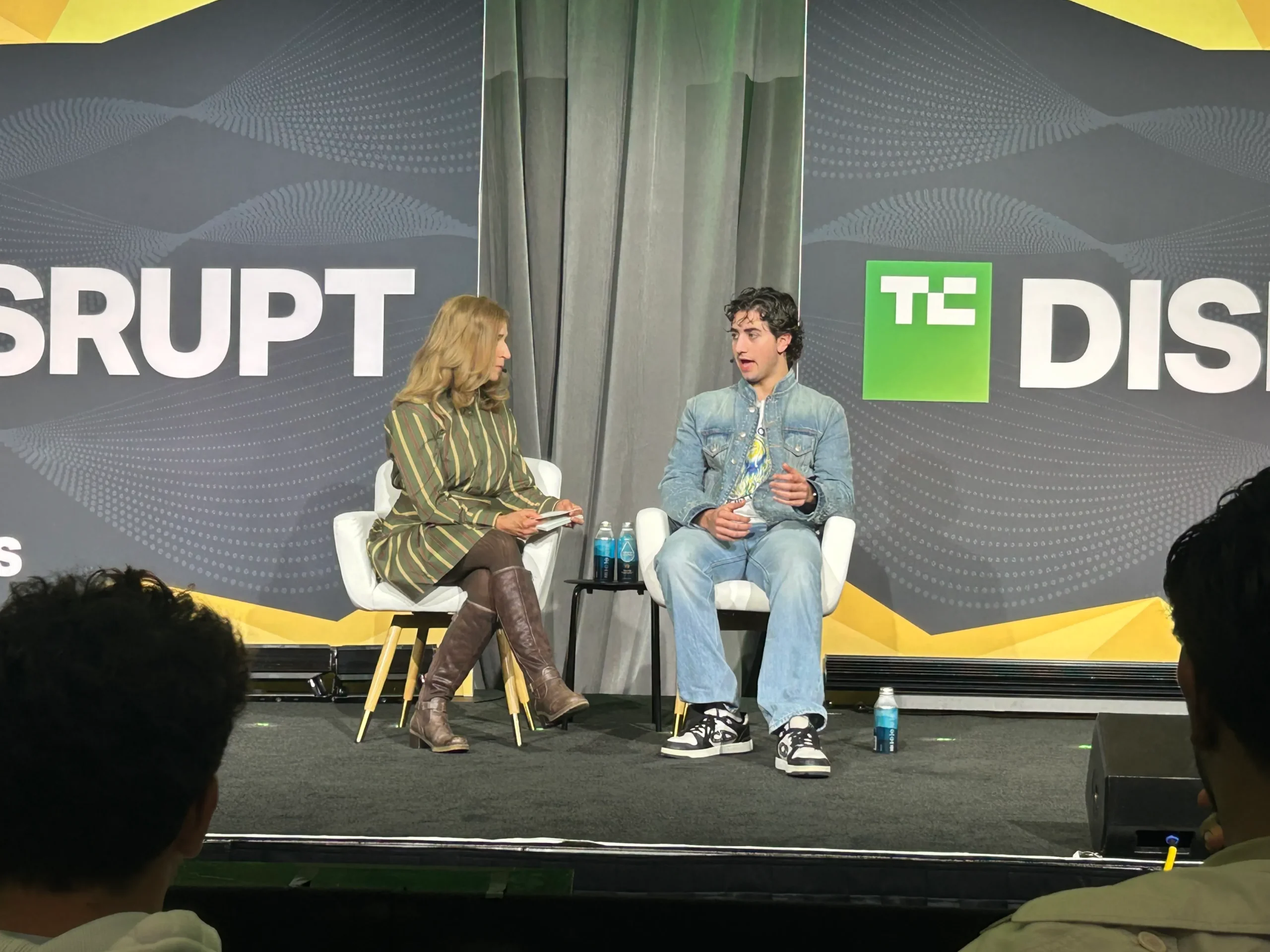
Presley, reflecting on the rapid transformation of the digital landscape, notes a stark trend. "When we first started in 2021, and then as a company in 2023, we maybe saw one out of four things we looked at have inauthentic activity around it," he stated during the company’s appearance at TechCrunch Disrupt 2026. "Now it’s probably nine out of ten things that we look at have this inauthentic activity."
This surge in synthetic influence is reflected in Gudea’s rapid adoption. Just three years after its founding, the company counts nearly 40 clients among its roster, including Fortune 50 telecommunications firms and retailers, one of the world’s largest AI labs, major international musical acts, and various government agencies. This diverse client base serves as a testament to the universal nature of the "digital storm" problem.
Official Responses and Strategic Vision
At TechCrunch Disrupt 2026, the Gudea team made a definitive case for a proactive approach to reputation management. CEO Keith Presley emphasized that current executive leadership is often operating with a "legacy mindset."
"These big industries don’t understand that there are things they can do proactively to defend their reputation and their brand," Presley argued. "A lot of the chief communications officers and chief media or marketing officers, they’re using legacy tools to try to figure out what’s happening. Those tools were only ever designed to tell you the number of hashtags or number of impressions."
Looking Ahead: Geolocation and Predictive Modeling
Gudea is not resting on its current success. The company has laid out an aggressive roadmap for the next 18 months. A primary focus is "narrative geolocation." Slated for rollout next year, this technology aims to allow users to pin down the origin of conversations with surgical precision—potentially down to the city-block level.
Furthermore, Gudea plans to move from defensive analysis to predictive simulation. The company is developing features that will allow clients to "stress test" their own advertising or public relations campaigns through Gudea’s AI model before launch. By identifying potential negative reactions or misinterpretations in advance, companies can adjust their messaging before it ever hits the public eye.
Implications: The Future of Brand Resilience
The recent infusion of $7 million in seed funding—co-led by Mudita Venture Partners and Silicon Road Ventures—brings Gudea’s total funding to approximately $15 million. This capital injection signals that investors view the "narrative defense" space as a critical growth sector for the next decade.
A New Standard for Reputation Management
The implications of Gudea’s technology extend far beyond corporate PR. As AI-generated misinformation becomes indistinguishable from reality, the ability to trace the origin of a narrative is becoming a prerequisite for institutional stability.
- The Death of Passive Monitoring: Organizations can no longer afford to wait for a crisis to crest before reacting. The speed of social media requires an intelligence-led approach that favors early intervention.
- The Democratization of Disinformation: Because AI has made it possible for a single individual with a laptop to mimic the reach of a professional organization, the "threat surface" for companies has expanded exponentially. Gudea’s model addresses this by leveling the playing field.
- Strategic Transparency: As Gudea moves toward allowing clients to test their own narratives, we are likely to see a shift in how companies approach public communication. Pre-emptive modeling could lead to more nuanced, culturally aware, and crisis-resistant messaging.
Final Thoughts
Gudea’s journey from an intelligence-led nonprofit to a VC-backed powerhouse mirrors the evolution of the internet itself. We have moved from a web of static pages to a dynamic, chaotic, and often weaponized ecosystem. In this new world, silence is not a strategy, and reactive measures are often "too little, too late."
By treating online discourse as a meteorological phenomenon—subject to patterns, shifts, and, most importantly, predictability—Gudea is providing the essential infrastructure for modern organizations to navigate the storm. As Presley noted, the company’s path has been "unusual," but in an era defined by the unpredictable, perhaps an unconventional approach is exactly what the industry requires. The question for the next decade will not be whether a company can generate buzz, but whether they can survive the inevitable storms of the digital age.