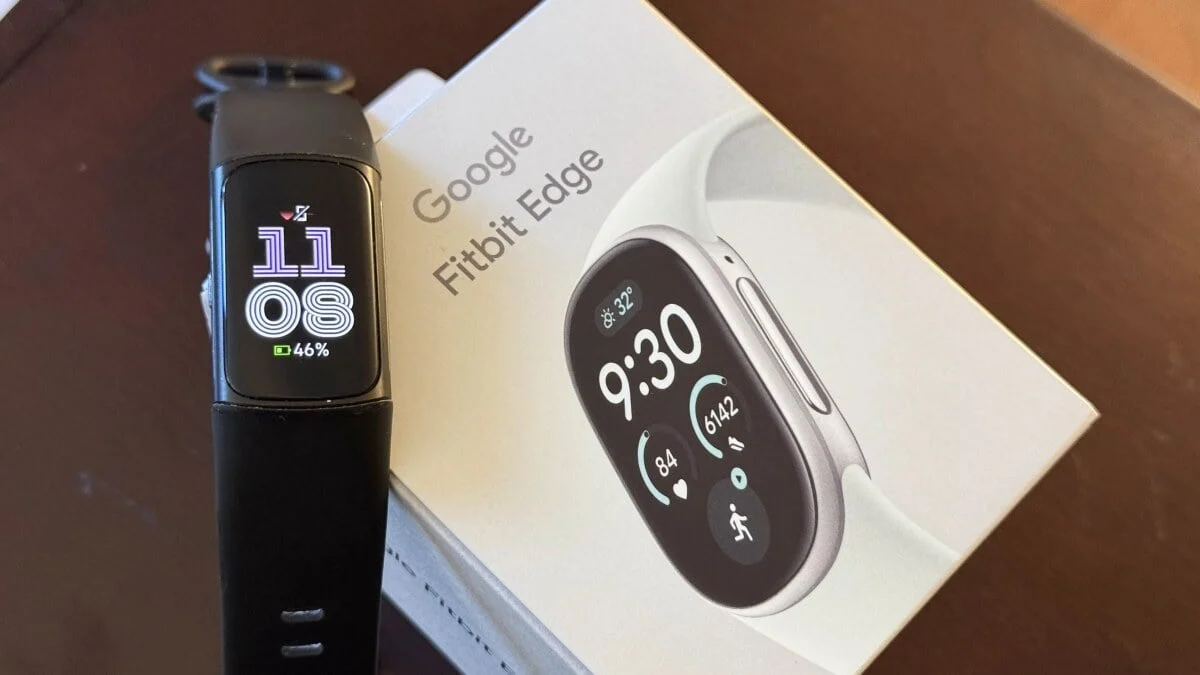
The landscape of wearable technology has undergone a seismic shift over the last three years. Since the last major release of a screen-equipped fitness tracker, the market has pivoted toward more sophisticated health monitoring, integrated ecosystems, and a refined balance between aesthetic appeal and utility. With the official announcement of the Fitbit Edge and the subsequent opening of pre-orders, the fitness community finds itself at a crossroads. For the millions of users currently sporting the Charge 6, the arrival of the Edge invites a critical question: Has Google finally bridged the gap between a simple activity tracker and a fully realized smart companion?
Main Facts: A New Chapter for Fitbit
The Fitbit Edge represents a significant pivot in hardware philosophy. Positioned strategically between the minimalist, screenless Fitbit Air and the premium, curved-glass aesthetic of the Google Pixel Watch, the Edge aims to capture the "prosumer" fitness market.
Key hardware departures from the Charge 6 include:
- Tactile Feedback: The inclusion of a genuine, clicky side button replaces the finicky, haptic-only "button" of the Charge 6, providing a much-needed tactile confirmation of user input.
- Altimeter Integration: After a long hiatus, the barometric altimeter returns, allowing for precise floor-climbing metrics and more accurate elevation tracking during outdoor excursions.
- Enhanced GPS: Google has overhauled the internal chipset, promising to resolve the connectivity and accuracy issues that plagued the Charge 6, particularly when the device was worn with a snug fit.
- Universal Media Control: Breaking away from the restrictive YouTube Music-only ecosystem, the Edge offers system-wide media playback controls for any audio app running on a connected smartphone.
However, these gains come at a cost. In a surprising move, Google has stripped the Edge of Near-Field Communication (NFC) capabilities. This means the absence of Google Wallet, effectively ending the ability for users to utilize "tap-to-pay" functionality at the register—a feature that many Charge 6 loyalists considered a cornerstone of their daily routine.
A Chronological Perspective: Three Years in the Making
To understand the significance of the Fitbit Edge, one must look at the timeline of Google’s stewardship over the Fitbit brand.
Following the acquisition of Fitbit, Google faced the daunting task of integrating its software ecosystem with Fitbit’s proprietary hardware. The Charge 6 arrived as an iterative update, focused on refining existing sensors and pushing users toward the YouTube Music platform. While it was a reliable tracker, it felt like a transitional device—a placeholder while the R&D teams worked on a more cohesive vision.
The three-year gap between the Charge 6 and the Edge was not a period of inactivity, but rather a reflection of the "Fitbit Air" strategy. By releasing a screenless, stripped-down tracker first, Google tested how much users were willing to rely on mobile app data versus on-wrist information. The Edge is the synthesis of those learnings. It acknowledges that users want a screen, but they want one that is integrated into a more responsive, physical interface.
Supporting Data: Performance and Technical Specifications
The performance metrics of the Edge suggest a focus on reliability over gimmickry. In early testing, the physical button provides a 100% success rate for wake-up commands, a sharp contrast to the Charge 6, where the haptic nub often required multiple, frustrating presses to register.
The return of the altimeter is perhaps the most significant data-driven update. For runners and hikers, the "floors climbed" metric and elevation gain tracking provide a more comprehensive view of workout intensity. By utilizing the barometric sensor rather than relying purely on GPS-based elevation—which is notoriously prone to variance—the Edge offers a higher degree of precision for high-altitude training.
Regarding the GPS chipset, the "snug fit" issue of the Charge 6 was a well-documented technical failure where the tension of the band physically distorted the antenna’s reception. By repositioning the antenna and upgrading the chipset, Google has seemingly mitigated the "comically distorted map" phenomenon. While real-world testing is ongoing, the architecture suggests a much more robust connection to satellite arrays, regardless of how tightly the strap is cinched.
However, the lack of NFC is a major data point for consumer behavior. By removing Google Wallet, Google is effectively segmenting its user base: if you need contactless payments, you are pushed toward the higher-end Pixel Watch. If you prioritize raw fitness data and battery life, you are steered toward the Edge.
Official Responses and Strategic Implications
Google’s positioning of the Edge is telling. When asked about the exclusion of Google Maps and NFC, company representatives emphasized the "focused experience" of the device. The "coming soon" status of Google Maps navigation suggests that the Edge is a living product; it will receive feature drops long after the initial unboxing.
The strategy here is clear: Google is moving away from making the Fitbit a "mini-smartphone" and toward making it a "dedicated health companion." By removing the complexity of payments and heavy navigation apps, the device can dedicate more of its internal resources to sensor polling, heart rate variability (HRV) monitoring, and, ultimately, longer battery life.
The "Missing" Google Maps
The decision to launch without Google Maps support is, in the eyes of many, a strategic pause. On the Charge 6, the Maps app was limited to turn-by-turn text prompts. It was often viewed as a "check-the-box" feature rather than a utility. By delaying its launch on the Edge, Google has the opportunity to rebuild the experience to be more fluid, perhaps utilizing the new side button for quicker access to location data.
Broader Implications for the Wearable Market
The Fitbit Edge serves as a case study for the current state of the fitness tracker market. We are seeing a divergence between "smartwatches" (like the Apple Watch or Pixel Watch) and "trackers" (like the Fitbit Edge).
- Subscription Lock-in: The shift away from YouTube Music-only controls is a major victory for consumer freedom. It signals that Google understands the friction caused by proprietary walled gardens.
- Hardware Durability: The move back to physical buttons is a trend we are seeing across the tech industry, as manufacturers realize that the "sleekness" of touch-only surfaces often comes at the expense of usability.
- The Ecosystem Tax: The exclusion of NFC is a reminder that in the world of wearables, you rarely get a perfect device. There is always a trade-off, and the Edge forces users to decide whether their priority is the convenience of a wallet on their wrist or the accuracy of their elevation and performance tracking.
Conclusion: Should You Upgrade?
For the current Charge 6 owner, the decision to upgrade to the Fitbit Edge should be based on your specific pain points. If you are a runner who lives in hilly terrain, the new altimeter and improved GPS are non-negotiable upgrades that will significantly improve your data accuracy. If you were constantly frustrated by the Charge 6’s music controls or its unresponsive haptic button, the Edge provides a much more refined and reliable daily experience.
However, if you are a user who relies on your tracker to pay for your morning coffee via Google Wallet, the Edge is not an upgrade—it is a regression. You would be better served looking toward the Pixel Watch or sticking with your current device.
The Fitbit Edge is not trying to be a revolutionary device that changes your life; rather, it is a refinement of the core fitness experience. It is a "back to basics" approach that prioritizes sensor quality, physical reliability, and ecosystem openness. As Google continues to refine the software, the Edge will likely solidify its place as the definitive tracker for the athlete who wants to focus on their performance, not their peripheral features. As we move forward, the success of the Edge will provide a clear indicator of whether the market still desires a dedicated tracker, or if the "smartwatch-for-everyone" model will eventually render the wrist-based tracker a relic of the past. For now, the Edge stands as a sturdy, capable, and welcome evolution in the Fitbit lineage.