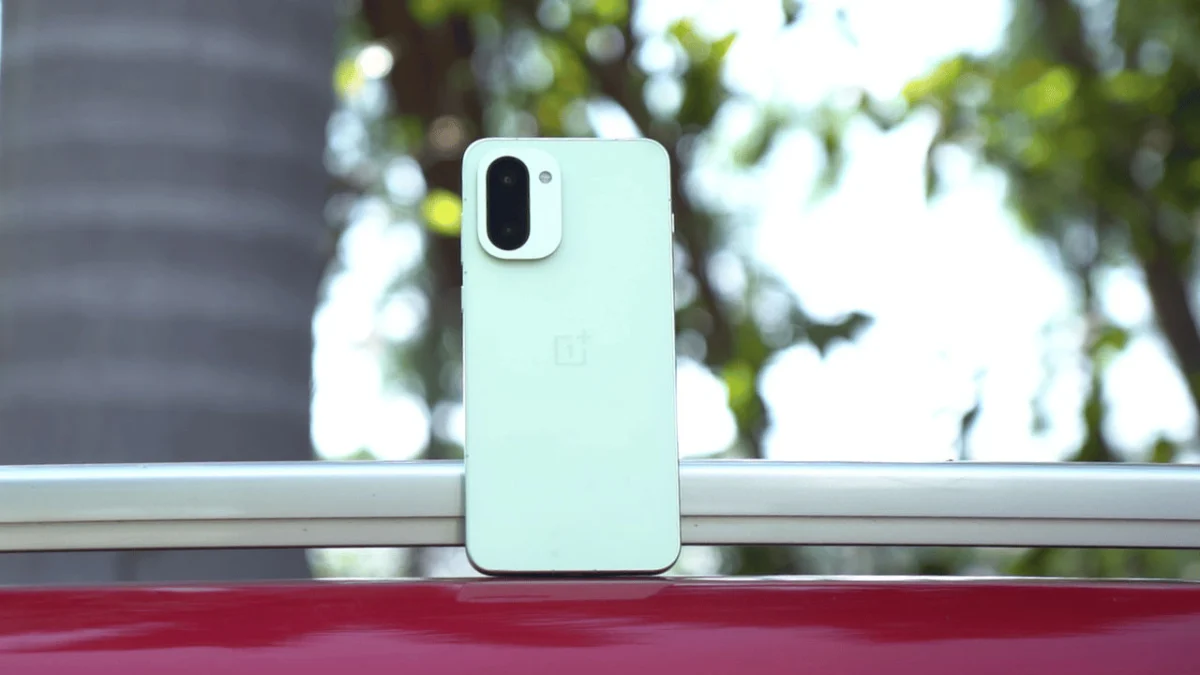
NEW DELHI — In a move that signals a significant shift in the landscape of mobile artificial intelligence and hardware durability, Oppo has officially pulled back the curtain on its next-generation operating system, ColorOS 17. Scheduled to make its highly anticipated Indian debut on October 22, 2026, the new software will launch alongside the company’s latest flagship hardware, the Find X10 series.
This announcement marks a pivotal moment for the Chinese smartphone giant as it seeks to solidify its position in the premium segment. By integrating Android 17 with a suite of proprietary "Agentic" AI features and robust security protocols, Oppo is positioning itself not just as a hardware manufacturer, but as a pioneer in the "AI-First" smartphone era.
The Main Facts: A Convergence of AI and Premium Engineering
The core of the announcement revolves around two primary pillars: the launch of the Find X10 series and the introduction of ColorOS 17. The Find X10 series will consist of two primary models—the Find X10 and the Find X10 Pro Max. These devices are designed to showcase the full capabilities of ColorOS 17, which Oppo claims is its most intuitive and secure operating system to date.
Key highlights of the announcement include:
- India Launch Date: October 22, 2026.
- Operating System: ColorOS 17, built on the Android 17 architecture.
- Hardware Lineup: Find X10 (6.59-inch) and Find X10 Pro Max (6.78-inch).
- AI Integration: Introduction of AI Mind Pilot, AI Mind Suggest, and the OSee visual intelligence engine.
- Security Innovations: Implementation of a Private Computing Cloud (PCC) featuring post-quantum encryption and an AI Call Guard to combat deepfake fraud.
- Durability Standards: A rare triple-certification of IP66, IP68, and IP69.
Chronology: The Road to October 22
The journey toward the Find X10 series has been one of steady escalation in the premium market. Following the success of the Find X8 and X9 series, which focused heavily on camera optics and rapid charging, the Find X10 marks a transition toward "holistic intelligence."
- Early 2026: Rumors began circulating regarding Oppo’s collaboration with Google on early access to Android 17’s kernel, specifically focusing on low-level AI integration.
- September 2026: Oppo teased the "Mind Pilot" interface at a closed-door developer conference, hinting at a shift from "Assistants" to "Agents."
- October 13, 2026: Official unveiling of ColorOS 17’s feature set and the announcement of the India-specific launch event.
- October 22, 2026 (Upcoming): The Find X10 series will officially go on sale in the Indian market, followed by a phased rollout of ColorOS 17 to older compatible devices including the Find X9 and Reno 13 series.
Supporting Data: Hardware Specifications and Performance
Oppo’s Find X10 series is not merely a vehicle for software; it is a powerhouse of engineering designed to compete with the highest-tier offerings from Samsung and Apple.
Display and Visuals
Both the Find X10 and Find X10 Pro Max utilize advanced LTPO (Low-Temperature Polycrystalline Oxide) panels. The Pro Max features a 6.78-inch display, while the standard Find X10 offers a more compact 6.59-inch footprint.
- Refresh Rate: Up to 144Hz, allowing for ultra-smooth scrolling and gaming.
- Brightness: The displays are among the brightest in the industry, claiming a global peak brightness of 2,000 nits and a staggering local peak brightness of 3,600 nits for HDR content. This ensures legibility even under the harshest direct sunlight in the Indian subcontinent.
Durability and Build
In a significant upgrade for outdoor enthusiasts and professional users, the series boasts triple IP ratings:
- IP66: Protection against high-pressure water jets.
- IP68: Resistance to immersion in water up to 1.5 meters for 30 minutes.
- IP69: Protection against high-pressure, high-temperature water sprays—a standard usually reserved for specialized industrial equipment.
The Hasselblad Partnership
Continuing its long-standing collaboration, the Find X10 series features a Hasselblad-tuned camera system. While specific sensor sizes were not detailed in the initial briefing, the integration of ColorOS 17’s AI Mind Pilot is expected to bring revolutionary computational photography features, including "Generative Relighting" and "Action-Aware" motion stabilization.
Software Deep Dive: The Intelligence of ColorOS 17
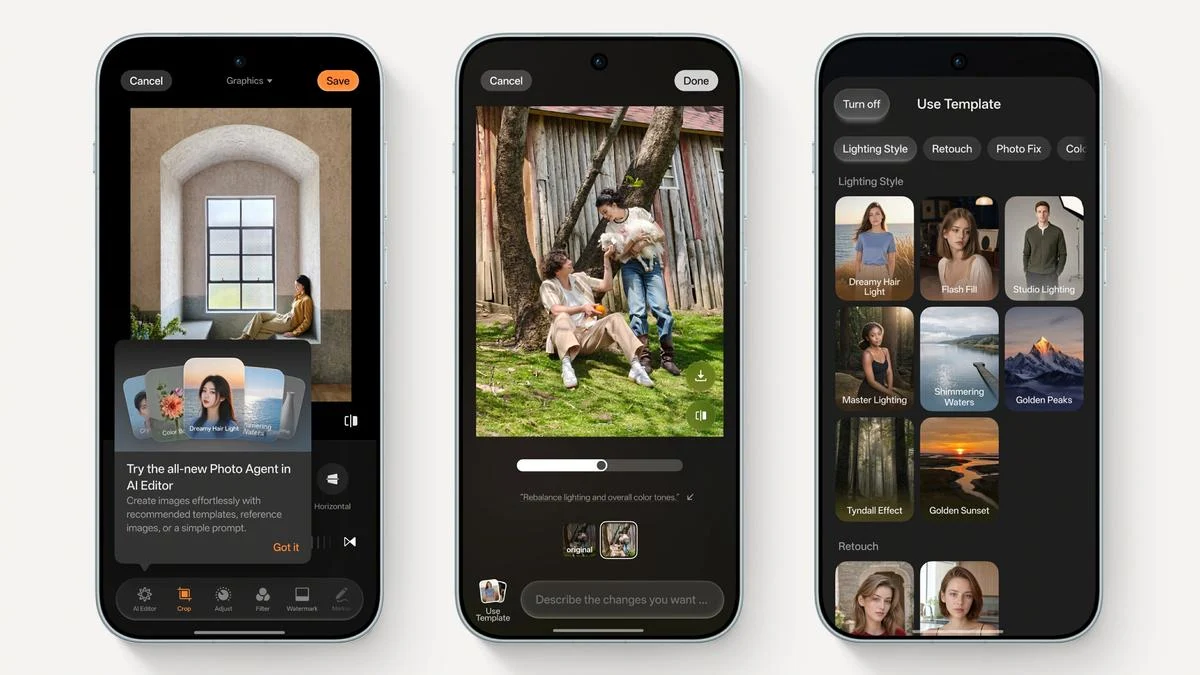
The defining feature of ColorOS 17 is the AI Mind Pilot. Unlike traditional voice assistants that operate on a command-response basis, the AI Mind Pilot introduces an Agent Mode.
AI Mind Pilot: Beyond Basic Commands
Agent Mode is designed to understand context and hierarchy. If a user asks the device to "Find the receipt from last Tuesday’s dinner and send it to my accountant," the AI Mind Pilot can:
- Identify the specific photo or PDF in the local storage.
- Verify the content of the file.
- Open the mail application, draft the message, and attach the file—all without the user needing to switch between apps manually.
Memory Collections and Structured Data
ColorOS 17 aims to solve the problem of "digital clutter." Through Memory Collections, the OS can save documents and video links, using AI to "watch" or "read" the content. It then categorizes this information into structured, searchable personal memories. This allows users to search for concepts (e.g., "Where did I see that video about sustainable gardening?") rather than just keywords.

OSee: Visual Intelligence
The OSee engine transforms the camera into a portal for information. By leveraging object recognition and knowledge lookups, OSee can perform nutrition analysis on food, high-definition scanning of documents, and real-time translation of complex technical manuals, connecting users directly to the services they need based on what they are looking at.
Privacy and Security: The Post-Quantum Frontier
As AI becomes more integrated into personal data, security has become the primary concern for consumers. Oppo has addressed this with a sophisticated multi-layered defense strategy.
Private Computing Cloud (PCC)
Oppo’s PCC ensures that data used for cloud-based AI processing is never accessible to third parties. Every bit of data is processed within a secure environment using end-to-end encryption.
Post-Quantum Security
In a forward-looking move, ColorOS 17 introduces post-quantum security capabilities. As quantum computing threatens to break traditional encryption methods, Oppo’s dual-encryption mechanism protects data transmission between the device and the cloud against future "harvest now, decrypt later" attacks.
AI Call Guard
To combat the rising threat of AI-generated fraud, the AI Call Guard monitors incoming calls in real time. It is specifically designed to detect synthetic voices and AI face swaps (in video calls), alerting the user immediately if suspicious activity is detected.
Transparency and Control
The new Transparency Report provides a granular view of how data is processed. Users can see exactly which AI services were used, the timestamps of access, and the nature of the operations performed, with the option to export this data for personal auditing.
Official Responses and Strategic Vision
While the official launch event is set for October 22, spokespeople for Oppo India have emphasized the "user-centric" nature of this update.
"ColorOS 17 is not just an update; it is a fundamental rethinking of the relationship between the user and their smartphone," an Oppo representative stated during the unveiling. "With the Find X10 series, we are providing the hardware muscle to support an OS that acts more like a personal assistant than a tool. India is a key market for this transition, as our users here are among the most tech-savvy and demanding in the world."
Industry analysts suggest that the focus on "Agentic AI" is a direct response to the growing capabilities of Google’s Gemini and Apple’s Intelligence suite. By building these features directly into the OS skin, Oppo aims to provide a more seamless experience than third-party AI apps can offer.
Implications: What This Means for the Market
The launch of the Find X10 series and ColorOS 17 has several far-reaching implications for the Indian smartphone ecosystem:
- Pressure on the Premium Segment: With its 3,600-nit display and triple IP rating, Oppo is setting a high bar for durability and visual performance. Competitors like Samsung and Apple may need to accelerate their hardware cycles to keep pace with these "over-engineered" specifications.
- The AI Arms Race: ColorOS 17 moves the conversation away from "megapixels and gigahertz" toward "agents and privacy." The success of AI Mind Pilot will likely determine if consumers are ready to trust their devices with more complex, multi-step tasks.
- Security as a Product: By introducing post-quantum encryption, Oppo is targeting a niche but growing segment of security-conscious professionals and enterprise users who are wary of the vulnerabilities inherent in standard cloud computing.
- The Future of Android Skins: ColorOS 17 demonstrates that Android skins are no longer just aesthetic overlays. They are becoming deeply integrated platforms that can offer features—like the AI Call Guard—that are not yet native to the base Android experience.
As October 22 approaches, all eyes will be on the Indian market to see if Oppo’s ambitious vision of an AI-driven, ultra-durable future resonates with consumers. If the Find X10 series delivers on its promises, it could very well redefine the "flagship" standard for the years to come.