In the high-stakes world of growth marketing, the mantra has always been the same: find the channel before it becomes the status quo. Early adopters of paid search captured low-cost leads before the auction prices skyrocketed. Pioneers of content marketing built empires on organic traffic before the web became saturated with generic AI-generated filler. Those who mastered email early built direct relationships before the era of aggressive spam filtering and deliverability hurdles.
History in digital marketing is a cycle of discovery, exploitation, and eventual normalization. Today, that cycle is repeating itself with the rise of "Answer Engine Optimization" (AEO). As buyers shift away from traditional keyword-based search in favor of AI-driven conversational discovery, the brands that secure their spot in the "answer" are the ones that will define the next decade of market leadership.
The Shift from Search to Synthesis: Understanding the AEO Landscape
For two decades, the "blue link" was the undisputed king of the internet. Brands fought for the top spot on Google to drive traffic to their landing pages. However, the rise of Large Language Models (LLMs) and conversational AI—such as Perplexity, ChatGPT, and Google’s AI Overviews—has fundamentally changed the buyer’s journey.
Buyers no longer want to click through ten different websites to synthesize information themselves. They want an answer, a comparison, and a recommendation delivered in a single, coherent response. When a potential customer asks an AI agent, "What are the best CRM platforms for small enterprise manufacturing?" they are not looking for a list of links; they are looking for a curated expert opinion.
This shift has created a significant "window of opportunity." Because most marketing departments are still tethered to legacy SEO playbooks, the competitive landscape for AI citations remains relatively wide open. The brands earning consistent citations today are building brand equity and awareness before a buyer ever lands on a traditional website. This is not just about traffic; it is about establishing credibility at the very beginning of the decision-making funnel.

A Chronology of the AEO Revolution
To understand why AEO is the current "lever" for growth, we must look at the rapid evolution of the search landscape over the last 24 months:
- The Pre-AI Era (2000–2022): The dominance of intent-based search queries. Success was defined by ranking for high-volume keywords and optimizing meta-descriptions for click-through rates (CTR).
- The "ChatGPT Moment" (Late 2022–2023): The public launch of LLMs signaled a shift in user behavior. Users began testing AI for complex queries, bypassing traditional search entirely.
- The Rise of Answer Engines (2023–2024): Specialized tools like Perplexity and search-integrated AI features (SGE/AI Overviews) became the default research tools for B2B buyers.
- The Maturity Phase (2025 and beyond): As AI models incorporate more real-time data and citation ranking becomes a core component of search algorithms, the "prime real estate" of the answer box will become as expensive and competitive as the top position of the search engine results page (SERP).
We are currently in the sweet spot—the "Goldilocks zone" where AI adoption is high enough to drive significant traffic, but low enough that the market is not yet saturated with optimized content.
Supporting Data: Why Visibility Matters
The metrics surrounding AEO are distinct from traditional search. While traditional SEO focuses on "clicks," AEO focuses on "citations" and "visibility." Data from early adopters suggests that brands with high citation frequency see a higher "intent-to-buy" score from visitors.
According to internal industry reports, visitors arriving via AI-referred traffic often possess a deeper understanding of the category. Because they have already been "educated" by the AI, they reach the landing page with fewer objections and a higher propensity to convert.
However, there is a catch: not all answer engines are created equal. A citation in a generalist AI model might provide top-of-funnel brand awareness, whereas a citation in a specialized B2B comparison tool or a technical research engine provides bottom-of-funnel, high-intent traffic. Growth teams that treat AEO as a monolith—optimizing for "AI" as a single channel—are failing to see the nuance. The key to successful AEO is granular analysis: understanding which engines drive visitors who actually progress to the "Demo Request" or "Purchase" stage.

Implications for Modern Growth Teams
The implications for marketing departments are profound. The transition to AEO requires a departure from legacy workflows.
1. Granular Attribution and Channel Analysis
Growth teams must move beyond vanity metrics. It is no longer sufficient to track "organic traffic." Teams need to utilize advanced dashboards—such as those found in HubSpot’s AEO tool—to break down visibility by engine, query type, and citation rank. By connecting this data to the CRM, marketers can finally answer the "so what" question: Do these AI-referred visitors actually turn into revenue?
2. Scaling Content for "Machine Consumption"
The content strategy for AEO is fundamentally different from traditional SEO. It is not enough to write 2,000-word blog posts filled with keyword density. AEO-ready content must be:
- Structured: Utilizing schema and clear formatting that AI models can easily parse.
- Definitive: Providing direct, concise answers to specific questions.
- Evidence-Based: Supporting claims with data, case studies, and primary research that LLMs can cite as a "source of truth."
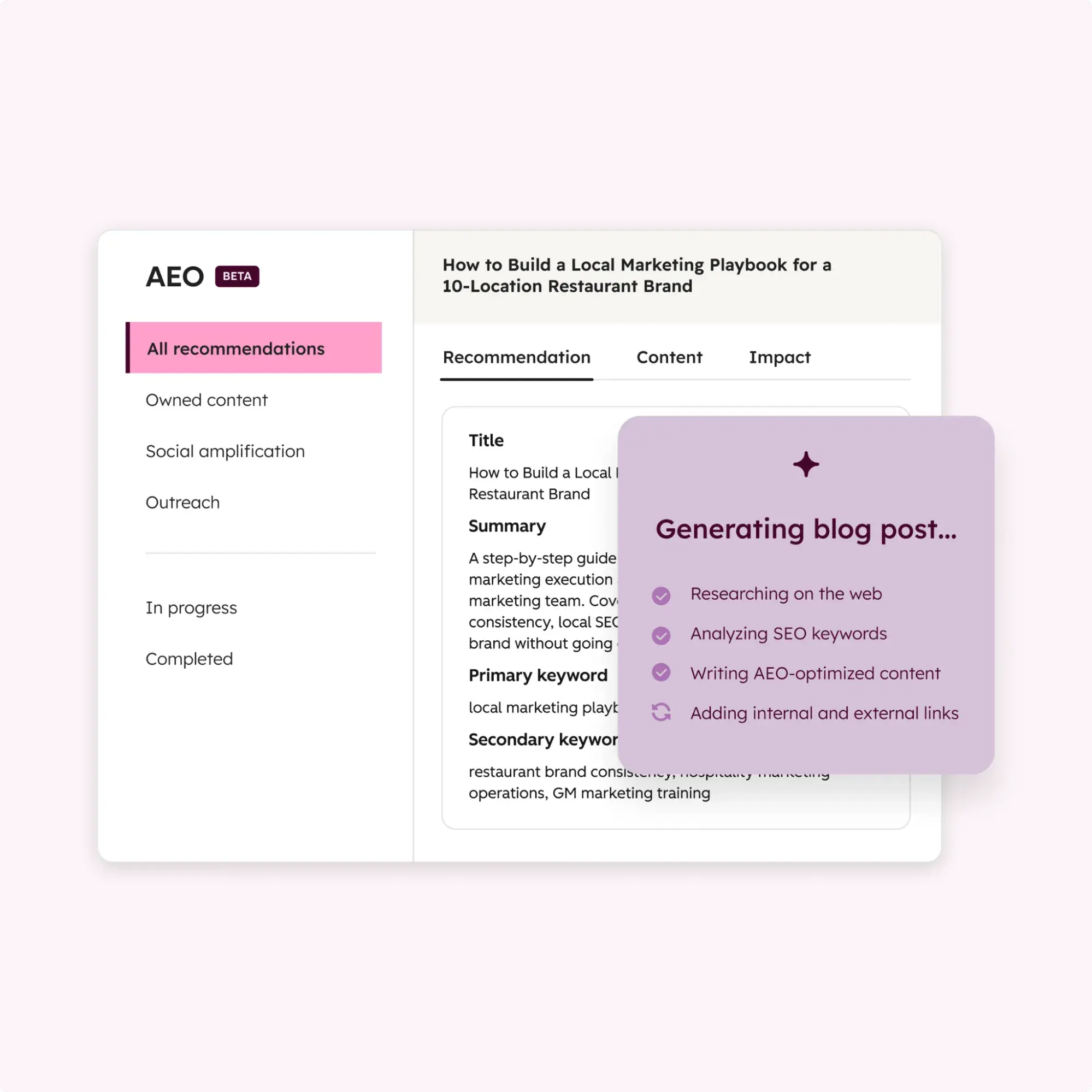
Leveraging AI-driven content agents allows teams to scale this production without sacrificing quality. By identifying content gaps—the specific questions buyers are asking that the brand has not yet answered—marketing teams can fill those gaps at a pace that keeps them ahead of competitors.
3. The "First-Mover" Advantage in Attribution
One of the most significant challenges in marketing is justifying investment in a new channel. When AEO is connected to the acquisition funnel, the justification becomes quantitative rather than speculative. By tracking AI-referred contacts from the first touch point through to MQL (Marketing Qualified Lead) and eventually the closed-won deal, growth teams can build a defensible case for increased budget allocation.

Official Perspectives: The Integration of CRM and AEO
Industry leaders are increasingly emphasizing that the silo between "Search" and "Sales" must be demolished. As noted by experts at HubSpot, the integration of AEO tools with existing CRM data is the missing link.
"When you empower your marketing team with a tool that doesn’t just suggest topics, but provides a direct line from AI-citation to closed-deal, you change the nature of the conversation," says one industry analyst. "It shifts from ‘We should do this because it’s the trend’ to ‘We should do this because it is contributing $X to our pipeline.’"
By utilizing "Content Agent" technology, teams are moving away from manual research and toward an automated, data-backed approach. This allows marketers to focus on strategy—such as positioning, value proposition, and brand voice—while the technology handles the heavy lifting of identifying high-potential citation queries and drafting the responses that AI engines prefer.
Conclusion: The Closing Window
The window of opportunity for AEO is not a permanent fixture. As AI models become more integrated into the daily workflows of every buyer, the "rules of the road" for ranking will solidify. Eventually, the same aggressive competition that characterized the search wars of the 2010s will arrive at the doorstep of AI discovery.
Teams that wait for "industry standards" or "proven playbooks" to emerge will find themselves playing catch-up in a crowded market. The winners of the next phase of growth marketing will be those who are currently building the infrastructure, the measurement systems, and the content production engines to dominate the answer space today.

The question for growth leaders is not if they should invest in AEO, but how quickly they can operationalize it. The AI answer engine is the new front door to your business. It is time to ensure your brand is the one that gets recommended when the customer asks the most important question: "Who should I buy from?"