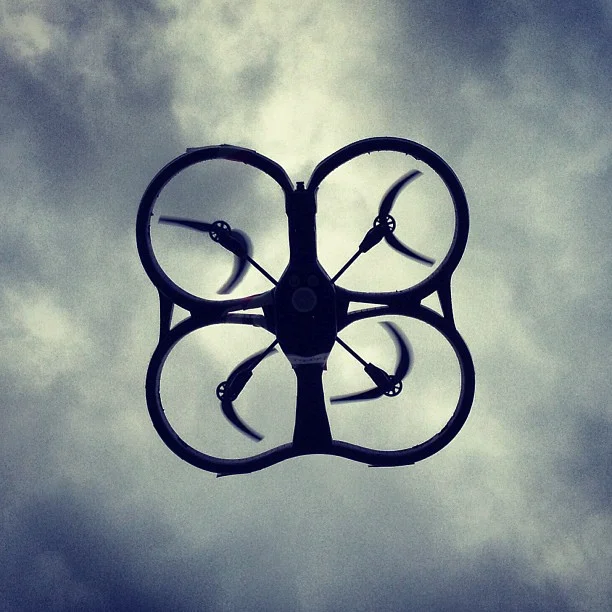
The Indian drone sector is witnessing a period of intense capital mobilization and regulatory scrutiny. AITMC Ventures, a player straddling the intersection of vocational education and advanced drone technology, has officially refiled its draft papers with the Securities and Exchange Board of India (SEBI) for an Initial Public Offering (IPO). The move marks a pivotal moment for the company as it seeks to pivot from a government-reliant skill development firm into a full-stack drone ecosystem provider.
The proposed IPO consists of a fresh issue of 3.5 crore equity shares, with no offer-for-sale (OFS) component, signaling a focus on raising capital for business expansion rather than an exit strategy for early investors. As AITMC prepares to compete against established industry players like DroneAcharya and ideaForge, the company’s updated Draft Red Herring Prospectus (DRHP) reveals a narrative of high ambition tempered by significant, multi-faceted operational risks.
A Chronological Evolution: From Classrooms to Cockpits
Founded in 2016, AITMC Ventures began its journey as a boutique provider of vocational education and skill development programs. For the better part of a decade, the company’s revenue model was tethered to government-sponsored initiatives designed to improve the employability of India’s youth. By securing contracts under various state and central government schemes, the company built a robust reputation for execution within the public sector.
However, recognizing the burgeoning potential of the unmanned aerial vehicle (UAV) market, AITMC underwent a strategic metamorphosis starting around 2022. It expanded its mandate to include:
- Drone Pilot Training: Leveraging its existing network of vocational training centers to certify operators.
- Manufacturing and Assembly: Moving into the production of indigenous drone hardware.
- Drone-as-a-Service (DaaS): Piloting a subscription-based model that provides end-to-end solutions, including fleets, compliance management, mission planning, and data analytics.
This transition is not merely a diversification; it is a fundamental shift in business model. The company is moving from an asset-light, service-oriented training provider to an asset-heavy, technology-intensive manufacturer.
Supporting Data: The Concentration Risk
A deep dive into AITMC’s financial disclosures reveals the extent of the company’s current reliance on its legacy business. In the fiscal year ending March 2026, the Vocational Education and Skill Development vertical accounted for a staggering 96.8% of the company’s operating revenue.
This trend is not new; the vertical contributed 88.1% in FY25 and 99.2% in FY24. Furthermore, the company displays a heavy geographic concentration, with Delhi and Haryana alone generating Rs 89 crore—or 83.4% of total revenue—in FY26.
Perhaps most concerning for prospective investors is the customer concentration. In FY26, the top 10 customers contributed 83.6% of operating revenue. Even the "private" clients on the company’s books are often entities procuring IT equipment for government-funded laboratories, making the entire revenue structure highly sensitive to shifts in public spending.
Operational Hurdles: The "Future Tech Park" and Manufacturing Challenges
AITMC is currently grappling with the inefficiencies of its early-stage manufacturing operations. Its sole production facility in Gurugram, while boasting an installed capacity of 600 drones per quarter, has seen actual output numbers that underscore the gap between capacity and commercial demand. In the four quarters of FY26, production stood at 56, 100, 4, and 20 units respectively, with capacity utilization rates languishing between 0.67% and 16.67%.
To rectify this, the company has announced the development of a "Future Tech Park" in Hisar, Haryana. This facility is intended to serve as the nucleus of its future growth, housing drone production, component manufacturing, and R&D. The company plans to move its commercial and non-defence manufacturing to Hisar, while dedicating the Gurugram unit exclusively to defence-related contracts.
The DRHP warns that any failure to execute this restructuring smoothly could lead to operational bottlenecks, cost escalations, and a disruption in existing orders. Furthermore, the transition to defence manufacturing brings with it a higher threshold for compliance, traceability, and quality control.
The Defence Pivot: High Rewards, Higher Risks
Entering the defence sector is a strategic "must-win" for many Indian drone startups, and AITMC has already secured initial orders from Telecommunications Consultants India Limited (TCIL). While this opens the door to a high-value, high-margin segment, the company acknowledges the volatility involved.
Unlike the commercial market, defence contracts are characterized by:
- Stringent Technical Specifications: Drones must meet rigid performance metrics in varied environments.
- Regulatory Oversight: Multiple government agencies monitor every stage of production.
- Penalty Clauses: Failure to meet delivery timelines or quality benchmarks can lead to blacklisting, which would effectively cripple the company’s long-term prospects in the sector.
The "DaaS" Ambition and Market Uncertainty
AITMC’s "Drone-as-a-Service" model aims to solve the "idle capacity" problem by providing a comprehensive, on-demand solution for industries like agriculture, infrastructure, and logistics. However, the company admits in its DRHP that these markets are still in their infancy.
The interdependence of the company’s verticals creates a potential domino effect. If the training vertical produces too many certified pilots but the DaaS model fails to gain traction due to a lack of market demand, the brand’s credibility suffers. Conversely, if the drones themselves are not competitive, it hampers the ability of the trained operators to start their own drone-based enterprises, further stalling the growth of the service ecosystem.
Legal and Financial Turbulence
Beyond the operational risks, AITMC faces legal headwinds that could impact investor sentiment. The company is currently involved in FIR No. 33/2025, registered at the Saily Police Station in Dadra and Nagar Haveli, concerning allegations under Sections 420 (cheating) and 34 (common intention) of the Indian Penal Code. While no charge-sheet has been filed, the investigation remains an ongoing burden for management.
Additionally, the company’s liquidity is under pressure due to lengthy government payment cycles. In FY26, receivables from government contracts stood at Rs 28.8 crore. These delays not only constrain working capital but also complicate the company’s ability to forecast and execute long-term projects.
Official Stance and Implications for Stakeholders
In its updated DRHP, AITMC is transparent about the formative phase of its new verticals. The company explicitly states: "Unlike our earlier operations in vocational training, where we possess experience, established systems, and historical performance data, our drone verticals are still in a formative phase."
For potential investors, the implications are clear: the AITMC IPO is a bet on the future of the Indian drone sector rather than a reflection of its current cash-flow-positive legacy business. The company is asking the market to value its potential to scale, its ability to successfully pivot to defence manufacturing, and the eventual maturation of the DaaS model.
The road ahead for AITMC is fraught with the "juggling act" of managing legacy revenue streams while simultaneously pouring capital into a new, unproven, and highly competitive technological field. The success of the IPO will likely depend on whether the company can convince institutional and retail investors that its transition is a controlled evolution rather than a leap into the unknown.
Summary of Key Risks
- Dependency: Heavy reliance on government skilling budgets.
- Concentration: Revenue concentrated in a few customers and geographies.
- Capacity: Massive gap between installed manufacturing capacity and actual output.
- Legal: Ongoing police investigations and litigation involving key management.
- Execution: The risks associated with the upcoming restructuring and migration to the Hisar facility.
As AITMC moves forward, the market will be watching closely to see if the firm can convert its "Future Tech Park" vision into a reality that justifies its premium and secures its place in the rapidly expanding Indian UAV landscape.