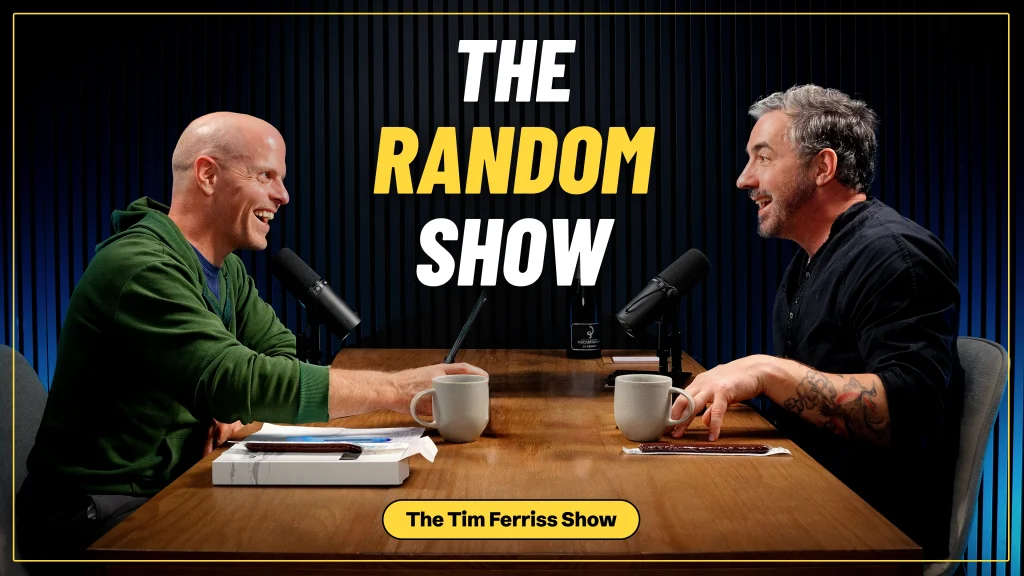
In their latest high-octane installment of The Random Show, longtime collaborators Tim Ferriss and Kevin Rose reunited in Los Angeles for a wide-ranging, unscripted discussion that traversed the bleeding edge of artificial intelligence, human optimization, and the philosophy of personal renewal. The episode, which clocks in at over two hours, serves as a masterclass in the "worried well" subculture, blending Silicon Valley pragmatism with a deep-seated curiosity about the limits of human biology and the rapidly shifting digital landscape.
From the rise of agentic AI assistants that manage daily logistics to the obscure but effective world of supplement protocols for rock climbers, the conversation provides a window into how two of the tech industry’s most influential figures are navigating an era of unprecedented acceleration.
The Agentic Shift: AI Moves from Chatbot to Chief of Staff
The episode opened with a deep dive into what Rose identified as an "inflection point" in AI development. Moving past the initial hype of standard chatbots like ChatGPT and Claude, the discussion shifted toward "agentic" AI assistants—tools capable of proactive, autonomous task execution.
The Rise of Instinct and Muse
Rose highlighted his experience with Instinct, a startup that has reportedly reached a $10 billion valuation in just four months. Unlike browser-based chatbots, Instinct functions through existing messaging channels like iMessage, allowing it to integrate deeply with a user’s digital life. By granting access to Google Drive and email, the assistant proactively manages schedules, tracks travel, and even coordinates with the assistants of other users.
"It’s not another app to download," Rose noted. "It learns by my responses, and it really understands what I care about."
The duo contrasted this with Muse, a similar project from Meta. While Ferriss raised standard concerns regarding privacy and the "blast radius" of granting an AI access to one’s entire digital footprint, Rose argued that the convenience of an agent that can handle complex tasks—such as booking difficult restaurant reservations or scheduling multi-party meetings—is a technological shift that will soon become indispensable.
The Death of Destination Websites
The implications for e-commerce were a significant focal point. Ferriss and Rose explored the friction between platforms like Amazon and emerging AI agents. Amazon has reportedly moved to block certain AI agents from its platform, fearing that if an AI becomes the primary "top of funnel" interface for consumers, Amazon’s ad-driven business model could be bypassed.
"In a world where you say, ‘I need new towels,’ rather than going to Amazon, you just ask your AI," Rose explained. "The AI will say, ‘Walmart has the same thing for $10 less.’ Amazon is worried because they were the destination, and now the AI is the decision-maker."
Chronology of Optimization: Supplements and Performance
Following the tech-heavy opening, the conversation pivoted to the physical realm. Ferriss, who has recently dedicated himself to the sport of rock climbing, detailed his rigorous approach to training and recovery.
Beta-Alanine and Climbing Endurance
Ferriss introduced his audience to beta-alanine, a supplement often associated with bodybuilders but which he has applied to climbing to improve endurance. Citing randomized, double-blinded studies involving elite climbers, Ferriss noted that participants taking four grams of beta-alanine daily for four weeks saw a 57% increase in time-to-fatigue compared to placebo groups.
He warned, however, that the supplement is not without quirks, specifically paresthesia—a tingling sensation caused by carnosine saturation. He recommended the sustained-release (SR) version to mitigate this side effect.
Sperm Quality and Micronutrient Density
In a segment that began as a humorous aside, the pair discussed the intersection of diet and fertility. Ferriss shared research suggesting that consuming 75 grams of walnuts daily significantly improved sperm vitality and motility in healthy men.
"You are what you eat ate," Ferriss emphasized, arguing that soil depletion has made micronutrient consumption increasingly difficult. He advocated for Brazil nuts as a source of selenium, provided they are sourced from high-quality regions, and cautioned against the widespread contamination of microplastics in seaweed and heavy metals in common fiber supplements.
The Future of Dream Engineering and Bioelectricity
Perhaps the most speculative and fascinating section of the show involved Ferriss’s deep dive into "dream engineering." Ferriss, an investor in the startup Dust, discussed the potential for modifying dream content to treat PTSD and other trauma-related conditions.
Anesthesia as a Therapeutic Tool
The conversation touched upon emerging research from Stanford Medicine regarding the use of propofol—the anesthetic commonly used in endoscopies—to taper patients out of surgery. Researchers are exploring whether a controlled "quiet emergence" from anesthesia can allow patients to rehearse the resolution of traumatic memories within their dreams.
"Some of these people, 10 months later, still show zero symptoms of complex PTSD," Ferriss reported.
Bioelectric Medicine
Ferriss also shared his personal experiences with non-invasive brain stimulation, such as TMS (Transcranial Magnetic Stimulation), noting that newer protocols now allow for one-day treatments rather than the traditional, multi-week regimens. He expressed optimism that bioelectric medicine, which treats the brain using electrical fields rather than chemistry, will eventually overtake pharmacological interventions for mood regulation.
Implications: The Human Element in an AI World
The conversation concluded on a philosophical note regarding the future of human agency. Despite his enthusiasm for AI, Ferriss introduced a counter-narrative, citing a piece by Shawn Smucker titled Please Use AI.
The article argues for the preservation of inefficient, human-centric processes. Ferriss shared a classic Kurt Vonnegut passage about going out to buy a single envelope just to experience the world: "We’re here on Earth to fart around, and don’t let anybody tell you different."
The "Crowded Bar" Test
Regarding his forthcoming book on the power of saying "no," Ferriss reflected on the lessons learned from his past literary efforts, specifically the 2012 release, The 4-Hour Chef. He admitted that the book tried to do too much, violating his own rule that "presentations fail from too much information, not too little."
He is currently applying the "crowded bar test" to his new manuscript: if you cannot explain the premise in two sentences in a noisy, crowded bar, the concept is likely too complex. By cutting his draft from 870 pages down to 350, Ferriss hopes to create a "workbook" that offers high utility—a giftable, tangible object in an age of infinite digital noise.
Final Reflections
The episode ended with a playful, albeit high-stakes, bet. Rose challenged himself to achieve a Jean-Claude Van Damme-style split between two chairs within six months. The loser will donate $500 to a charity of the winner’s choice.
As the show concluded, the overarching theme was clear: we are living through a period of extreme technological leverage, but that leverage requires a disciplined, human-centric philosophy to manage. Whether through the careful curation of our supplements, the strategic use of AI to reclaim time, or the decision to engage in "inefficient" human activities, the message remains consistent: technology should be a tool for personal renewal, not a replacement for the human experience.
As Ferriss noted, "The dose makes the poison." In a world of increasing digital, chemical, and biological optimization, the ability to choose what to automate and what to experience remains the ultimate competitive advantage.