In the ever-evolving landscape of digital puzzles, The New York Times has solidified its position as the undisputed curator of daily brain-teasers. Following the meteoric rise of Wordle, the logical complexity of Connections, and the enduring challenge of the Spelling Bee, the publisher’s latest venture—Strands—has carved out its own unique niche. Today, we navigate the intricacies of Game #953, exploring the linguistic gymnastics required to solve this latest installment.
For the uninitiated, Strands is not merely a word-search; it is a thematic puzzle that demands both pattern recognition and lateral thinking. Players are presented with a grid of letters and tasked with finding words related to a specific, often cryptic, theme. Once all words are cleared, the "Spangram"—a word or phrase that touches opposite sides of the board—is revealed, acting as the structural backbone of the puzzle.
The Linguistic Challenge: Decoding Game #953
Today’s puzzle, tagged as Game #953, centers on the theme: "In a manner of speaking."
As any veteran player knows, the theme is the most critical tool in your arsenal. It sets the tone for the vocabulary you should be hunting for. In this instance, the theme points toward the nuances of human communication, dialects, and the various ways in which we articulate thought.
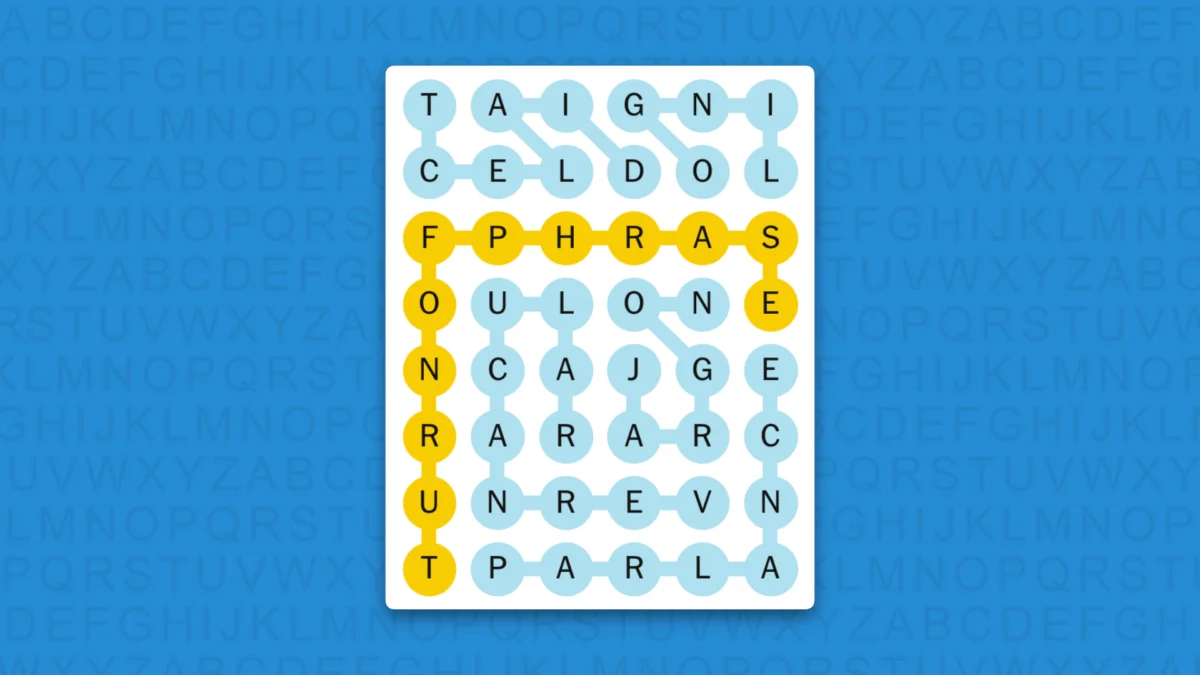
The Spangram for this particular game is a 12-letter tour de force that stretches across the grid, anchoring the board from the left side of the 8th row to the right side of the 4th row. For those who found themselves staring at the grid in frustration, the Spangram is TURNOFPHRASE. It is a clever, multi-directional word that perfectly encapsulates the "manner of speaking" theme, demanding that players look beyond simple linear connections to see the broader linguistic picture.
A Chronology of the Daily Solve
The experience of playing Strands is often a journey of trial and error. For many, the solve begins with scanning the grid for obvious, smaller words—the low-hanging fruit.
- Early Exploration: Upon loading the grid, the initial scan revealed common letter clusters. Early success was found with words like "SLING," a common distraction for those searching for the word "SLANG."
- The Pivot: Once the initial, easier words were identified, the focus shifted to the core theme. The realization that the board was populated with terms related to language and speech patterns allowed the board to open up significantly.
- The Spangram Reveal: Identifying the 12-letter Spangram, TURNOFPHRASE, was the turning point. Unlike standard words, the Spangram requires a specific path, often zig-zagging across the board, which provides a satisfying "aha!" moment that defines the Strands experience.
- Final Cleanup: With the Spangram in place, the remaining words fell into alignment, allowing the player to complete the puzzle and clear the board.
The Significance of Dialect and Diction
Beyond the game mechanics, the theme of #953—"In a manner of speaking"—invites a deeper contemplation of how we communicate. The inclusion of the word DIALECT as one of the puzzle’s answers is particularly poignant.
In a globalized world, the way we speak is often the strongest marker of our identity. Dialects are not merely "mispronunciations" or "slang"; they are sophisticated linguistic systems that evolve within specific communities. Whether it is the varying ways one might request a cup of coffee across different regions of the United States, or the rhythmic cadence of a local vernacular in North London, language is a living, breathing entity. Strands succeeds here because it forces the player to engage with these concepts, even if just for a few minutes of screen time.
Supporting Data: The Mechanics of Modern Puzzles
The success of Strands is not an accident; it is the result of a calculated design philosophy that prioritizes "shareability" and incremental challenge. Unlike Crosswords, which require a broad base of general knowledge, Strands relies on spatial awareness and vocabulary retrieval.
Data from the New York Times Games portal indicates that players are increasingly spending more time on these "niche" puzzles than on traditional ones. This is likely due to the "infinite" nature of the word bank. Because the board layout changes daily, the game avoids the stagnation that can plague static word searches. The inclusion of an in-game hint system—unlocked by finding non-thematic words—ensures that the difficulty remains accessible to casual players while providing enough friction to satisfy hardcore enthusiasts.
Implications for the NYT Gaming Ecosystem
The New York Times has successfully built a "sticky" ecosystem. By linking Wordle, Connections, Quordle, and Strands, the company has transformed a daily habit into a community event. Millions of users now start their day by sharing their "results" on social media, creating a viral loop that sustains interest without the need for traditional advertising.
The implication for the future of digital media is clear: micro-games are the new front line of engagement. By providing high-quality, ad-light, and intellectually stimulating content, the NYT has secured a place on the home screens of millions of users worldwide. Strands, in particular, represents the next generation of this strategy—a game that is visually driven and mobile-first, designed for the "commuter" audience.
Perspectives and Expert Analysis
Critics often argue that these games are trivial, yet the psychological benefits of daily word-puzzles are well-documented. They provide a sense of agency and accomplishment in an often unpredictable world.
"The appeal of Strands lies in its tactile nature," notes one digital media analyst. "It isn’t just about knowing the answer; it’s about the physical act of tracing the letters on a screen. It feels more like a craft than a quiz."
For the daily player, the annoyance of getting the Spangram second or struggling to find that final elusive word is part of the charm. It is a shared struggle. When you see a word like "SLING" on the board, it is a deliberate design choice—a "red herring" intended to trip up the player who is thinking too quickly. These small, devious design choices are what elevate Strands from a simple game to a daily mental workout.
Looking Ahead: The Evolution of the Grid
As we look toward the future of Strands, it is likely that we will see more complex themes and perhaps even interactive elements that go beyond static letter grids. The New York Times has proven that they are willing to iterate, taking feedback from the community to refine the difficulty curves and theme relevance.
For those who missed the mark on Game #953, or for those who are already looking forward to the next challenge, the cycle remains the same. A new board appears at midnight in your time zone, bringing a new theme, a new set of hidden words, and a new opportunity to test your linguistic mettle.
Whether you are an expert at Wordle or a newcomer to the NYT games stable, Strands offers a refreshing take on the word search genre. It is a reminder that even in a world of high-speed data and instant information, there is still immense value in slowing down, looking at a grid of letters, and finding the connections that bind us together—in a manner of speaking, of course.
Reminder: If you are seeking assistance with yesterday’s puzzle or looking to brush up on your strategy, our comprehensive guide to playing NYT Strands is available for review. Remember to check back tomorrow for the next installment of our daily breakdown.