The dream of the "laptop lifestyle"—earning a full-time income while working from a beach, a café, or the comfort of one’s own home—has become a cornerstone of modern digital mythology. Yet, for every success story touted on social media, there are thousands of abandoned blogs gathering digital dust. The question remains: can you really make money blogging, or is it merely a pipedream sold by those who profit from the "how-to-blog" industry itself?
To cut through the noise, we must separate the marketing spin from the operational reality. While the barrier to entry for starting a blog is near zero, the barrier to profitability is significant. It is time to dissect the mechanics of professional blogging, the realities of income distribution, and the sheer grit required to turn a digital diary into a sustainable business.
Main Facts: The Reality of Blogging Revenue
The blogging landscape is currently bifurcated by two extremes. On one end, "get-rich-quick" gurus promise millions in weeks, usually as a precursor to selling an expensive course or coaching program. On the other end, cynics argue that blogging is dead and that anyone claiming to make a living is either a charlatan or a liar.
The truth resides firmly in the middle. Blogging is a legitimate business model, but it is not a shortcut. It is an industry built on the creation of value, the cultivation of trust, and the strategic deployment of multiple revenue streams. Whether you are in fashion, travel, wood-working, or health, monetization is possible—but it is contingent upon transitioning from a "hobbyist" mindset to an "entrepreneurial" one.
A Chronology of Growth: From Side Hustle to Enterprise
Professional blogging is rarely an overnight success. For most, the journey follows a distinct, often arduous, trajectory.
Phase 1: The Incubation Period (Years 0–2)
During the first year, most bloggers earn nothing. The primary focus here is not revenue, but authority building. This phase is characterized by consistent content creation, SEO optimization, and the slow, grueling process of finding an audience. Many beginners quit here, discouraged by the lack of immediate financial feedback.

Phase 2: The Traction Phase (Years 2–4)
If the blogger persists, small amounts of revenue begin to trickle in. This might be through ad networks, affiliate commissions, or small-scale sponsorships. At this stage, the income rarely covers a full-time salary; it functions more as a "side hustle" or "coffee money." The transition from this phase to the next is where the most significant drop-off occurs.
Phase 3: The Scale Phase (Year 4 and beyond)
Data suggests that the vast majority of six-figure bloggers have been in the game for at least four years. This is the stage where the cumulative effect of high-quality content, a loyal community, and a diversified income strategy begins to compound. By this point, the blog is no longer just a collection of posts; it is an asset—a business that may eventually require employees, contractors, and sophisticated marketing infrastructure.
Supporting Data: What the Numbers Actually Say
To understand the economics of blogging, one must look at the statistical distribution of earnings. A survey of 1,500 active bloggers reveals a sobering reality:
- The Bottom Tier: Approximately 10% of those attempting to monetize generate zero income. Another 28% earn less than 30 cents per day. A staggering 63% of aspiring bloggers make less than $3.50 daily.
- The Middle Tier: Roughly 9% of bloggers reach a "part-time" income level, earning over $1,000 per month. This level of income is often enough to supplement a traditional salary or support a family while managing other commitments.
- The Top Tier: Only about 4% of those surveyed cracked the $10,000-per-month threshold.
What is the defining characteristic of this top 4%? Longevity. Nearly 85% of high-earners have been blogging for four years or longer. This data confirms that there is no "formula" for instant wealth; there is only the consistent application of labor over an extended period.
The Myth of the "Make Money Online" Niche
A common critique of the blogging industry is that the only people making money are those teaching others how to do it. While the "make money online" niche is undeniably lucrative, it is by no means the only path to profitability.
In fact, some of the most profitable blogs on the internet focus on "niche" topics entirely unrelated to the business of blogging. For example, a photography blog, a woodworking site, or a travel portal can be significantly more profitable than a site dedicated to blogging tutorials. The reason is simple: advertisers and consumers in those niches have clear, intent-driven needs. If you provide a solution to a specific problem—whether that is how to take a better portrait or how to build a coffee table—you are creating inherent, marketable value.
Implications: The Four Pillars of Success
If you intend to join the minority of bloggers who make a full-time living, you must focus on the four pillars of a profitable digital enterprise:
- Content Excellence: Your content must be original, helpful, and high-quality. In an era of AI-generated fluff, the value of human expertise, personal experience, and deep research has never been higher.
- Audience Acquisition: You cannot monetize a ghost town. Developing a strategy for traffic—be it through SEO, social media, or email marketing—is the lifeblood of your operation.
- Reader Engagement: A blog is a community, not just a broadcast channel. Building trust with your readers is what turns casual visitors into repeat, paying customers.
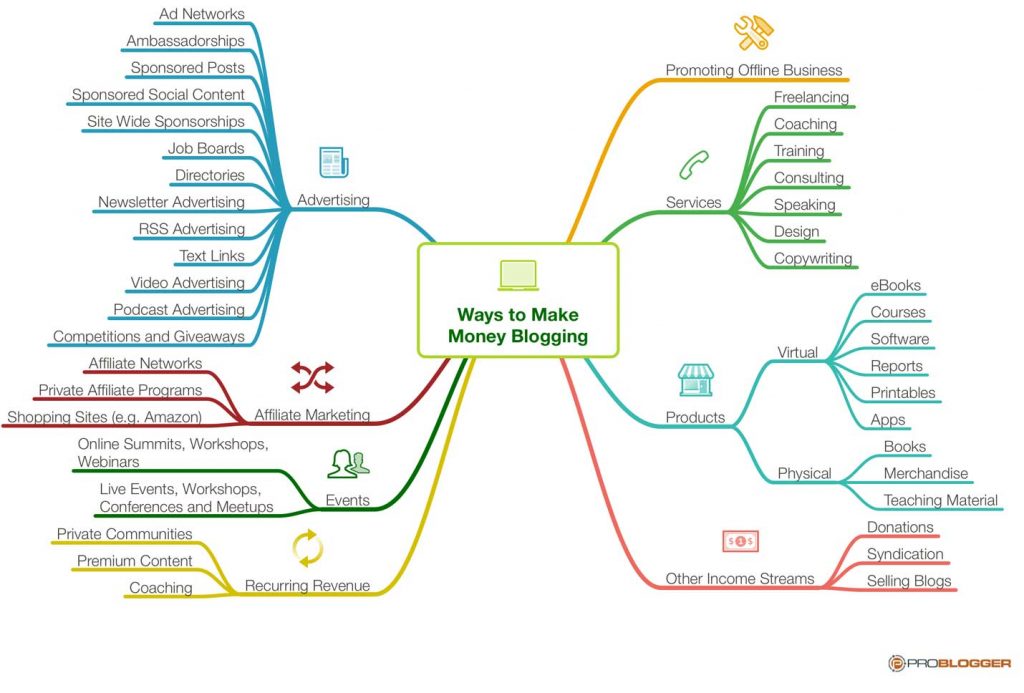
- Monetization Diversification: Relying on a single income stream is a recipe for disaster. Successful bloggers often juggle a mix of:
- Affiliate Marketing: Earning commissions on products you recommend.
- Advertising: Utilizing display ad networks for passive income.
- Digital Products: Selling ebooks, courses, or templates that you own.
- Consulting/Coaching: Selling your expertise directly to clients.
- Sponsorships: Partnering with brands that align with your audience’s interests.
Official Responses and Industry Outlook
Industry veterans agree on one overarching truth: Blogging is not a passive income stream. While the term "passive income" is frequently used as a marketing hook for digital products, the reality is that maintaining a successful blog is an active, ongoing business.
The most successful practitioners, such as those featured at ProBlogger events, are characterized by their "bias for action." They do not wait for the perfect algorithm update or the perfect moment. They produce, they analyze, they iterate, and they pivot when necessary. The "passive" aspect of blogging only arrives after years of intense, active labor, where the systems you have built (such as automated sales funnels or evergreen content libraries) begin to function with less daily intervention.
Conclusion: The Path Forward
The dream of making a full-time living from blogging is absolutely achievable, but it is not a lottery ticket. It is a commitment.
The barriers to entry are low, which means the competition is high. However, the vast majority of your competition will give up within the first twenty-four months. If you are willing to play the long game—to treat your blog as a professional business, to diversify your revenue streams, and to provide genuine, lasting value to a specific audience—then the digital economy remains a land of opportunity.
The most important step, however, is the one many never take: starting. Don’t wait for the perfect conditions or the perfect niche. Identify a topic you are passionate about, commit to a long-term strategy, and begin creating. Your blogging breakthrough starts today.