
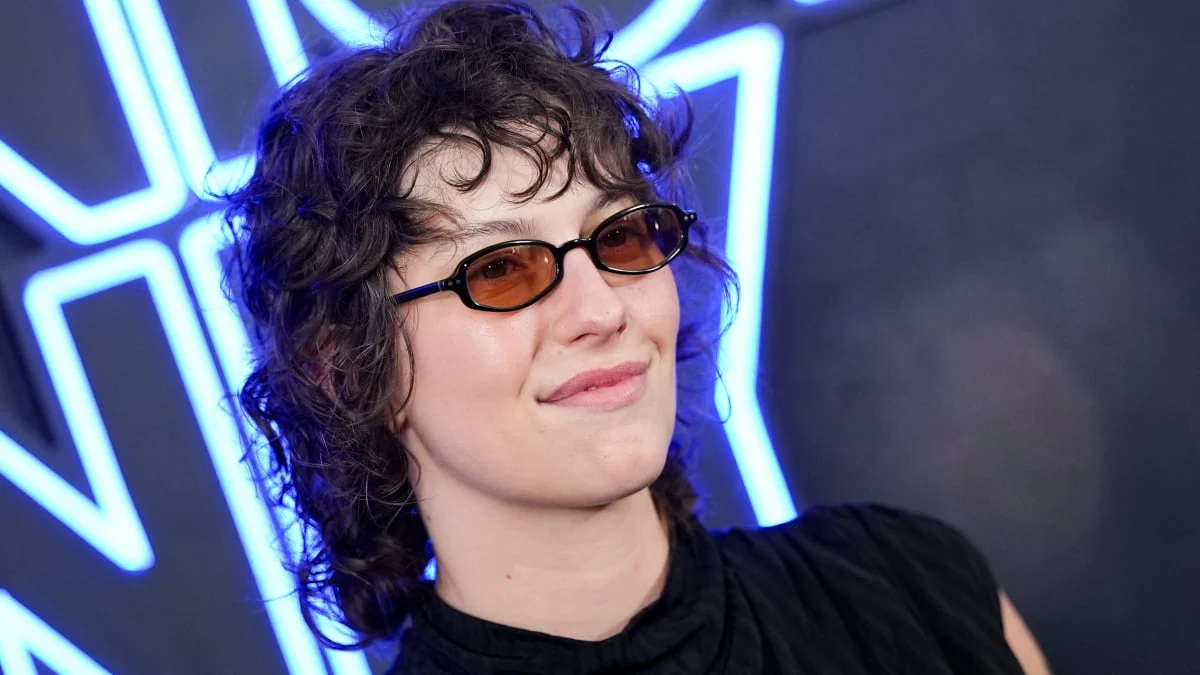
On the final day of Bisexual Visibility Month, the internet found itself embroiled in a familiar yet uniquely heated debate regarding the boundaries of sexuality. At the heart of the discourse is singer-songwriter King Princess, who has long identified as a lesbian. A resurfaced clip from a November 2024 episode of the podcast Celebrity Book Club with Steven & Lily ignited a firestorm across social media, leading to a broader, more existential conversation about what it means to claim—and to police—queer labels in the modern era.
The Catalyst: A Candid Confession
The controversy began when a segment of the podcast surfaced on social media platforms, capturing King Princess speaking with characteristic bluntness about her sexual history. Discussing her past encounters, the musician remarked, "I’ve taken a lot of dick." She continued, "Sometimes you get bored, and you’re just like, ‘I’m just gonna ride a cock.’ People get really shook when I say that… I’m not bi, but why would I exclude myself?"
The quote, which was followed by the sentiment, "I would fuck a dude if I was bored enough," acted as a match in a dry forest. Within hours, the comment had traveled from the podcast’s niche audience to the wider reaches of Reddit, X (formerly Twitter), and TikTok. For many, the juxtaposition of the "lesbian" identity with the admission of casual sexual encounters with men was not just a personal revelation—it was a challenge to the traditional definitions of sexual orientation.
A Chronology of the Digital Firestorm
The reaction was immediate and polarized. On platforms like Reddit, specifically within communities such as r/lesbiangang and r/lesbianactually, users expressed deep frustration. The primary grievance was not necessarily the sexual behavior itself, but the label of "lesbian" being applied to experiences that many in the community feel fall under the umbrella of bisexuality or pansexuality.
As the sentiment shifted from confusion to criticism, the term "lesbian" became a battleground. Commenters across social media began accusing the artist of "bisexual cosplaying," while others argued that the lesbian community—a group historically marginalized and seeking safe, exclusionary spaces—deserved better than to have their identity terminology diluted.
King Princess, known for her direct engagement with fans, attempted to address the backlash through a series of now-deleted TikTok videos. In these responses, she clarified that while she has engaged in sexual acts with men, she has never experienced romantic attraction to them, nor has she ever been in a relationship with a man. She pushed back against the concept of the "gold star lesbian"—a colloquial term for a woman who has never had a sexual encounter with a man—arguing that her past experiences do not invalidate her identity.
However, the situation escalated when she appeared to pivot, suggesting that her level of interest in men was so minimal that it would be "inappropriate" to label herself as bisexual. She concluded her defense by stating, "You can’t tell me what my sexuality is," effectively closing the door on the debate from her perspective.
The "Pop Diva" Allegations
The controversy took a more volatile turn when King Princess allegedly attempted to deflect the criticism by directing attention toward other industry peers. In an additional deleted comment, she suggested that the public should be "checking on the pop divas who are actively lying about being gay… in fully committed relationships with men on the DL."
This comment effectively turned a debate about semantics into a "witch hunt." Social media users immediately began speculating about which artists she might be referencing, creating a secondary layer of drama that distracted from the initial conversation regarding sexual identity and instead fueled industry gossip.
The Data: A Landscape of Stigma and Insecurity
The intense public reaction to King Princess’s comments cannot be divorced from the broader social reality for bisexual and queer individuals. Research suggests that the rigidity of labels is often a defensive reaction to the persistent stigma surrounding non-monosexual identities.
According to a 2025 study from YouGov, the stigma against bisexual individuals remains stark. The data reveals that two-thirds of straight women are unwilling to date a bisexual man, while one-third of straight men are unwilling to date a bisexual woman. Perhaps most revealing for this specific controversy, one in five lesbians expressed an unwillingness to date a bisexual woman.
When researchers pressed for the "why," many respondents struggled to articulate a reason, often citing vague "preferences" or relying on the tired, harmful stereotype that bisexual people are inherently prone to infidelity. This "bi-phobia" is a well-documented phenomenon that creates an environment where, for many, "bisexual" feels like a label that invites suspicion rather than validation.
The Academic and Cultural Implications
Why does this matter in 2026? The case of King Princess is part of a larger trend of high-profile figures navigating the "fluidity" of modern identity. The industry has seen a succession of stars, such as JoJo Siwa and Renée Rapp, grapple with the public-facing nature of their labels.
Renée Rapp’s journey, in particular, highlights the tension between personal evolution and public expectation. After previously identifying as bi, then coming out as a lesbian in 2024, she later questioned on a podcast whether she would still feel the same in ten years. This uncertainty, while honest and human, creates a sense of instability for communities that rely on labels for cohesion and shared history.
From a sociological perspective, the controversy reflects a clash between two schools of thought:
- The Essentialist View: That words like "lesbian" have concrete, historical meanings (exclusive attraction to women) that should be protected to maintain community boundaries.
- The Constructivist View: That sexual identity is an individual, fluid experience that can be reclaimed and redefined by the user to fit their unique internal narrative.
A Personal Reflection on the "Gray Area"
As a member of the bisexual community, the debate over who gets to use what label is deeply personal. We often find ourselves in the position of being "not queer enough" for some and "too confusing" for others.
If one were to analyze the specific behavior described by King Princess—a pattern of same-sex attraction with occasional, purely physical encounters with the opposite sex—many would categorize this as bisexual or "bi-curious." Yet, the reluctance to adopt the label is understandable given the "punching bag" status bisexuals often occupy in the public sphere. We are frequently the target of jokes, accusations of being "half-straight," and the victims of the "lesbian/gay superiority" complex.
However, the refusal to embrace the label "bisexual" because of its negative social connotations does little to help the community. If more people who experience attraction to multiple genders reclaimed the term, the stigma would inevitably decrease. Instead, the current discourse suggests a trend toward "label-squeezing," where individuals contort their definitions of "lesbian" or "straight" to avoid the perceived baggage of the bisexual identity.
Conclusion: Beyond the Binary
The controversy surrounding King Princess is less about her specific sex life and more about the collective anxiety of a culture that is moving away from black-and-white definitions of human desire. We are living in an era where the human brain, which prefers the simplicity of binary boxes, is being forced to confront the messy reality of spectrum-based attraction.
Ultimately, while King Princess has the right to identify however she chooses, the reaction to her comments underscores a fundamental truth about our current moment: we are more interested in policing the boundaries of identity than in understanding the people who occupy them. As we move forward, the challenge for the queer community will be to reconcile the need for historical, protective definitions with the reality of individual, fluid, and often contradictory human experiences.
Whether or not the public ever reaches a consensus on King Princess’s label, the discourse serves as a reminder that the conversation around identity is far from finished. Labels are meant to serve the person, not the other way around—but when those labels are used to exclude others or to avoid the discomfort of social stigma, the result is the kind of firestorm we have seen this month. In the end, the most important takeaway is that no matter how loud the debate gets, the reality of an individual’s desire remains their own to navigate.