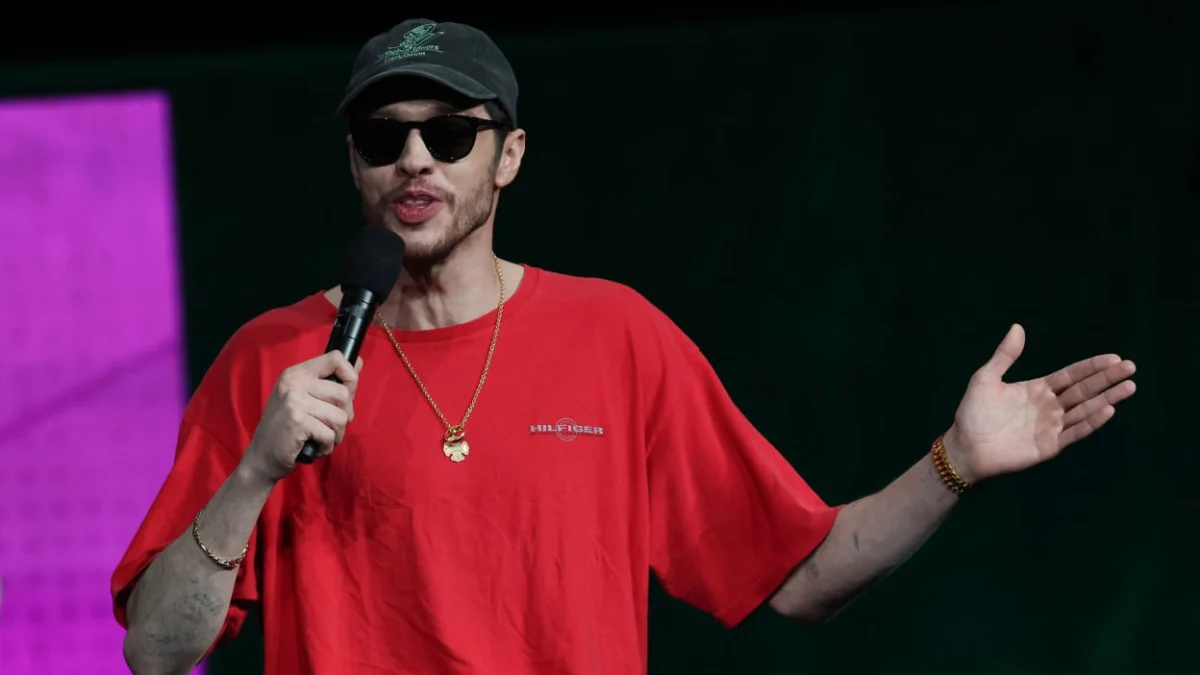
Pete Davidson has long occupied a unique space in the cultural zeitgeist—a comedian whose personal life often eclipses his professional output. However, in a wide-ranging, candid cover story for Variety published on September 30, 2026, the Saturday Night Live alum attempted to reclaim the narrative. From reflecting on his high-profile romantic history to offering a surprisingly empathetic take on his former rival, Ye (formerly Kanye West), and critiquing the current state of influencer culture, Davidson left little off the table.
As is often the case with the 32-year-old star, his words acted as a lightning rod for internet discourse. Within hours of the interview’s release, social media platforms were flooded with reactions, ranging from sympathetic defenses to pointed criticisms of his perceived privilege.
A Chronology of the Conversation
The Variety profile, which included both long-form text and accompanying video segments, touched upon several distinct pillars of Davidson’s life:
- The "Kardashian Effect": Davidson addressed his 2021–2022 relationship with Kim Kardashian, framing his time in the spotlight as a trial by fire.
- The Ye Conflict: Providing a retrospective on the intense harassment he faced during the fallout of the Kardashian relationship, Davidson offered a complex perspective on mental health.
- Defending the Past: He spoke about his former fiancée, Ariana Grande, and the unfair scrutiny directed toward her physical appearance.
- The Influencer Critique: In a segment that proved to be the most divisive, Davidson took aim at the "get ready with me" (GRWM) culture on TikTok and Instagram.
- The AI Defense: Addressing his upcoming thriller Bitcoin, directed by Doug Liman, Davidson defended the film’s controversial use of artificial intelligence to manage production costs.
Unpacking the Kardashian Narrative
Davidson’s reflection on his relationship with Kim Kardashian was framed with a blend of humor and somber realization. Referring to himself as a "survivor" of the Kardashian dating cycle—joking that the experience was akin to being a Marine—he highlighted the sheer weight of being a public figure attached to one of the world’s most scrutinized families.
While he acknowledged that Kardashian was respectful of his boundaries, he noted that the "constant attention and security" became a crushing burden. At the time, Davidson was navigating his own well-documented struggles with mental health and substance use.

The public response was swift and largely polarized. Critics pointed to his comments as an attempt to reframe his experience as a victim’s narrative, with many users on X (formerly Twitter) suggesting that he entered the relationship with full knowledge of the scrutiny it would invite. "There he goes crying again, nobody made you date her," one viral post noted, echoing a sentiment held by many who feel that celebrities often bemoan the very fame that affords them their lifestyle.
A Surprisingly Empathetic Stance on Ye
Perhaps the most unexpected turn in the interview was Davidson’s discussion of Ye. During the height of their conflict in 2022, Ye targeted Davidson relentlessly, including the release of an "Eazy" music video that depicted a claymation version of the comedian being kidnapped and beheaded.
Davidson’s response was measured. He noted that he was "super open" about his own mental health, yet found himself the target of what he described as a "kill yourself" campaign. However, rather than doubling down on the animosity, Davidson expressed sympathy. "He’s also lost a parent and has mental stuff," Davidson remarked, suggesting that Ye’s public outbursts were a manifestation of internal pain rather than a genuine reflection of his character. He added that the public nature of the feud was likely fueled by a lack of positive influence surrounding the rapper, concluding that "there’s zero way he really feels like that."
Ariana Grande and the Defense of Privacy
When the conversation shifted to Ariana Grande, the tone softened significantly. Davidson, who was briefly engaged to the singer in 2018, spoke with genuine respect, calling her "cool and immensely talented."
More importantly, he took a firm stand against the vitriol directed at her appearance in recent years. "I don’t like it at all," he stated. "It’s not cool." He praised Grande’s resilience while simultaneously expressing frustration at the internet’s relentless need to analyze, critique, and objectify the appearances of high-profile women. His commentary on the "support group" for men who have been the subject of breakup songs—a nod to his and Jake Gyllenhaal’s place in pop culture history—offered a rare moment of levity in an otherwise heavy discussion.

The Influencer Culture "Broken World" Critique
If the reflections on his exes were measured, his comments on the influencer economy were combative. In a "Ask a Local" video for Variety, Davidson did not mince words regarding the "get ready with me" format popularized by TikTok creators.
"Girls are just talking to themselves on there… ‘OK, come get ready with me,’ and I’m like, ‘Who the f*** are you? What do you do?’ Nothing," he said, before adding that some creators are making "$40 million a year," concluding that "the world’s broken."
The backlash from the creator community was instantaneous. Figures like Hayley Kalil and Claudia Oshry (@girlwithnojob) pushed back, pointing out the hypocrisy of a celebrity criticizing people for "doing nothing" while reaping the financial benefits of their own fame. Others, like Oti Mabuse, pointed out the gendered nature of his critique, suggesting that if the industry were male-dominated, it might be viewed with more respect. The discourse quickly spiraled into a debate about the "right message, wrong messenger" trope, with many questioning whether a multimillionaire actor is the correct person to lecture others on the value of their labor.
AI Filmmaking: Pragmatism or Pretense?
Finally, Davidson addressed the elephant in the room regarding his upcoming film, Bitcoin. The project, directed by Doug Liman, has been the subject of controversy for its use of artificial intelligence to generate locations.
Davidson defended the technology as a practical solution to budgetary constraints, arguing that it allowed the production to bypass massive travel costs without sacrificing quality. He maintained that the film utilized a full crew and that the human performances remained untouched by AI.

However, the defense did little to soothe the anxieties of film enthusiasts and industry professionals who fear the encroachment of generative AI in cinema. Online reactions were largely dismissive, with many users signaling that the inclusion of AI would be enough to keep them from purchasing a ticket, regardless of the film’s budget or the star power attached to it.
The Broader Implications
The Variety interview serves as a snapshot of a cultural moment where the lines between "traditional" celebrity and "digital" fame are increasingly blurred and contested. Davidson’s frustrations—whether with the paparazzi, the relentless nature of social media, or the shift toward AI in creative fields—are shared by many, yet his delivery highlights the growing divide between those who live within the traditional Hollywood infrastructure and the new guard of digital creators.
As the industry continues to grapple with the role of AI, the ethics of public scrutiny, and the changing definition of "talent," Pete Davidson remains a polarizing figure. His ability to remain relevant by being both painfully open and occasionally tone-deaf is perhaps his greatest asset and his biggest liability.
Whether one views his comments as a necessary "truth-telling" session or as the out-of-touch grievances of an elite entertainer, the reaction to his interview confirms one thing: the internet is as invested in Pete Davidson’s thoughts as it is in his life. As of October 2026, the conversation is far from over.