
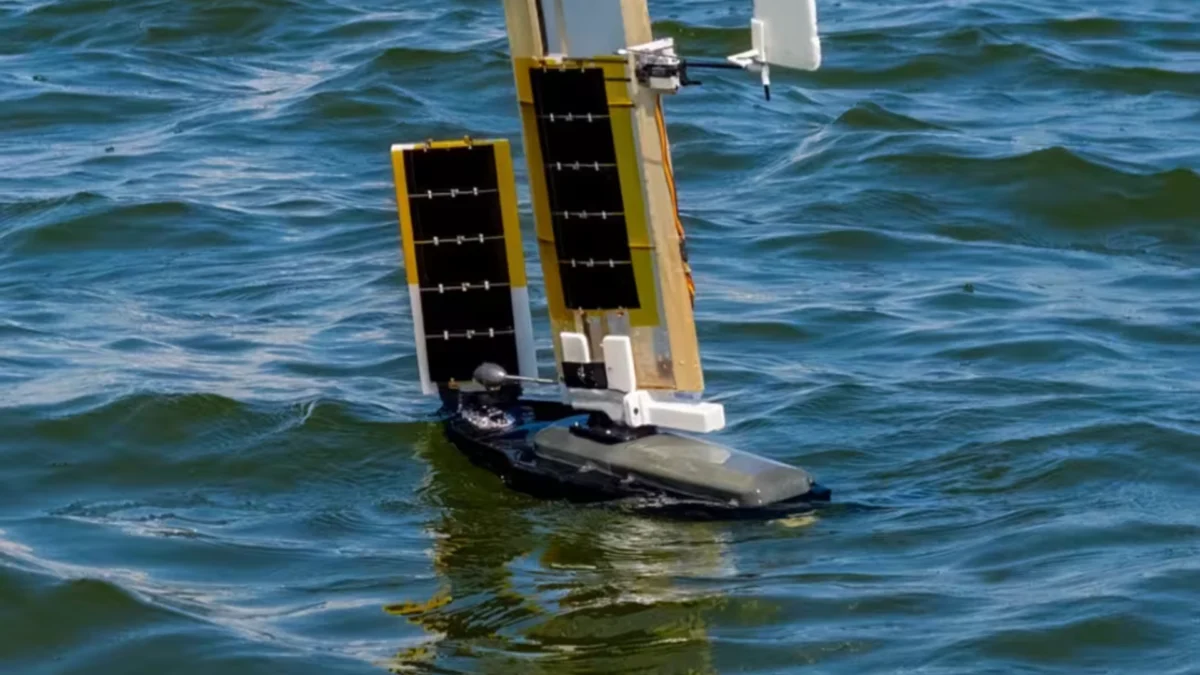
In a significant leap for autonomous robotics, a team of seven engineers from the Singapore University of Technology and Design (SUTD) has unveiled "ALBATROSS," a pioneering drone capable of traversing the boundary between the skies and the sea. Designed as a lightweight, wind-propelled vessel, the ALBATROSS solves one of the most persistent challenges in robotics: the transition from aerial delivery to aquatic operation without the heavy, complex, and energy-consuming infrastructure typically required for such maneuvers.
By abandoning traditional landing gear in favor of an elegant, passive autorotation descent mechanism, the team has created a system that is as efficient as it is unconventional. This drone does not merely land on water; it descends with a controlled spin, rights itself autonomously, and transforms into a sailing vessel, marking a paradigm shift in how we might deploy environmental sensors or surveillance equipment in remote, hard-to-reach oceanic regions.
Main Facts: Engineering the Sky-to-Sea Transition
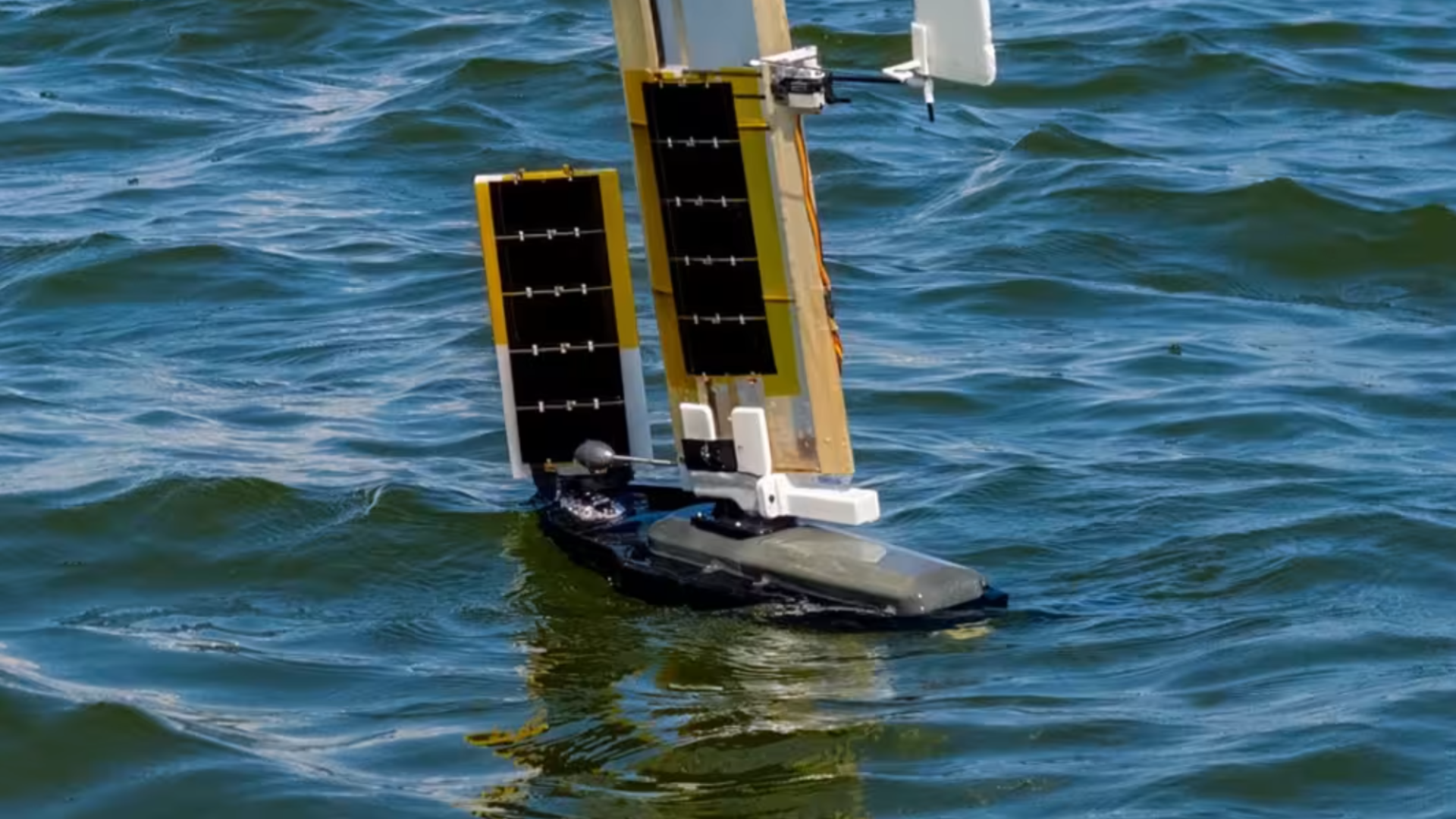
The ALBATROSS prototype weighs in at a modest 1.107 kg, a design choice that maximizes portability for deployment via larger aircraft or unmanned aerial vehicles (UAVs). Unlike hybrid aerial-marine vehicles that often rely on complex mechanical reconfiguration—such as folding wings or retractable propellers—the ALBATROSS utilizes its rigid wingsails to manage its own descent.
The Mechanism of Descent
Upon release from an altitude, the drone enters a state of autorotation. The wingsails act as aerodynamic brakes, forcing the craft into a steady, controlled spin. This spinning motion serves two critical purposes: it drastically reduces the terminal velocity of the drone, ensuring a low-impact water entry, and it eliminates the need for expensive or heavy shock-absorbing landing hardware. Once the craft meets the water’s surface, it possesses a unique structural geometry that allows it to automatically return to an upright position. Once upright, the "sails" catch the wind, transitioning the drone from a falling object into a functional, wind-propelled surface vessel.
Steering and Navigation
Lacking traditional mechanical propulsion, the ALBATROSS relies on a sophisticated rudder system that mimics the biomechanics of a fish tail. By utilizing three control actuators and three primary sensors, the drone generates lateral thrust, enabling it to steer through the water with remarkable precision. This passive approach to movement is a cornerstone of the design, allowing the drone to travel long distances without the power drain associated with motorized engines.
Chronology: From Concept to Deployment
The development of the ALBATROSS represents a multi-stage engineering evolution. While the SUTD team has kept the specific timeline of their internal development cycles relatively private, the project is part of a broader trend in maritime robotics research that has gained momentum over the last five years.
- Conceptualization: The team identified the "deployment gap"—the inability of current drones to land in the ocean and remain operational without expensive support vessels or heavy propulsion systems.
- Prototyping: The team focused on the "autorotation" mechanism, testing various wingsail configurations to ensure the drone would not crash upon hitting the water but would instead "land" gently.
- Water-Entry Testing: A critical milestone was the development of the self-righting hull. By balancing the center of mass and center of buoyancy, the researchers ensured the craft could survive the transition from high-speed descent to floating.
- Transition to Sailing: Once the craft was proven capable of surviving the landing, the final phase involved calibrating the rudder and sail interaction to ensure that the drone could effectively "tack" and move toward a target coordinate after hitting the water.
- Current Status: The prototype has successfully transitioned from lab-controlled testing to preliminary field assessments, demonstrating that the concept is viable for real-world environmental monitoring.
Supporting Data: Efficiency and Range
The performance metrics of the ALBATROSS place it in a unique category of "low-energy, long-range" autonomous systems.
Range and Comparative Analysis
The most striking figure associated with the ALBATROSS is its projected operating range, which exceeds 100 km. To put this into perspective, previous iterations of similar technology, such as the SailMAV, reported a range of approximately 7 km. By removing the need for active stabilization during the air-water transition and eliminating complex aerial propulsion, the SUTD engineers have created a system that is inherently more efficient.
Comparative Efficiency Table
| Feature | Traditional Hybrid Drone | ALBATROSS |
|---|---|---|
| Landing Hardware | Required (Heavy) | None (Passive) |
| Energy Consumption | High (Motors/Actuators) | Very Low (Wind-powered) |
| Reconfiguration | Mechanical/Complex | Aerodynamic/Passive |
| Operational Range | 5–10 km | >100 km |
The drone’s low mass allows it to be carried in large numbers by mothership UAVs, enabling "swarm" deployment. If an environmental event—such as an oil spill, a toxic algal bloom, or a localized weather anomaly—occurs in the middle of the ocean, a single aircraft could release a cluster of ALBATROSS units, which would then disperse and monitor the event for days or weeks using only wind energy.
Official Responses: The SUTD Perspective
In their official communications, the SUTD research team emphasized the simplicity of their design philosophy. According to the team, the primary failure point in many modern hybrid systems is the reliance on "moving parts" to facilitate the transition between mediums.
"ALBATROSS is designed to be released from an aircraft or UAV, passively enter autorotation for a controlled, low-impact water landing, and self-right without actuation," the team stated in their technical report. They specifically highlight that their design avoids the "aerial propulsion" trap. By treating the drone as a payload that becomes a vessel upon landing, they have sidestepped the need for batteries and engines that are only useful in one half of the mission.
The team also noted that, unlike larger autonomous sailing platforms like Saildrone—which are effectively "ships" that require significant logistical support and maintenance—the ALBATROSS is intended to be a "disposable" or "expendable" asset. This makes it ideal for high-risk zones where the recovery of the equipment is not guaranteed, but the data collection is vital.
Implications: The Future of Autonomous Monitoring
The successful deployment of the ALBATROSS concept carries profound implications for multiple sectors, most notably environmental science, maritime security, and disaster response.
Environmental Monitoring
Climate change is driving more frequent and severe oceanic events. Being able to drop a sensor array from a drone into the eye of a storm or the center of a chemical spill allows researchers to gather real-time data that was previously inaccessible. Because the ALBATROSS does not need to recharge, it can linger in an area of interest for extended periods, providing a continuous stream of data back to researchers.
Maritime Logistics and Security
The ability to deploy autonomous assets from the air into the sea without specialized maritime recovery vessels changes the logistics of border patrol and oceanic surveillance. It creates a "deploy and forget" capability where wide swathes of the ocean can be monitored for illicit activity or maritime accidents without the astronomical costs associated with patrolling by ship or manned aircraft.
Challenges Ahead
Despite the impressive success of the prototype, the research team acknowledges that the transition from a laboratory environment to the chaotic nature of the open ocean remains a significant hurdle. Consistent performance in high-sea states, the ability to navigate against strong currents, and the reliability of the autonomous steering system are all factors that will require further iteration.
Furthermore, the "self-righting" mechanism must be tested against varying water densities and wave heights. While the physics of the design are sound, the unpredictability of the ocean means that the ALBATROSS must eventually prove its mettle in adverse weather conditions.
Conclusion
The ALBATROSS project is a testament to the power of "minimalist" engineering. By looking toward the natural world—specifically the autorotation of seeds and the movement of aquatic life—the SUTD team has bypassed the complexity that has plagued the field of hybrid robotics for years. If the prototype can maintain its performance as it scales toward wider commercial or research applications, it may well become the new standard for long-range, low-cost maritime data collection. The vision of a swarm of drones falling from the sky to silently patrol the waves is no longer science fiction; it is the next step in our ongoing effort to map and protect the world’s most remote frontiers.