WASHINGTON — The Avatar universe, a cornerstone of modern animation that has captivated audiences for nearly two decades, is bracing for a bold new chapter. During a high-energy presentation at New York Comic-Con on Friday, October 9, executives and creators confirmed that the franchise’s latest entry, Avatar: Seven Havens, has been granted a significant vote of confidence: a renewal for seasons 3 and 4, even as the series makes its global debut.
This early commitment from Nickelodeon and Avatar Studios ensures a long-term narrative runway for a series that promises to push the boundaries of the Avatar legacy into darker, more complex territory.
Main Facts: A Bold New Era for the Avatar Legacy
The announcement, which arrived as a surprise to many in the packed Comic-Con hall, signals a strategic pivot for the franchise. Avatar: Seven Havens is not merely another addition to the mythos; it represents a thematic departure from the episodic adventures of Aang and the political struggles of Korra.
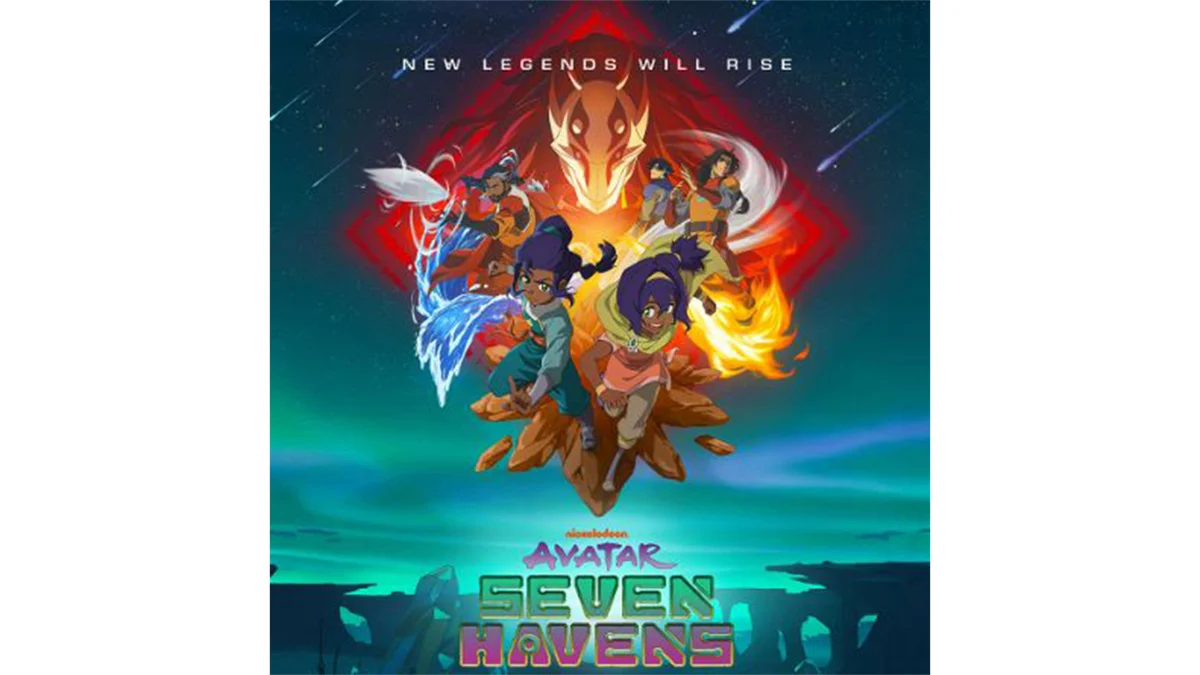
Set in a world shattered by an unspecified cataclysm, the narrative introduces Pavi, a young Earthbender who emerges as the next Avatar in a timeline where the title carries more stigma than reverence. In this fractured reality, the mantle of the Avatar is viewed with suspicion and fear, with the public regarding the elemental bridge as a potential harbinger of destruction rather than a beacon of hope.
The series centers on the "Seven Havens"—the final, precarious strongholds of civilization. Pavi’s journey is defined by isolation and the search for identity, as she attempts to navigate a world that is actively hunting her. The stakes are raised by the inclusion of her long-lost twin sister, Nisha, whose bond with Pavi serves as the emotional core of a story fraught with human and spiritual antagonism.
Chronology of Development: From Concept to Comic-Con
The path to Seven Havens has been one of meticulous planning within the newly minted Avatar Studios, a division of Nickelodeon dedicated exclusively to expanding the franchise’s IP.
- Pre-Production and Concept Phase: Following the conclusion of The Legend of Korra and the subsequent expansion into graphic novels and web content, creators Michael Dante DiMartino and Bryan Konietzko shifted their focus toward long-form animation. The concept for Seven Havens began taking shape as an exploration of a "post-fall" society, moving away from the industrialization of the Republic City era.
- Studio Formation: With the official launch of Avatar Studios, the creators gained the infrastructure necessary to develop multiple concurrent projects. Seven Havens was identified early on as the flagship series for this new era.
- Casting and Development: Throughout 2023 and 2024, the production team assembled a diverse voice cast, blending established industry veterans with rising talent.
- The October 9th Reveal: At New York Comic-Con, the project reached its public inflection point. The panel, moderated by Janet Varney—the voice of Korra—served as the formal introduction of the characters and the creative team, culminating in the shocking revelation that the series had already been greenlit through its fourth season.
Supporting Data: The Talent Behind the Havens
The production of Avatar: Seven Havens brings together a powerhouse team of industry veterans and creative visionaries. Executive producers Michael Dante DiMartino and Bryan Konietzko continue to serve as the creative architects, ensuring that the soul of the franchise remains intact.
The Creative Engine
- Michael Dante DiMartino & Bryan Konietzko: Executive Producers.
- Ethan Spaulding: Executive Producer, known for his work on Avatar: The Last Airbender and various high-profile animated projects.
- Sehaj Sethi: Co-Executive Producer, bringing a fresh perspective to the series’ narrative structure.
The Voice Cast
The character dynamics in Seven Havens are driven by a robust cast:
- Pavi: Voiced by Saheli Khan, whose portrayal of the burdened Earthbender is expected to define the emotional arc of the series.
- Nisha: Voiced by Aishu Devan, the long-lost twin whose relationship with Pavi is central to the mystery of their origins.
- Supporting Cast: The ensemble includes Major Curda, Akshay Khanna (as Karthik), Sakina Jaffrey (as Agam), Darren Barnet (as Daemin), and Dianne Doan (as Zi).
- Franchise Veteran: The legendary Dee Bradley Baker returns to the franchise, lending his vocal talents to both Geet and Ruhi, further grounding the series in the established soundscape of the Avatar universe.
Official Responses: A Vision for a Broken World
During the panel, the atmosphere was one of profound anticipation. Michael Dante DiMartino and Bryan Konietzko emphasized that the decision to set the story in a post-cataclysmic world was intentional, designed to challenge the audience’s perception of what it means to be the Avatar.
"We wanted to strip away the comfort of the world as we know it," said DiMartino during the Q&A session. "In previous series, the Avatar was a known quantity—a figure of reverence. In Seven Havens, the Avatar is a liability. Pavi isn’t just fighting monsters; she’s fighting the very public perception of her own existence."
Ethan Spaulding added that the early renewal for seasons 3 and 4 allows the team to "slow-burn" the mystery. "We have the luxury of space," Spaulding remarked. "We aren’t racing to a finale. We have the runway to let these characters breathe, to let the Seven Havens feel like real, lived-in, and desperate places. We want the audience to feel the weight of every choice Pavi makes."
Janet Varney, reflecting on her own time as the Avatar, noted the stark difference in tone: "Korra dealt with the weight of tradition. Pavi deals with the weight of survival. It’s a completely different kind of pressure."
Implications: The Future of the Franchise
The renewal of Avatar: Seven Havens for four seasons total at the moment of its inception is a strategic masterstroke that carries several implications for the future of animated television and the Avatar franchise as a whole.
1. Shift in Narrative Complexity
By committing to four seasons, the production team has signaled a shift toward long-form, serialized storytelling that mirrors the complexities of prestige television. Rather than focusing on single-season "villain-of-the-week" arcs, Seven Havens appears poised to explore deep-seated geopolitical and spiritual mysteries that require multiple years to unfurl. This encourages a more mature viewership and allows for deeper character development.
2. Economic Stability for Animation
The animation industry has seen significant volatility in recent years, with many projects facing cancellation before reaching their potential. The "four-season runway" model serves as a model for sustainability. It allows the production team to retain staff, build upon established assets, and plan for long-term narrative payoffs, ultimately leading to a more polished and cohesive final product.
3. Redefining the Avatar Archetype
The premise of Seven Havens directly challenges the "hero’s journey" narrative. By positioning the Avatar as an object of fear, the writers are engaging in a meta-commentary on the burden of power. If the world has been devastated by a cataclysm, and if the Avatar is the link between the physical and spirit worlds, the series will inevitably force viewers to ask: Did the Avatar’s previous failures cause this disaster? This question alone provides a compelling hook that differentiates Seven Havens from its predecessors.
4. Expanding the "Avatar Studios" Ecosystem
The success of this series will serve as the benchmark for all future projects under the Avatar Studios banner. If Seven Havens succeeds in blending darker themes with the franchise’s signature action-oriented storytelling, it could open the door for even more experimental projects, including spin-offs, prequels, or adult-oriented animated content.
5. A Test of Audience Loyalty
Finally, the series acts as a litmus test for the Avatar fanbase. Can a franchise built on a sense of hope and balance survive in a world of cynicism and decay? The early renewal suggests that Nickelodeon and the creative team believe the answer is a resounding "yes." They are betting that the audience is ready to grow alongside the franchise, embracing a more nuanced and difficult version of the world they have loved for years.
As the Seven Havens stand on the brink of collapse, and as Pavi begins her treacherous journey to find her twin and her place in history, the audience is left with a singular, driving question: In a world that fears its savior, can there ever truly be peace? With four seasons secured to answer that question, the journey is only just beginning.