
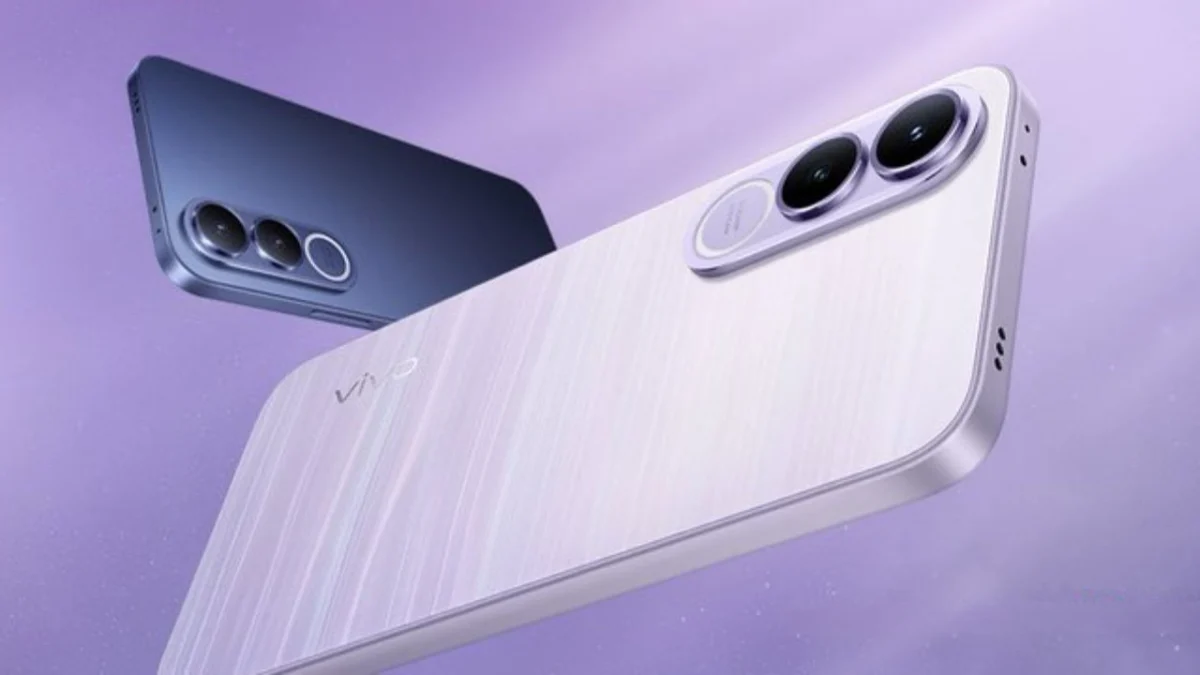
The Indian smartphone market, arguably the most competitive in the world, is currently witnessing a significant shift in value dynamics as e-commerce giant Amazon kicks off its latest seasonal sale. At the center of this whirlwind is Vivo, a brand that has successfully transitioned from a "camera-first" marketing strategy to a holistic hardware powerhouse. The current sale highlights a strategic price correction across Vivo’s most ambitious lineups, including the V-series, S-series, and the performance-oriented T-series.
This report explores the technical specifications, market positioning, and economic implications of these price drops, specifically focusing on the Vivo V70 Elite, Vivo V70 FE, Vivo S2, and Vivo T5x 5G.
1. Main Facts: Aggressive Pricing Meets High-Octane Hardware
The core of the current Amazon sale revolves around bridging the gap between flagship features and mid-range pricing. Vivo has introduced substantial discounts that range from ₹3,000 to over ₹5,000 on its latest models.
The Headline Deals:
- Vivo V70 Elite 5G: Originally positioned at ₹66,999, the device is now available for ₹62,999. It represents Vivo’s push into the "affordable flagship" space, utilizing the Snapdragon 8s Gen 3 chipset.
- Vivo V70 FE: The "Fan Edition" equivalent for Vivo, featuring a massive 200MP OIS camera, has seen its price slashed from ₹44,999 to ₹39,380.
- Vivo S2: A battery behemoth with a 7050mAh cell, the S2 has dropped from its official price of ₹42,999 to a competitive ₹39,580.
- Vivo T5x 5G: Targeting the volume-heavy sub-₹30,000 segment, this device is now listed at ₹26,749, down from ₹29,999.
These price adjustments are not merely clearing old stock; they represent a tactical move to capture the "Monsoon Season" buyers and counter recent launches from competitors like Motorola and Xiaomi.
2. Chronology: The Evolution of Vivo’s Market Strategy
To understand the significance of these deals, one must look at Vivo’s journey in the Indian subcontinent over the last decade.
- 2014–2017: The Offline Expansion. Vivo entered India with a focus on physical retail stores and massive marketing spends on the Indian Premier League (IPL). Their devices were primarily known for "Hi-Fi" audio and "Moonlight" selfies.
- 2018–2021: The Innovation Phase. With the introduction of the pop-up camera and in-display fingerprint sensors, Vivo began to be seen as a tech innovator. The V-series became a staple for the upper-middle class.
- 2022–2023: Sub-brand Diversification. Vivo refined its T-series to take on online-centric brands like POCO and Realme, while the X-series moved into the ultra-premium category to challenge Samsung and Apple.
- 2024: The "Big Battery & AI" Era. The current year marks a shift toward extreme endurance. As 5G consumption increases battery drain, Vivo has responded by integrating 6500mAh to 7200mAh batteries into slim chassis—a feat previously thought impossible due to heat and weight constraints.
The current Amazon sale is the latest chapter in this chronology, where Vivo is leveraging its supply chain maturity to offer high-capacity batteries and 4nm processors at lower price points than ever before.
3. Supporting Data: Technical Deep Dive and Comparison
When evaluating these smartphones, the data reveals a clear focus on three pillars: Display quality, Battery endurance, and Imaging prowess.
The Powerhouse: Vivo V70 Elite 5G
The V70 Elite is designed for power users who find the X-series too expensive but the standard V-series underpowered.
- Processor: Qualcomm Snapdragon 8s Gen 3. This chip offers flagship-level AI capabilities and near-Gen 3 performance at a lower thermal footprint.
- Display: 6.59-inch AMOLED with a 120Hz refresh rate, catering to high-frame-rate gaming and HDR streaming.
- Battery/Charging: A 6500mAh battery paired with 90W FlashCharge. This allows for a full day of heavy 5G usage with a recharge time of roughly 45 minutes.
- Camera System: A triple 50MP array (Main, Telephoto, and Front) ensures consistency in color science across all focal lengths.
The Photography King: Vivo V70 FE
The V70 FE is arguably the most balanced device in the lineup.
- The 200MP Factor: The inclusion of a 200MP sensor with Optical Image Stabilization (OIS) puts it in direct competition with the Redmi Note 13 Pro+ and the Motorola Edge series.
- Processor: MediaTek Dimensity 7360. This 4nm chipset is optimized for high-resolution image processing without lagging.
- Endurance: It carries a 7000mAh battery, which is a significant upgrade over the 5000mAh industry standard.
The Endurance Duo: Vivo S2 and T5x 5G
The S2 and T5x are built for the "always-on" generation—delivery partners, heavy social media users, and long-distance travelers.

- Vivo S2: Features a 1.5K AMOLED display (6.83 inches) and a 7050mAh battery. The Dimensity 7360-Turbo ensures that the high-resolution screen doesn’t stutter.
- Vivo T5x 5G: The most affordable of the lot, it utilizes a 7200mAh battery. While it uses an LCD panel instead of AMOLED to keep costs down, the 120Hz refresh rate and Dimensity 7400 chip make it a formidable gaming device for the budget-conscious.
4. Official Responses and Market Context
While Vivo has not issued a specific press release for this "flash" price drop, industry analysts suggest that the move is a response to the "Inventory Correction Cycle."
Market research firms like IDC and Counterpoint have noted that the mid-premium segment (₹30,000–₹50,000) is the fastest-growing bracket in India. Consumers are no longer satisfied with "budget" phones; they are looking to upgrade to devices that will last 3–4 years. By reducing prices on Amazon, Vivo is capturing the "Value Seeker" demographic that usually waits for the Big Billion Days or Great Indian Festival.
Furthermore, Vivo’s official service network—one of the largest in India—provides an "invisible value" that online-only brands struggle to match. Official sources from the retail sector suggest that these Amazon prices are often mirrored in offline stores (MOP – Market Operating Price) to ensure price parity and protect the interests of physical shop owners, a strategy Vivo has mastered better than most.
5. Implications: What This Means for the Industry and Consumers
The current sale on Amazon has three major implications for the near future of the smartphone industry:
I. The End of "Battery Anxiety"
By normalizing 6500mAh and 7000mAh batteries in standard-sized phones, Vivo is forcing competitors to rethink their hardware stack. For years, 5000mAh was the "gold standard." Vivo has effectively moved the goalposts. We can expect Samsung and Xiaomi to respond with higher-density silicon-carbon batteries in their upcoming 2025 models.
II. The Democratization of 200MP Imaging
The price drop of the Vivo V70 FE to under ₹40,000 makes high-resolution photography accessible to a wider audience. This is not just about "more pixels"; it’s about the ability to crop into photos without losing detail, a feature previously reserved for ₹70,000+ flagships.
III. The Squeeze on the "Premium" Segment
As devices like the V70 Elite (with Snapdragon 8s Gen 3) drop closer to the ₹60,000 mark, the ultra-premium segment (iPhone 15, Galaxy S24) faces a new challenge. If a consumer can get 90% of the performance and better battery life for ₹20,000 less, the "brand tax" of Apple and Samsung becomes harder to justify for the average Indian buyer.
IV. Impact on the 5G Rollout
As Jio and Airtel expand their 5G SA (Standalone) networks, data consumption is skyrocketing. Devices like the T5x 5G, now priced aggressively, ensure that even the lower-middle-class demographic has access to hardware that can handle 5G speeds without dying by noon.
Conclusion: A Strategic Window for Buyers
The current Amazon sale highlights a unique window of opportunity. The Vivo V70 series and its counterparts represent a convergence of long-term durability and immediate performance. For the professional journalist, the takeaway is clear: the smartphone market is no longer about incremental updates. It is about "Extreme Specs" becoming the new baseline.
Whether it is the 200MP sensor of the V70 FE or the 7200mAh battery of the T5x, Vivo is clearly signaling that it intends to dominate the Indian market through sheer hardware superiority and aggressive pricing. For the consumer, the decision now rests on whether to buy into this "Big Battery" ecosystem or wait for the inevitable response from the rest of the industry. However, at these discounted rates, the value proposition is currently leaning heavily in Vivo’s favor.