In the modern digital economy, content is no longer just "king"—it is the entire infrastructure of business growth. From solopreneurs building personal brands to B2B SaaS companies scaling through organic search, content marketing serves as the primary engine for lead generation and revenue. However, the educational landscape surrounding this discipline is saturated. A simple search reveals hundreds of courses promising to turn beginners into masters, but the vast majority of these offerings provide little more than surface-level theory that fails to translate into real-world results.
To truly accelerate your career or business, you must look beyond flashy landing pages. The most effective programs today are distinguished by three pillars: the practitioner-level experience of the instructors, the depth of feedback loops, and the agility of the curriculum in the face of the AI-driven marketing revolution. This article provides a comprehensive evaluation of the leading content marketing courses, measuring them against a rigorous set of professional criteria to help you determine which investment is right for your specific goals.
The Evaluation Framework: How to Measure Effectiveness
Most content marketing courses follow a familiar, if limited, blueprint: video modules followed by static quizzes. While the advice in these courses is often technically sound, it frequently lacks the "execution layer" necessary for modern success. To determine the value of a program, we must look at the following metrics:
| Factor | Why It Matters |
|---|---|
| Instructor Credibility | Has the instructor successfully built a business using these tactics, or are they purely academic? |
| Content Scope | Does the curriculum cover the full spectrum (SEO, email, social, and conversion)? |
| Advice Recency | Does the course address the paradigm shift caused by AI and changing search intent? |
| Feedback Loops | Do you receive personalized critique, or are you left to guess if your implementation is correct? |
| Community | Is there an active peer network for collaboration and troubleshooting? |
| Pricing Model | Is the cost a one-time investment or a recurring value-add? |
1. Copyblogger Academy: The Practitioner’s Approach
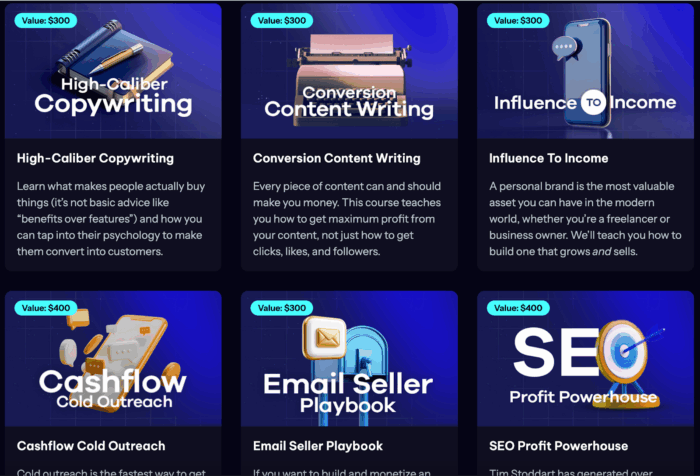
Copyblogger Academy distinguishes itself by moving away from pre-recorded, static lectures and toward a living, breathing community led by active entrepreneurs. Co-founded by Tim Stoddart and Charles Miller, the program is built on the premise that content should be a "growth asset" rather than a vanity metric.
Main Facts and Methodology
Unlike standard courses, Copyblogger Academy operates on a hybrid model of tactical video frameworks and direct mentorship. Tim Stoddart, a veteran of the agency world, and Charles Miller, a powerhouse in social branding, provide a curriculum that spans SEO, copywriting, email marketing, and personal branding.
Implications for the Learner
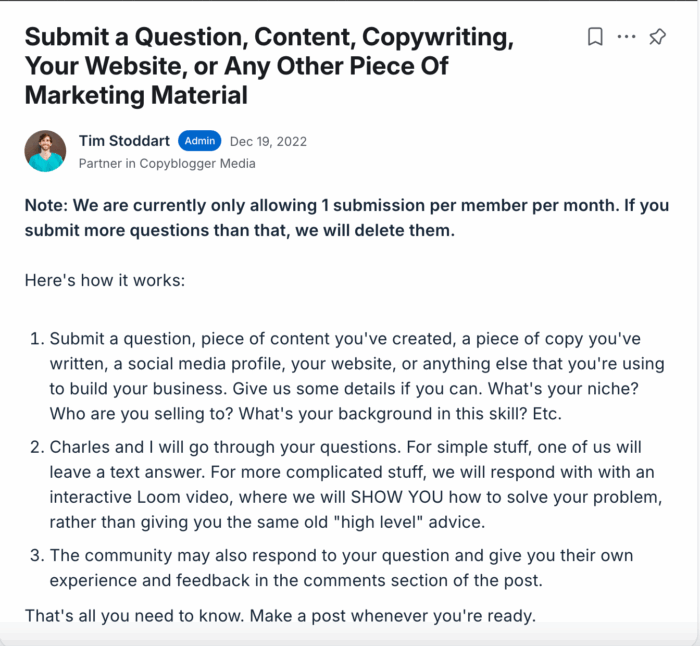
The primary advantage here is the "in-the-game" status of the instructors. Because both founders are currently operating businesses, the curriculum is updated in real-time to reflect shifts in algorithms and AI tools. The platform offers a dedicated space for members to submit their work for direct critique, effectively creating an apprenticeship-style learning environment.

2. HubSpot Content Marketing Certification
HubSpot is a titan in the marketing software space, and their free certification program remains the industry standard for entry-level knowledge.
Main Facts and Chronology
The course is an 8.5-hour, self-paced program featuring 54 videos and 11 quizzes. It is taught primarily by Justin Champion, a recognized authority in SEO and AEO (Answer Engine Optimization).
Supporting Data and Limitations
While the content is professionally produced and authoritative, it is essentially a "static" resource. It provides a foundational understanding of blogging and video marketing but fails to address the nuances of personal branding or the current, complex realities of AI-assisted content creation. Because it lacks a community component and personalized feedback, it serves better as a resume-builder for beginners than as a growth engine for experienced operators.
3. Grow and Convert: Customers from Content
Founded by Benji Hyam and Devesh Khanal, this course is designed for those who view content marketing through the lens of ROI rather than traffic volume.
Supporting Data
The program is built on a specific, documented system that has driven success for brands like Patreon and Leadfeeder. It is one of the few courses that emphasizes the "tracking" side of the equation—teaching students how to attribute revenue directly to content efforts.
Official Response and Philosophy
Hyam and Khanal treat the course less like a school and more like an agency training ground. The content is constantly evolving, and the inclusion of monthly Zoom calls and a private forum provides the kind of support that allows students to troubleshoot their specific client or business scenarios.
4. Superpath: The Professional’s Graduate School
Superpath, led by Jimmy Daly, is less of a traditional course and more of a high-level networking and strategy hub.
Implications for Career Growth
For content leaders, writers, and strategists, Superpath serves as a "graduate school." Instead of teaching the basics of how to write a headline, it offers teardowns, templates, and advanced strategy sessions sourced from professionals at top-tier companies like Shopify and Intercom.
Why It Stands Out
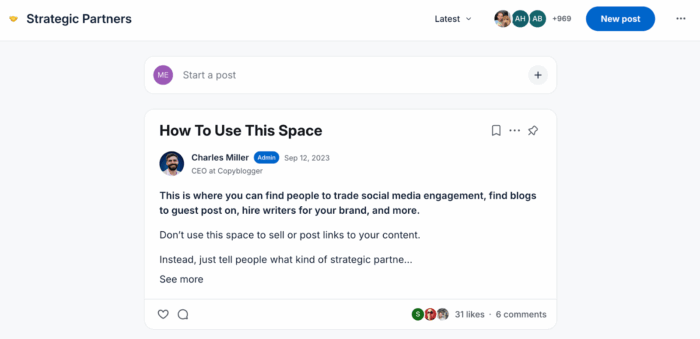
The community is the product. With over 400 active professionals, the value lies in the real-time peer discussions. If you are looking to advance your career in a B2B SaaS environment, the network access provided by Superpath is arguably the most valuable asset in the industry.
5. Ahrefs: Blogging for Business
Ahrefs is arguably the most respected name in the SEO industry. Their "Blogging for Business" course is a masterclass in organic traffic growth.
Chronology and Recency
Recorded in 2020, the course remains a high-quality, free resource for understanding the mechanics of search intent and content-led growth. However, its age is its primary weakness. In the post-2023 search landscape, where AI-generated content and search generative experiences (SGE) have disrupted traditional SEO, the course feels slightly disconnected from the modern reality. It is a fantastic starting point for understanding how to build a blog, but it must be supplemented with modern research on AI-driven search trends.
6. Semrush Academy: The SEO Deep Dive
Brian Dean, the legendary founder of Backlinko, provides two of the most popular free courses on Semrush Academy: "Advanced Content Marketing" and "Content-Led SEO."
Main Facts
Dean’s approach is incredibly tactical. His lessons are concise, data-backed, and focused on "how-to" implementation. Whether it is link-building or advanced keyword research, Dean’s frameworks remain some of the most effective in the industry.
Implications for the Learner
The primary drawback is the lack of interactivity. Because these are free, self-paced courses, students cannot ask for feedback on their own work. While the information is top-tier, the learner is responsible for the execution, which can be daunting for those without a background in technical SEO.
7. CXL: The Strategy Overview
CXL (Conversion XL) is known for high-intensity, data-driven marketing education. Their Content Marketing Research course, led by Derek Gleason of Shopify, is an excellent high-level overview.
Official Perspective
The curriculum focuses heavily on the research phase of content marketing—understanding the "why" before the "how." It is a professional-grade course that avoids the fluff found in many Udemy-style offerings. However, it is strictly theoretical and does not offer the "writing labs" or community support found in more interactive programs.
8. Udemy: Content Marketing Masterclass
For those seeking a broad, introductory overview, the "Content Marketing Masterclass" by Brad Merrill offers a comprehensive A-to-Z look at the industry.
Supporting Data
Spanning nearly four hours and covering everything from web design to the AIDA framework, this course is designed for the absolute beginner. While it is highly accessible and affordable, it suffers from a lack of specialization. It is a mile wide but an inch deep, making it a difficult choice for those who need to master specific, high-leverage skills like advanced SEO or high-conversion copywriting.
Conclusion: Which Path Should You Choose?
The "best" course is fundamentally a question of your current maturity level in the market:
- For the Entrepreneur & Builder: If you need to build a brand, write copy that converts, and learn how to manage content as a business asset, Copyblogger Academy offers the most comprehensive support and live feedback.
- For the B2B SaaS Strategist: Superpath is the gold standard for networking, peer learning, and understanding the high-level strategy used by the world’s leading technology companies.
- For the ROI-Focused Marketer: If your primary goal is to prove that content creates revenue, Grow and Convert provides the most rigorous, system-based approach.
- For the Absolute Beginner: If you are just starting and have zero budget, the free courses from Ahrefs and Semrush Academy are the best places to build a technical foundation.
Ultimately, content marketing is a skill learned through trial and error. The most valuable investment you can make is not just in the course content, but in the community and the feedback loops that will hold you accountable as you test, measure, and iterate on your own growth. Regardless of which path you choose, ensure your education includes an opportunity to put theory into practice immediately—because in the digital world, execution is the only true competitive advantage.